5ETB0 Communication Theory
- Area: Communications and Networking
- Topics: Filters · Random Signals and Power Spectral Density · Noise · Modulation · Digital Signaling and Pulse Shaping · Detection and Matched Filters · Channel Capacity
- Related courses: Communication 1 - 5ETC0 · Math II - 5EMA0 · Signals II (DSP Fundamentals) - 5ESC0
requirements
formula sheet
Course Introduction, Motivation, and Math Preamble
Analog vs Digital Communication
Math II - 5EMA0
Signals II (DSP Fundamentals) - 5ESC0
M2.1.pdf
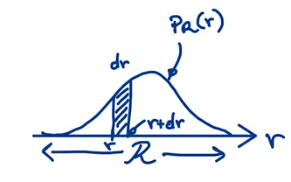
Conditional PDF formula can be thought of of as Discrete Input, Continuous Output probability.
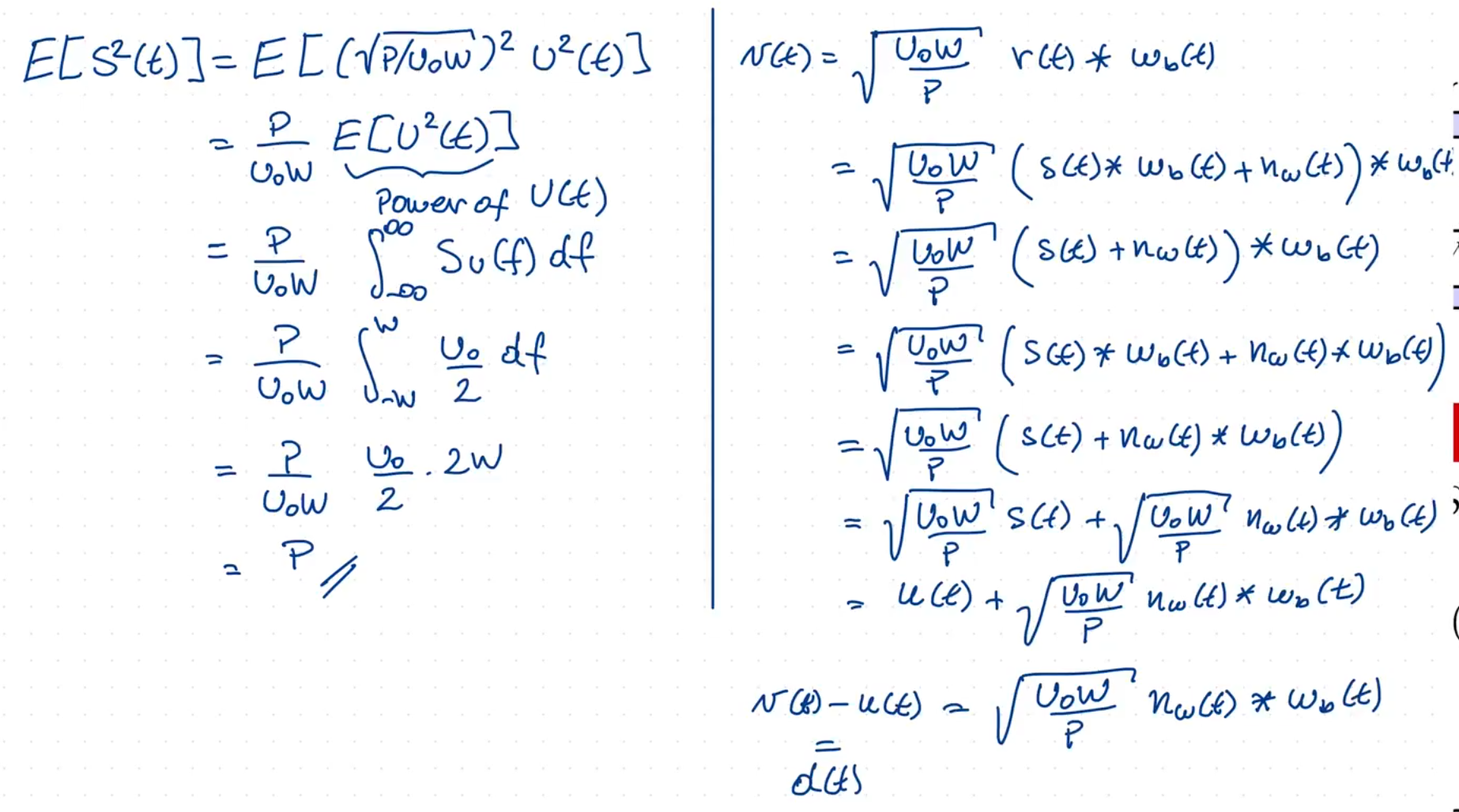
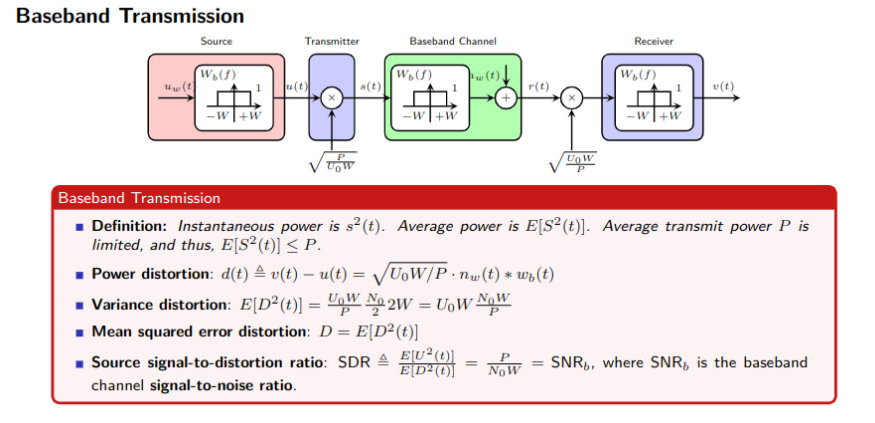
stationary autocorrelation function means
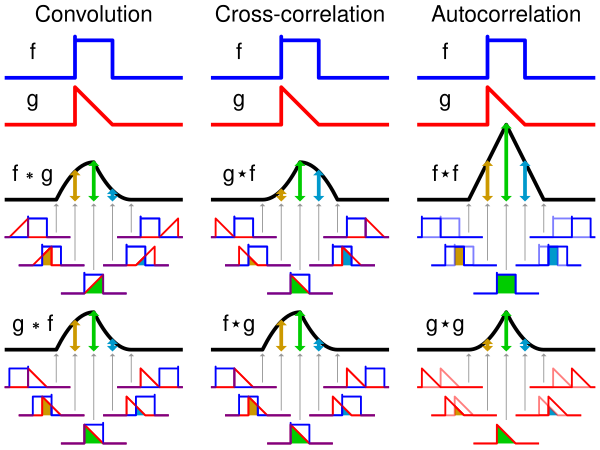
autocorrelation is correlation of a signal with a delayed copy of itself. similarity between observations of a random variable a function of the time lag between them.
higher bandwidth for an analog channel would let in higher frequency range which may let in more noise.
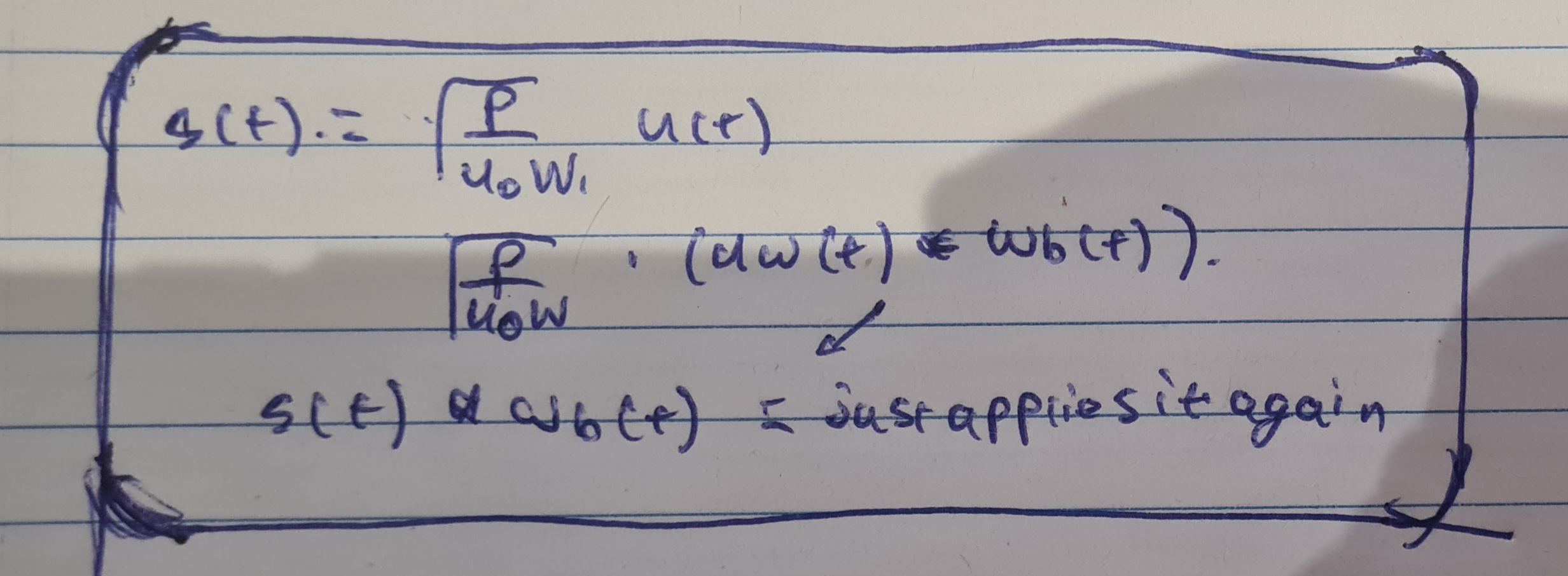
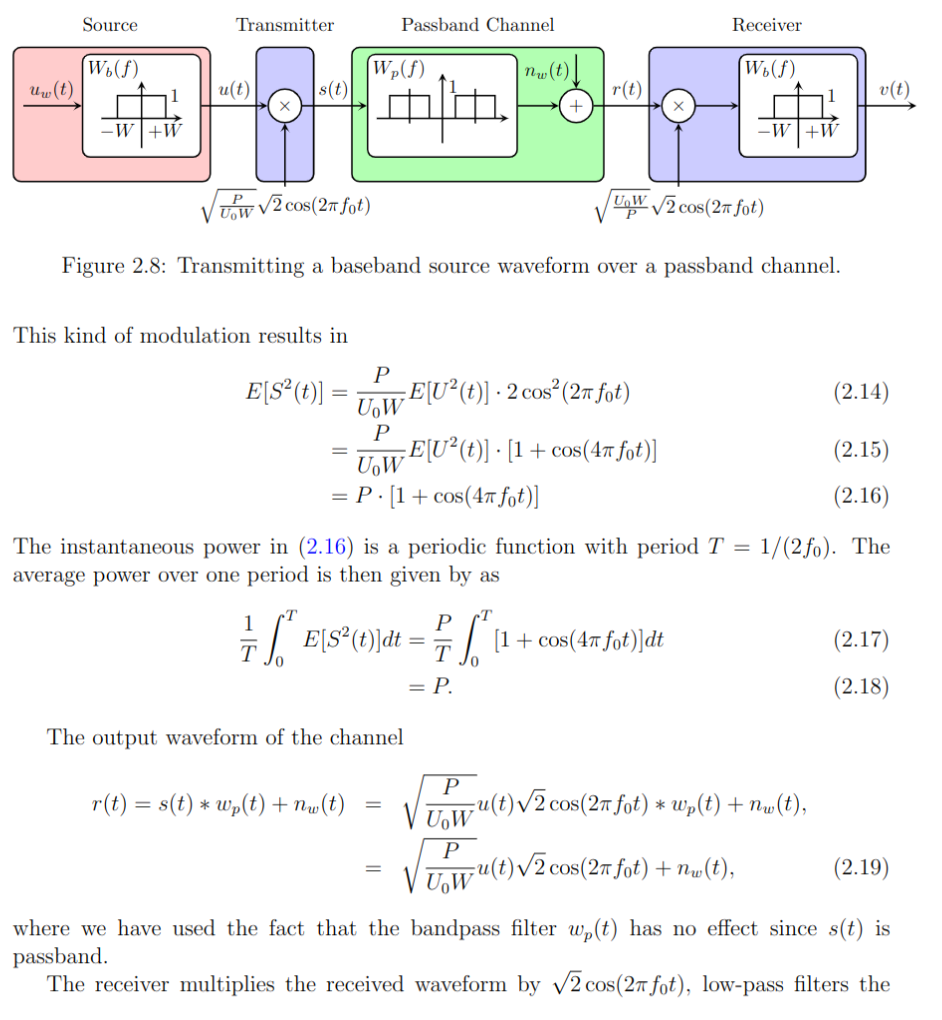
DSB-SC might not change SNR but as we see diagram we see increase in bandwidth…
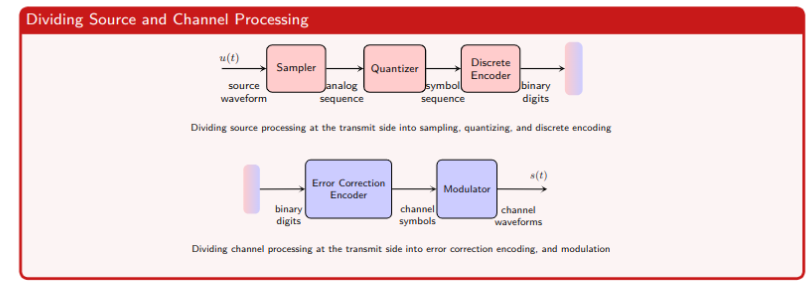
discrete encoder, since the information is of the sampled signal it reduced the information, while error correction encoder adds redundant bits to later retrieve original signal in case noise is added: Like hannon encoding etc (info bits).
COS 126: Prefix Codes
ocw.tudelft.nl/wp-content/uploads/Algoritmiek_Huffman_Codes.pdf
Side Quest: Signals
Communication 1 - 5ETC0
Bandwidth of a signal is defined as the difference between the highest and the lowest frequency
Baseband vs Bandpass
bandpass basically produces another carrier signal
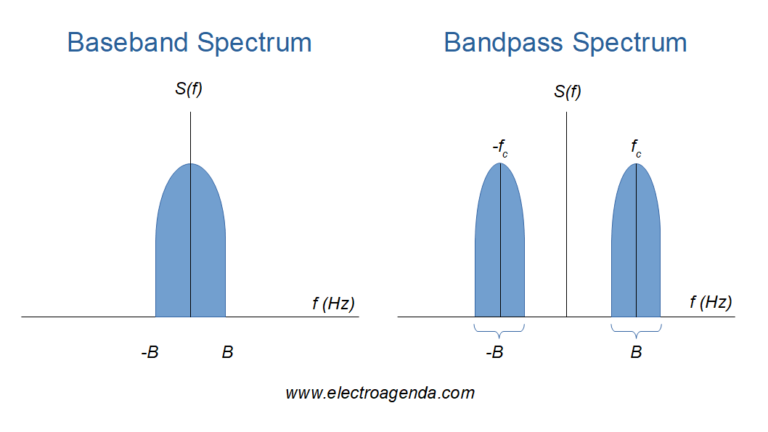
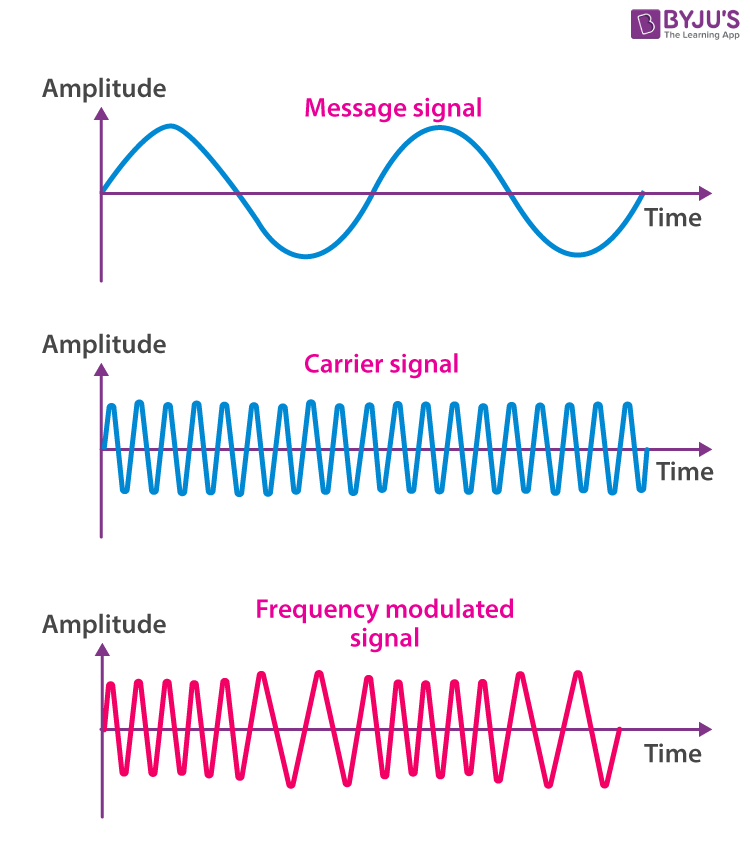
Bandpass signal is created when modulation or a constant carrier signal is added to the orignal message signal which is important for open air transmission in a noisy environment so you can occupy your specific carrier frequency spectrum and your bandwidth of it.
Sampling in Digital Communication - GeeksforGeeks
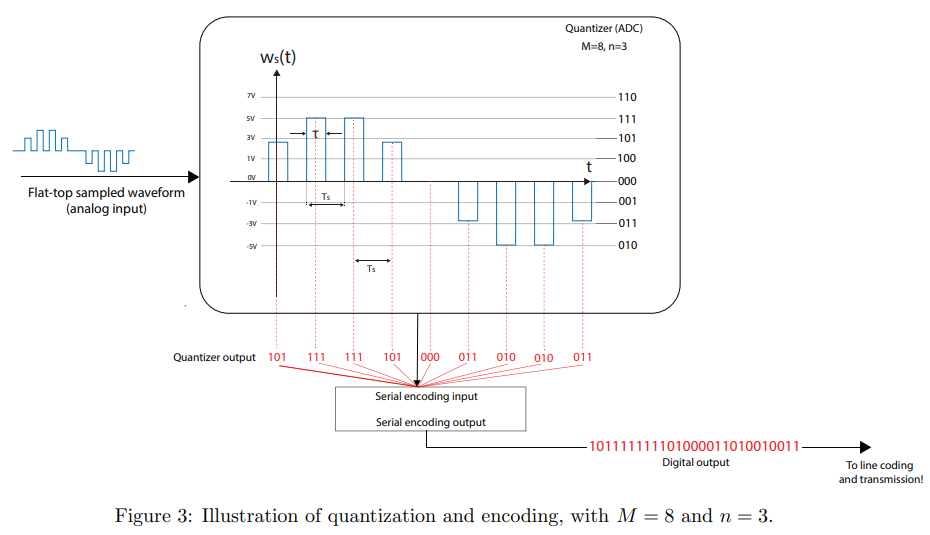
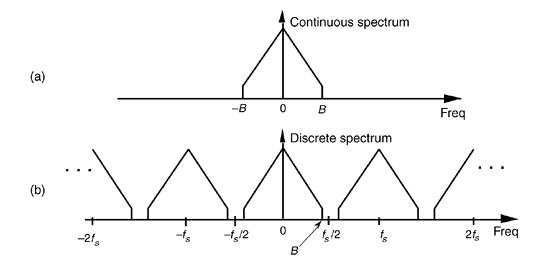
after sampling we can encode and digitize our signal to then transmit this information.
Modulation maps the digital signal onto a carrier wave, which is better suited for transmission over the chosen medium. It modifies the carrier wave’s properties (amplitude, frequency, or phase) to encode the information.
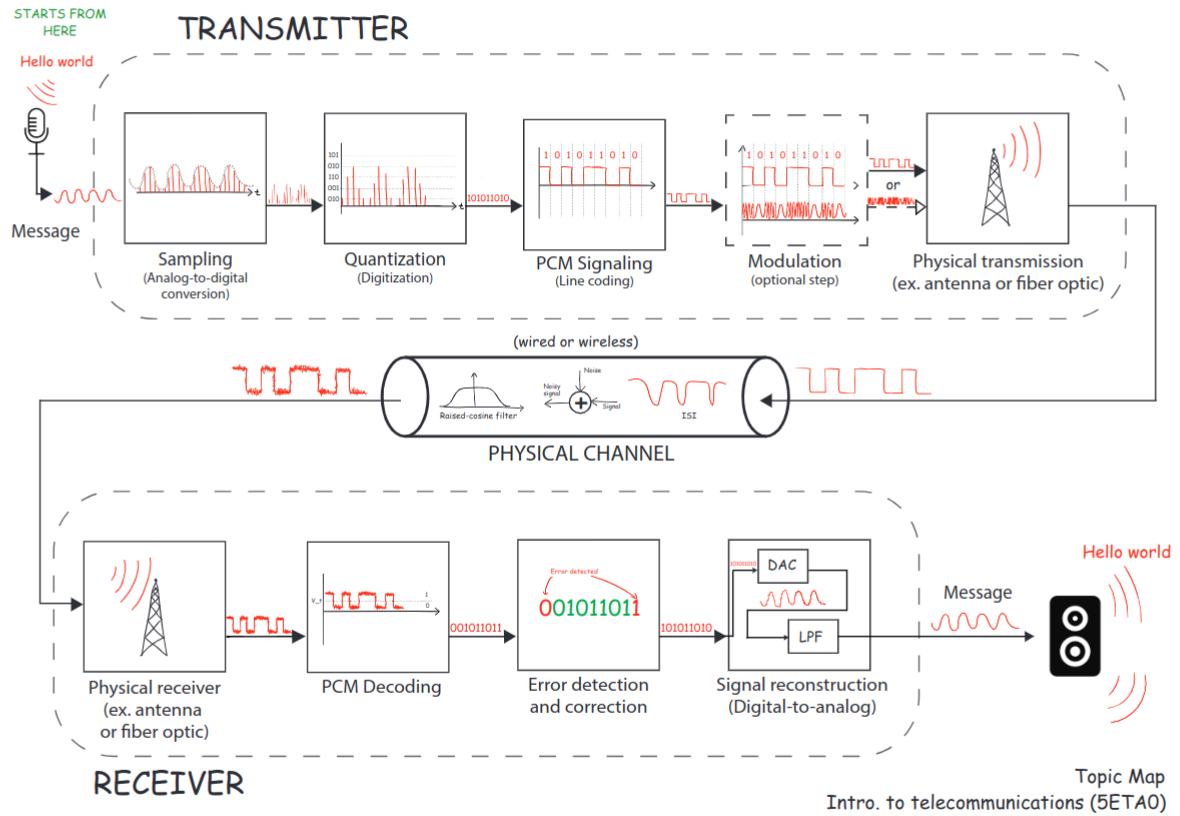
modulation can be on digital and continuous.
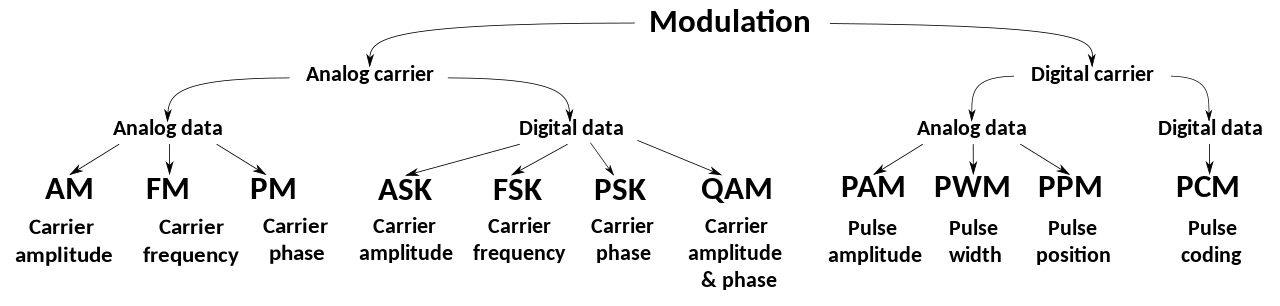
NOTE: PCM is technically on analog data since it converts analog signal to digital.
What is Modulation ? Why Modulation is Required ? Types of Modulation Explained. - YouTube
Decisions Rules for DIDO Channels
Topic: Detection and Matched Filters
M3.1.pdf
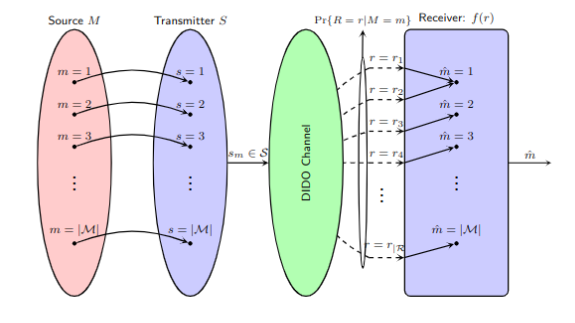
MAP Interpretation Comparison
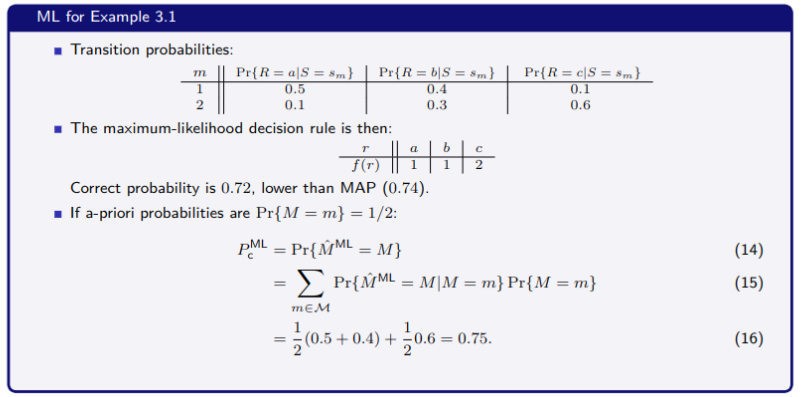
MAP is always better but when equally likely symbols, ML is the same.
We still care about ML, since with it you don’t need to inform the receiver what the a-priori probabilities are. Its more adaptable, overall the ML is simpler to implement.
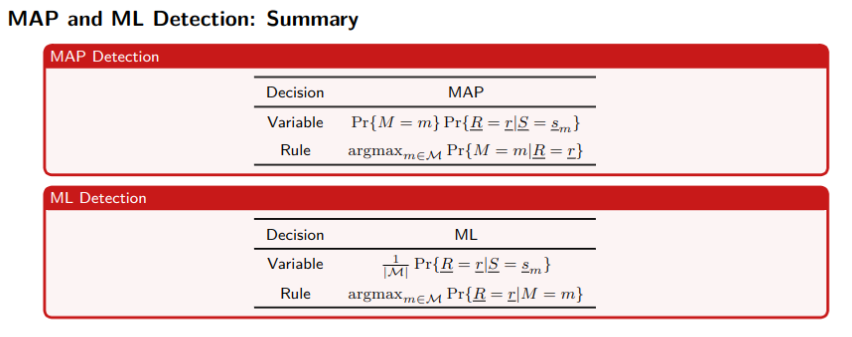
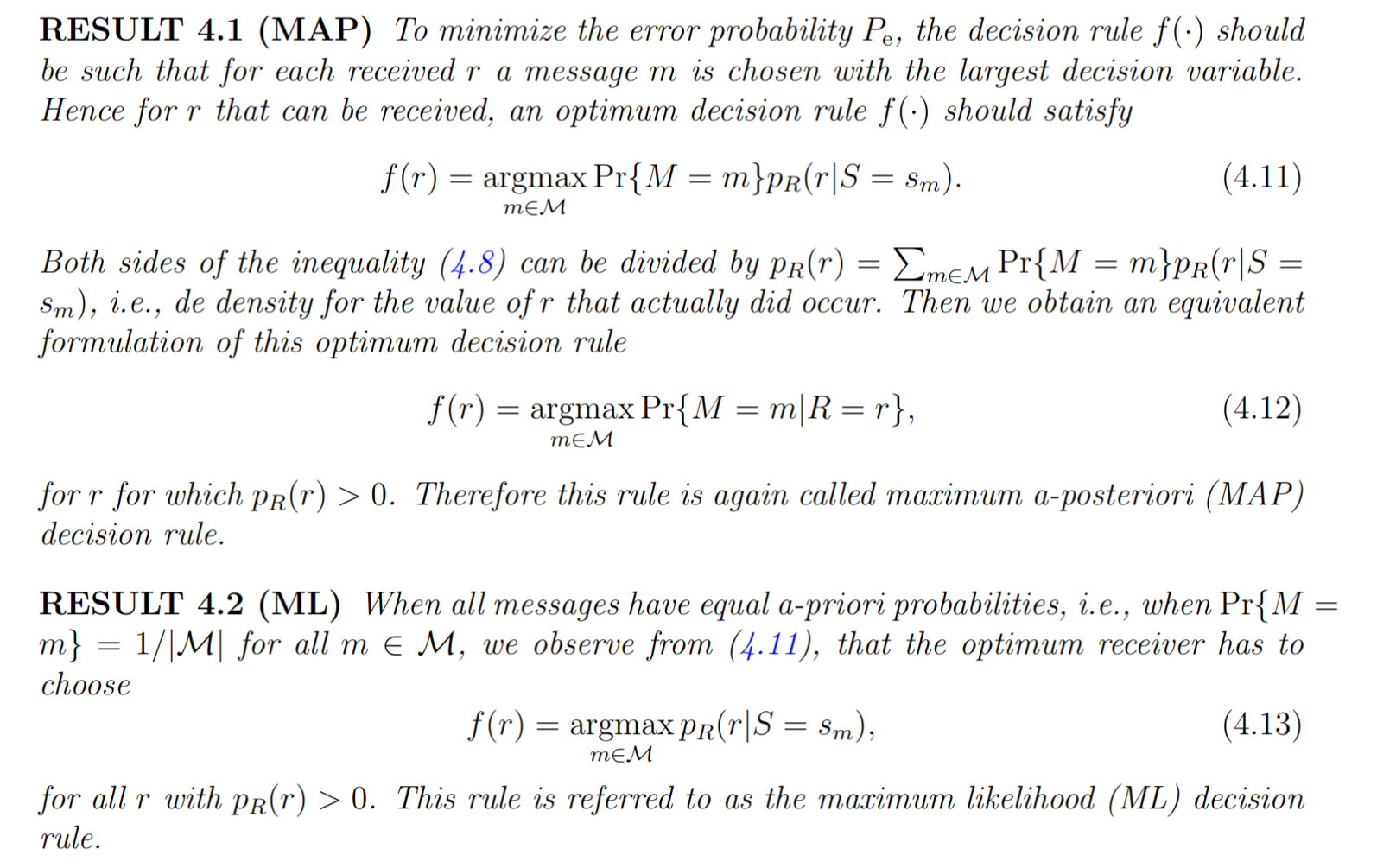
Maximum Likelihood (ML) detection is generally simpler and computationally more efficient compared to Maximum A Posteriori (MAP) detection, especially when the messages are equally likely. In such scenarios, MAP simplifies to ML because the a-priori probabilities
focuses only on maximizing the likelihood
Decision Rules for DICO Channels
Topic: Detection and Matched Filters
M4.1.pdf
square of all elements in a vector:
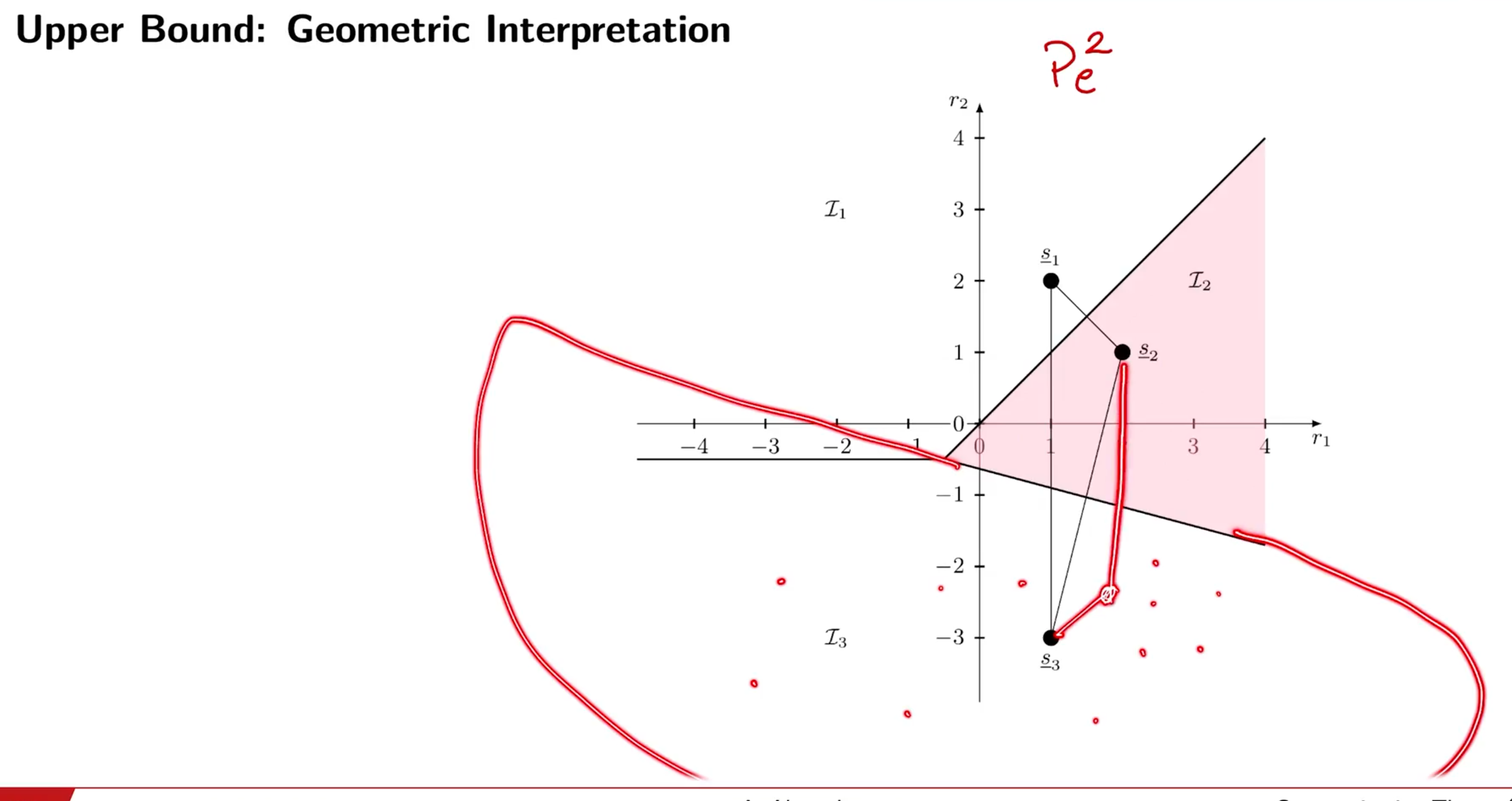
Take the union, basically find a sum of points in that area we can confirm the points are in that region by seeing that the distance between the correct and the wrong signal is different as the one that is correct is always FURTHER away.
(minimum euclidean distance decision rule)
Important Definitions
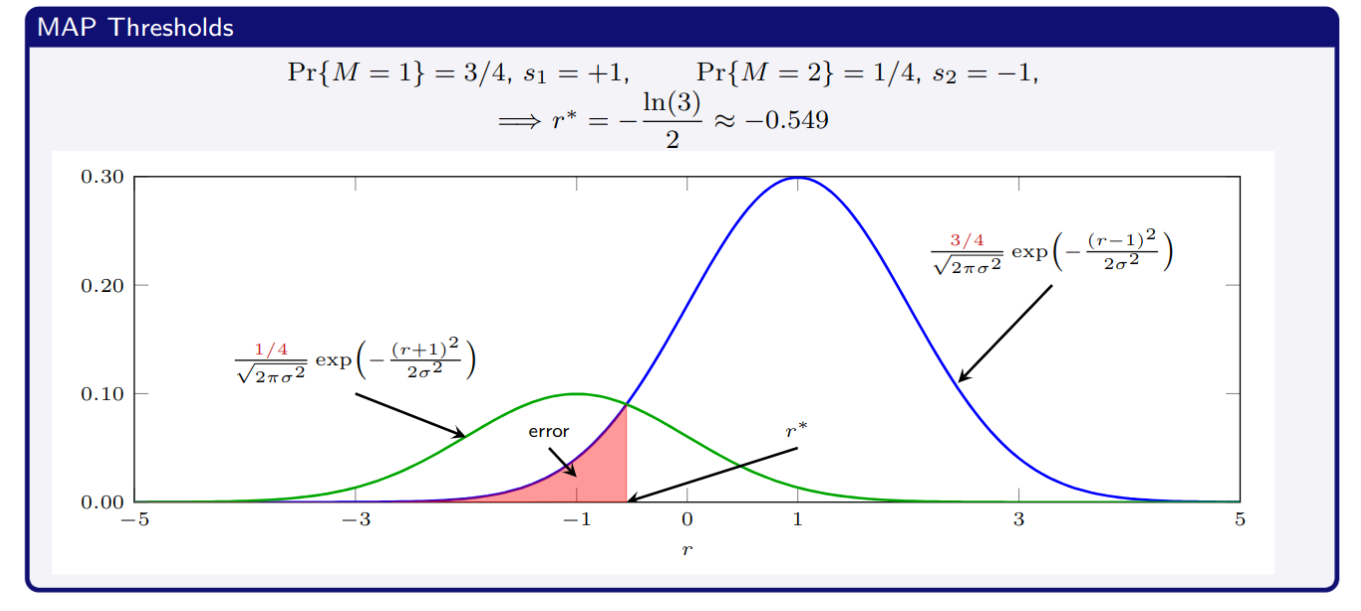
MAP Decision Rule
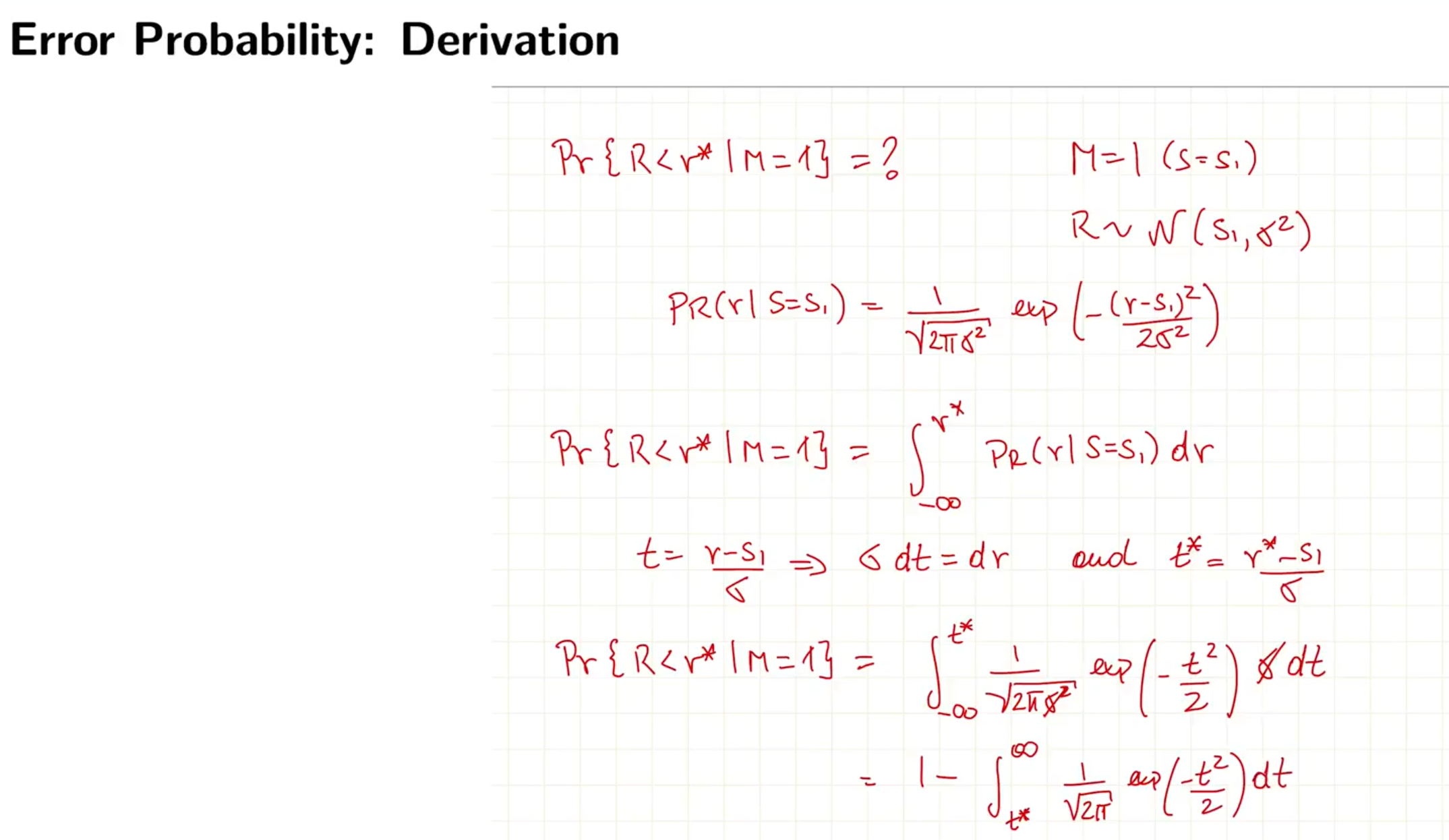
Error Probability (Scalar System)
Decision Variable (Gaussian Noise)
Threshold for Decision Rule
Error Probability for AGN Channel
Multi-Vector Channel Decision Variables
Minimum Euclidean Distance Decision Rule
Additive Gaussian Noise Channel (Vector Form)
Optimum Receiver Decision Threshold
- For a scalar bi-AGN channel, the threshold
for the optimum receiver is:
- When
, the threshold simplifies to:
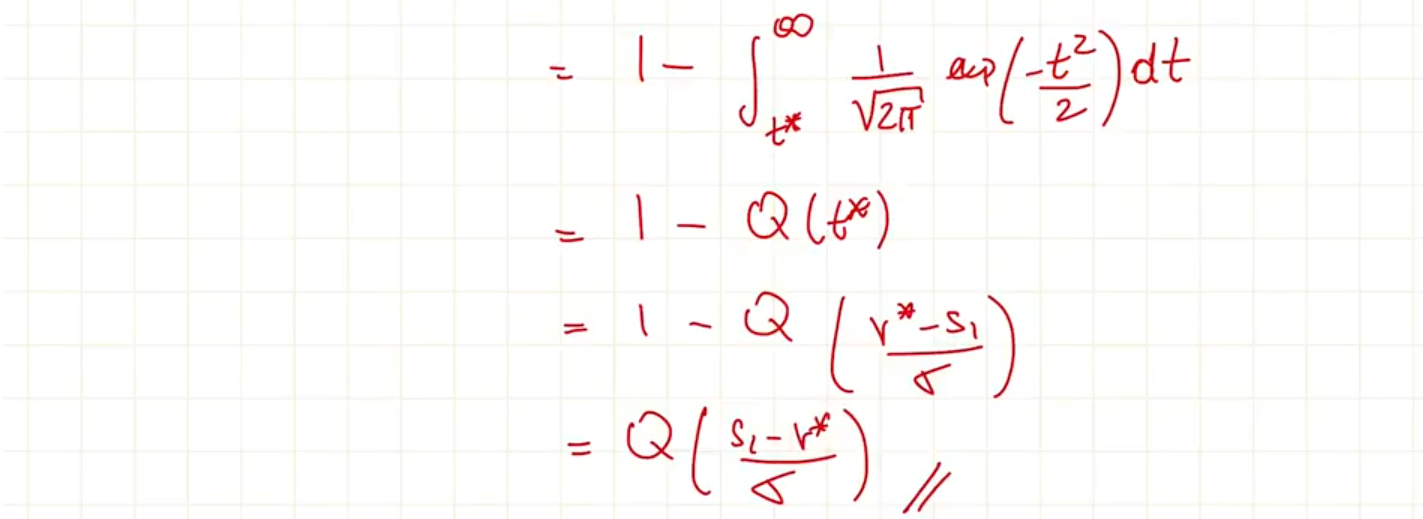
Error Probability (Scalar System)
- General formula:
Error Probability Components
-
:
-
:
Error Probability for AGN Channel
- Combining the above:
Error Probability Using Distance
- For vector channels:
whereis the half-distance between signal points.
Error Probability Upper Bound
- Upper bound using union bound:
Q-function and Properties
- Q-function definition:
- Symmetry property:
Probability of Error for a Hyperplane
- For the AGN vector channel:
whereis the perpendicular distance from the signal point to the hyperplane.
Waveform Channels
Topic: Random Signals and Power Spectral Density
M5.1.pdf
Energy of a Waveform
Orthogonality of Waveforms
Synthesis of Waveforms
Recovery of Signal Vector
Additive Noise in Signal Vector
Vector Representation of Noise
Relevant Noise Covariance
Signal Space Projection
Gram-Schmidt Process (See Question 5.1)
Step 1: Define the First Basis Function
Step 2: Define the Auxiliary Signal for Subsequent Functions
where
Step 3: Compute Energy of Auxiliary Signal
Step 4: Define the New Orthogonal Basis Function
Step 5: Express Each Signal in Terms of Basis Functions
see 5.1.c for a different distance based approach
see 5.4 and 5.7 for an intuition on gram-schmidt process
Receiver Implementation, Matched Filters
Topics: Filters · Detection and Matched Filters
M6.1.pdf
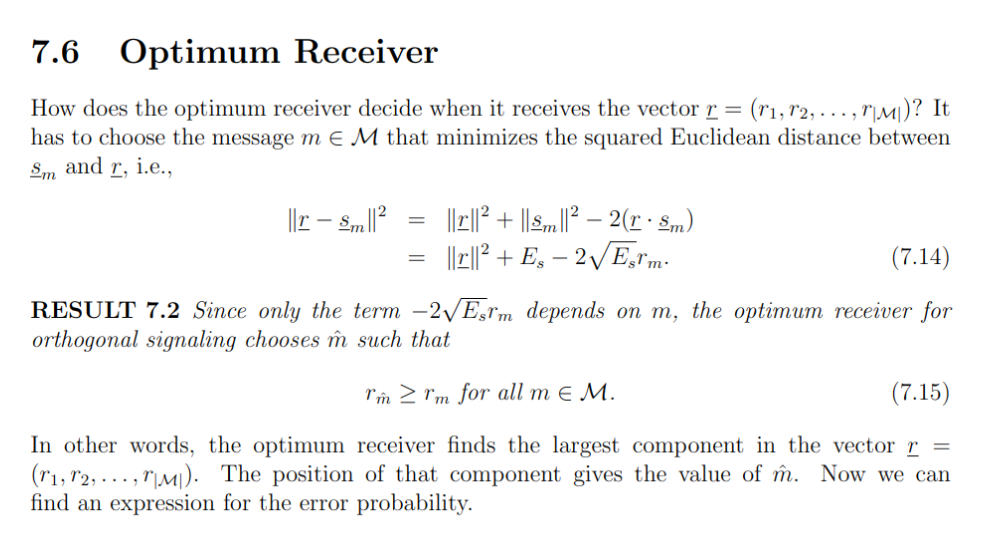
16 messages → 16 filters needed (needed same amount as messages)
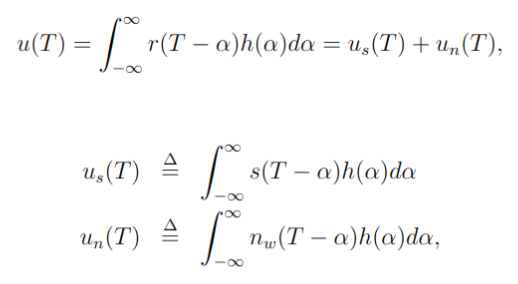
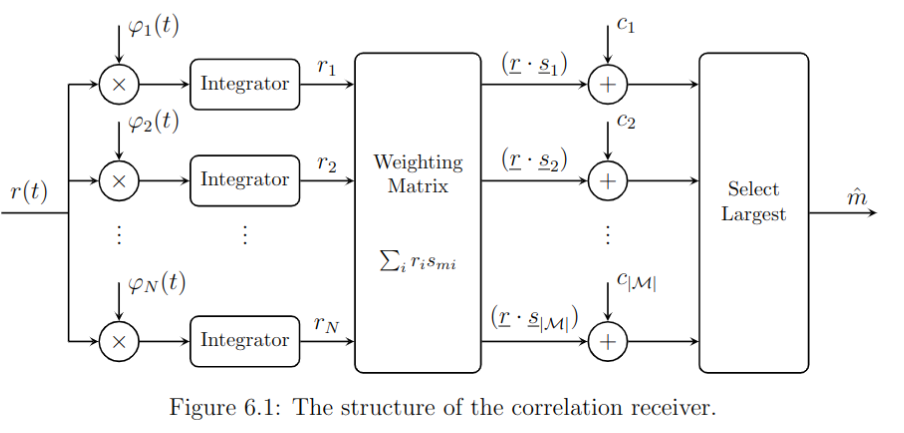
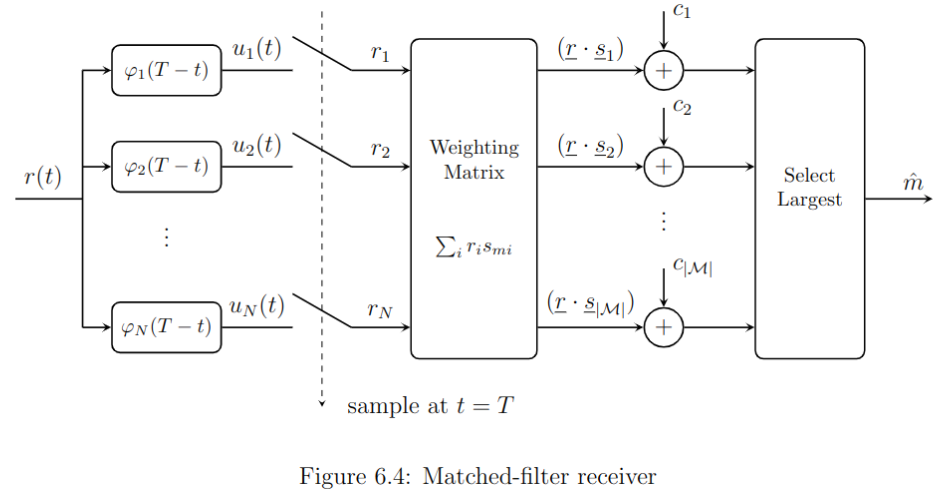
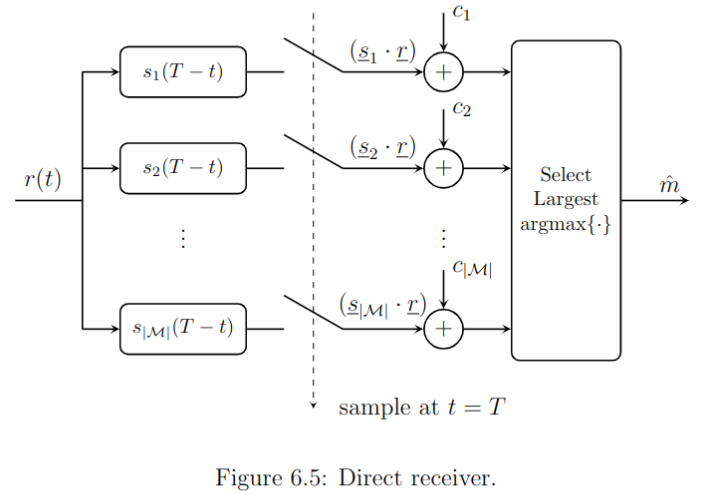
Signal Energy Considerations, Orthogonal Signals
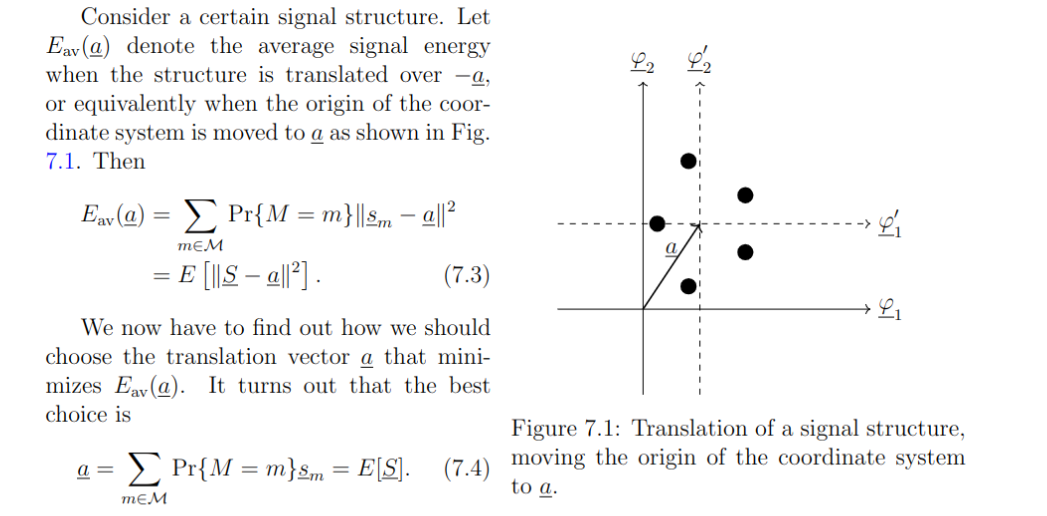
Translation and rotation of signal structures maintain the signal energy
Average energy:
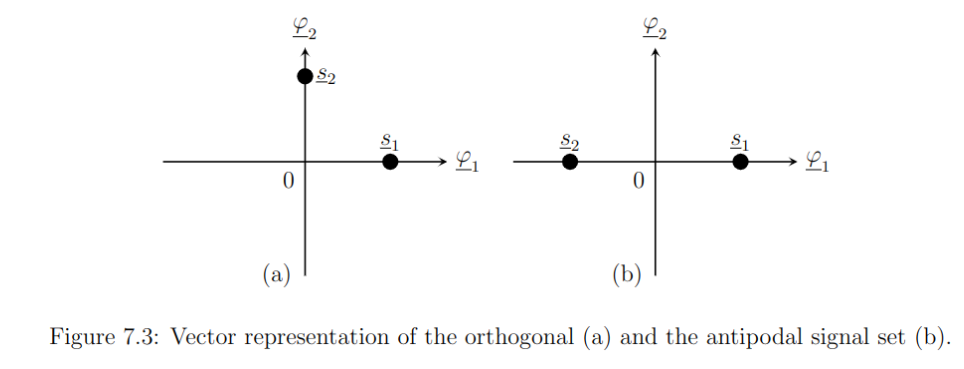
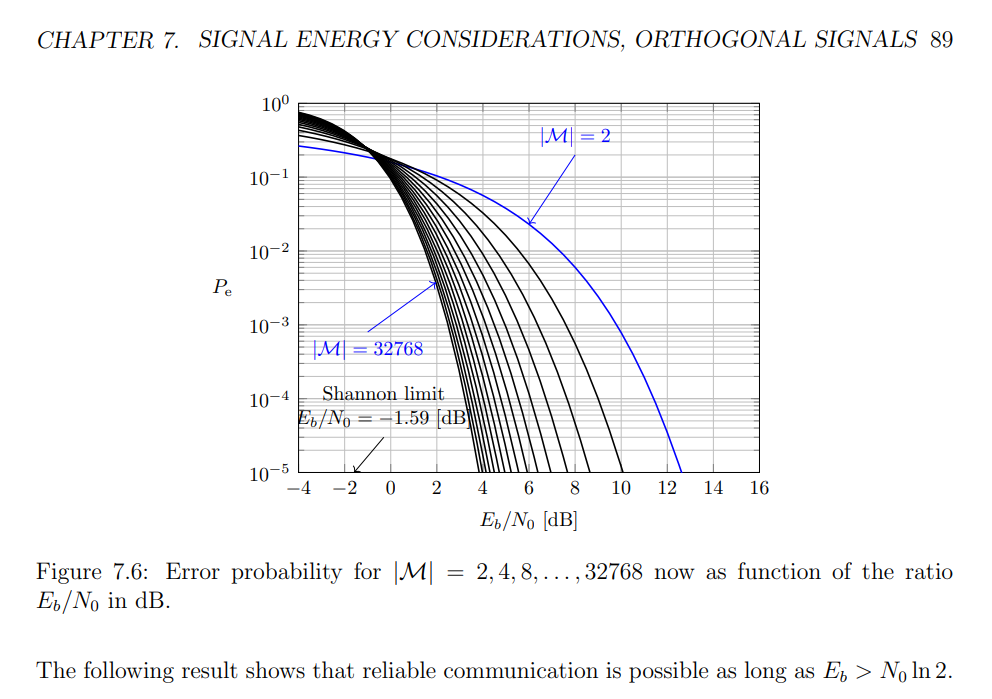
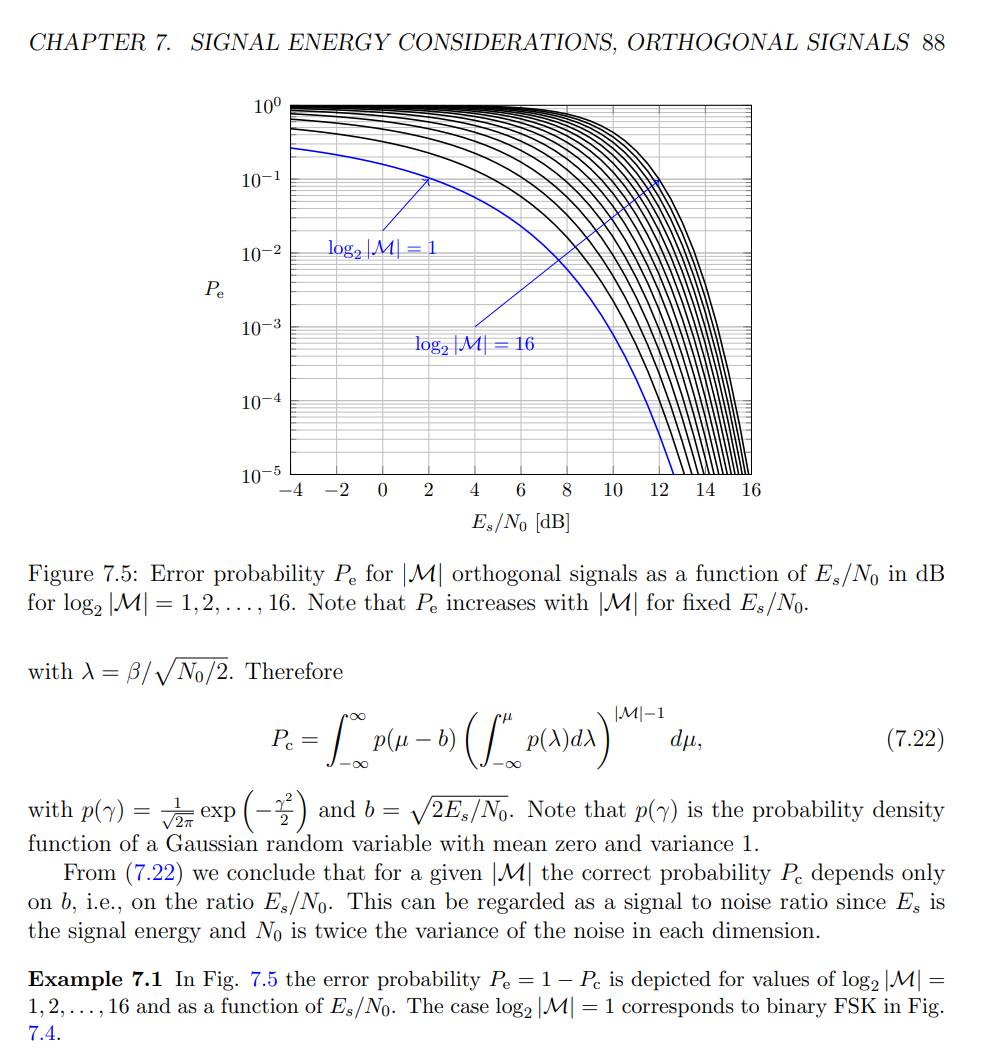
Binary Orthogonal vs. Binary Antipodal Signals: - For binary orthogonal signaling, the error probability under AWGN is
Antipodal signaling is more energy-efficient than orthogonal signaling in the binary case.
Message Sequences, Bandwidth
Topic: Digital Signaling and Pulse Shaping
M8.1.pdf
Capacity of the Baseband and Wideband Channels
Topic: Channel Capacity
M9.1.pdf
Pulse Transmission
Topic: Digital Signaling and Pulse Shaping
M10.1.pdf
Pass-Band Channels
Topic: Modulation
M11.1.pdf
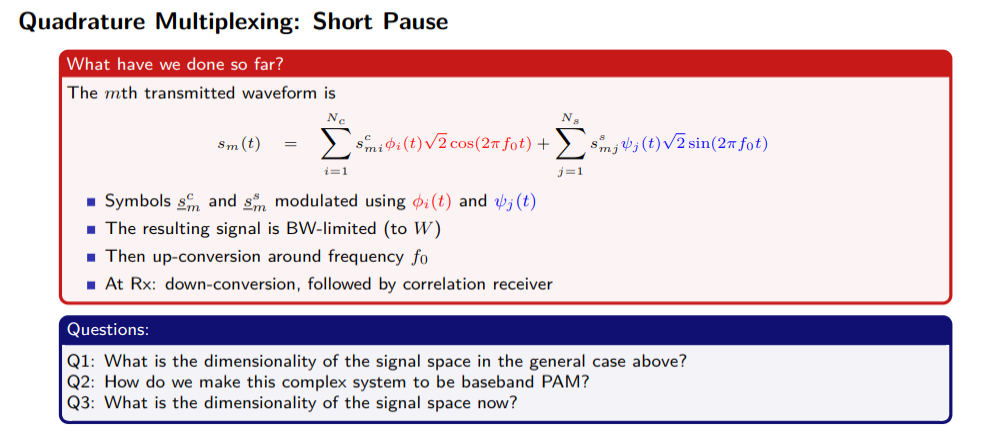
Q1:
Q2: Set frequency
Q3: 1
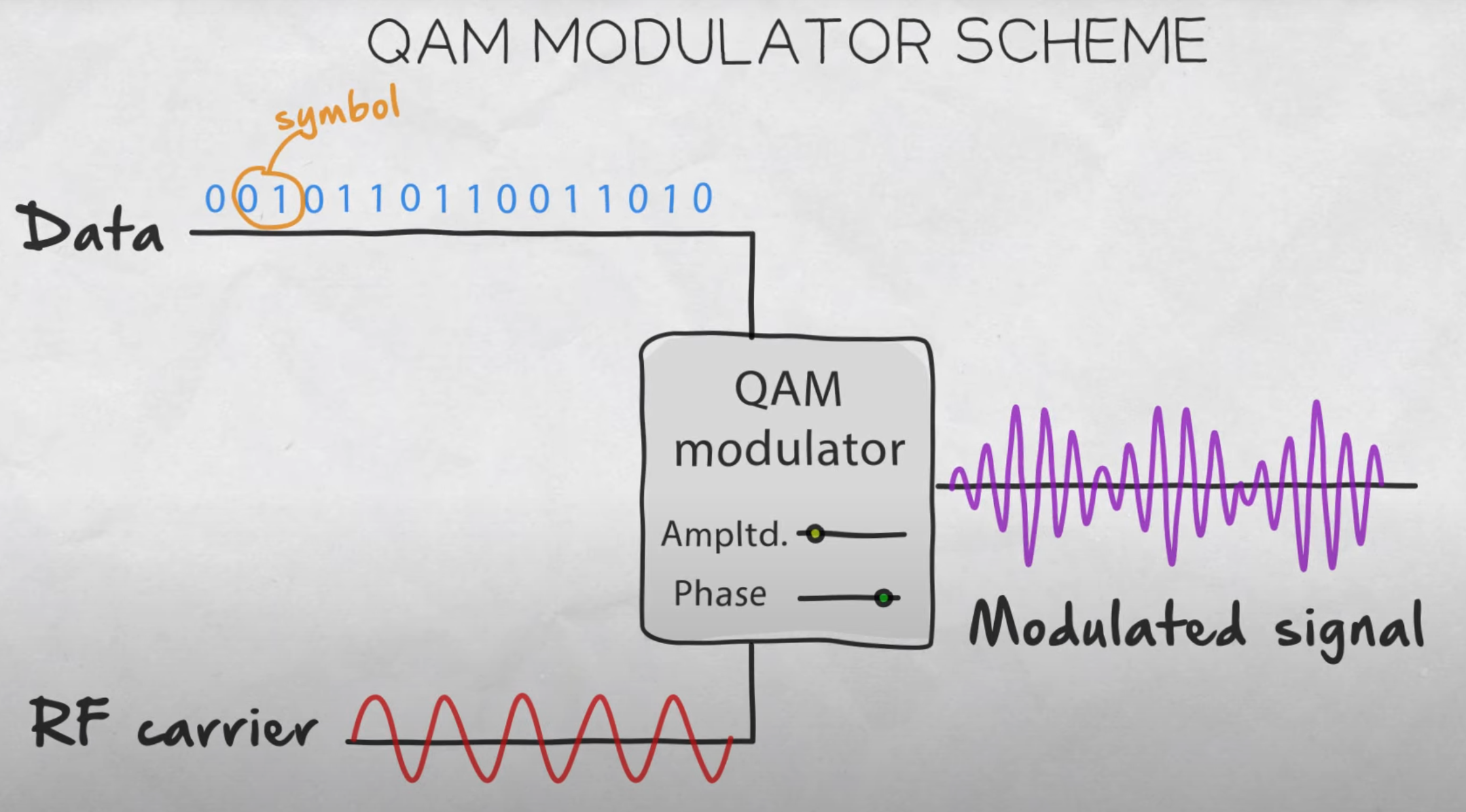
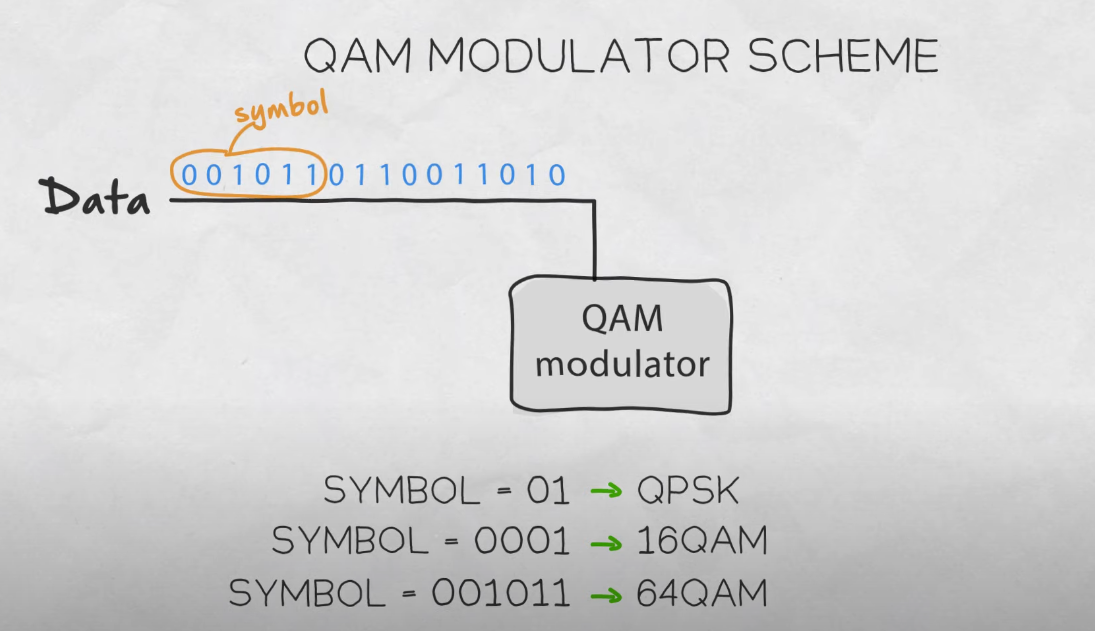
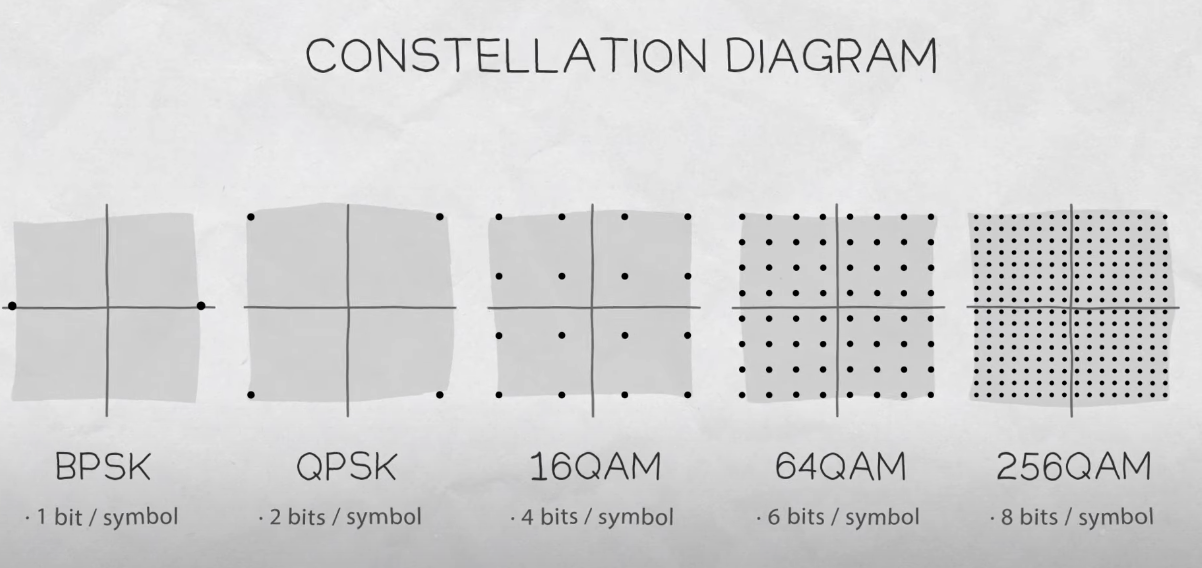
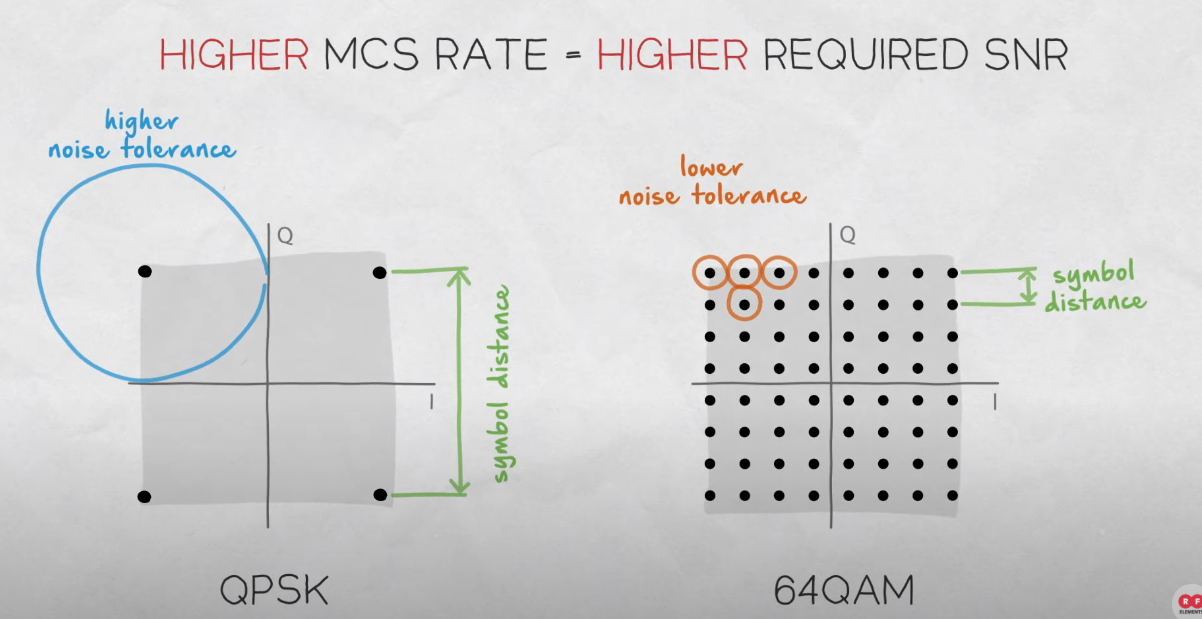
Inside Wireless: QAM modulation (Quadrature Amplitude Modulation) - YouTube
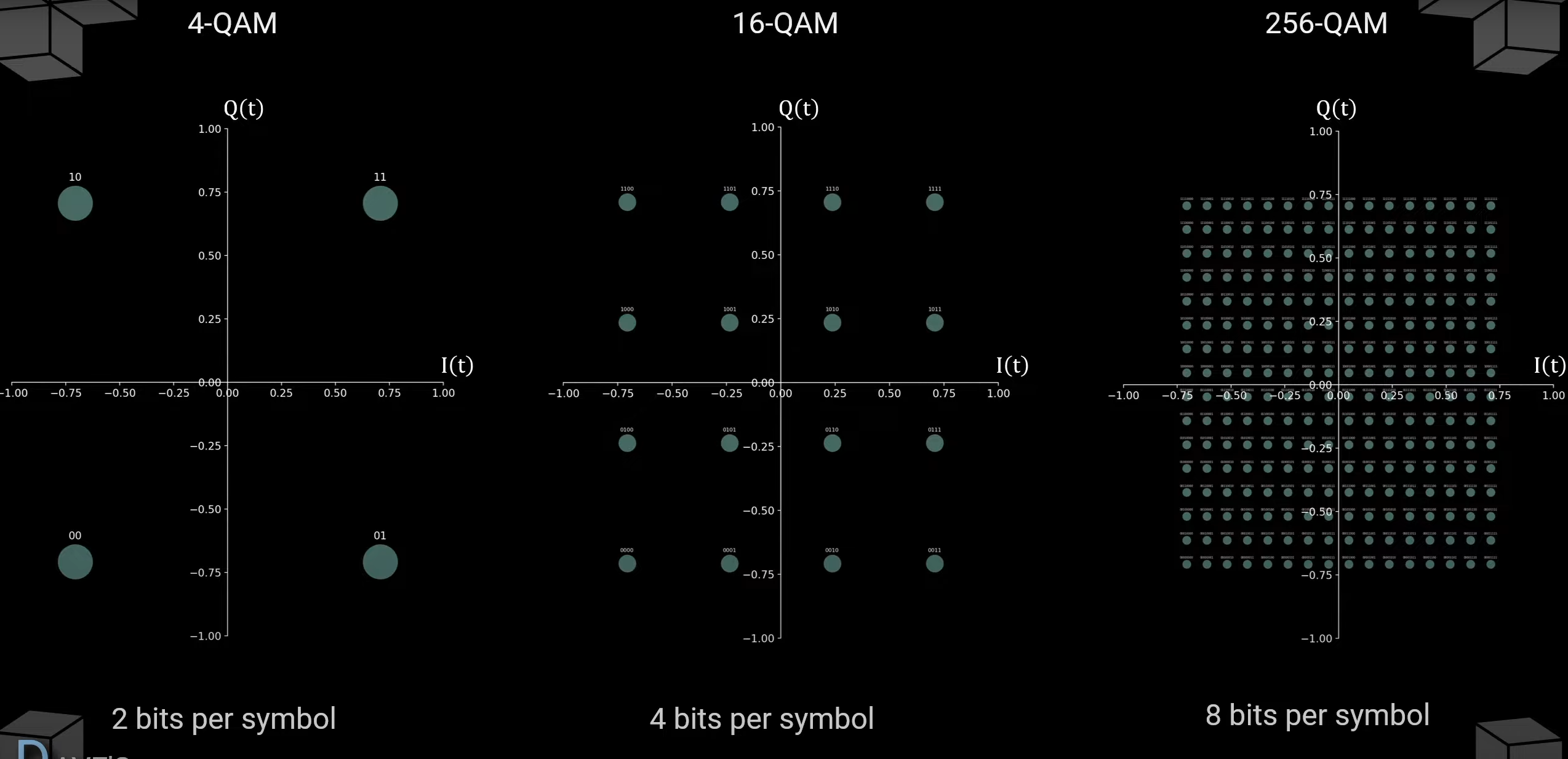
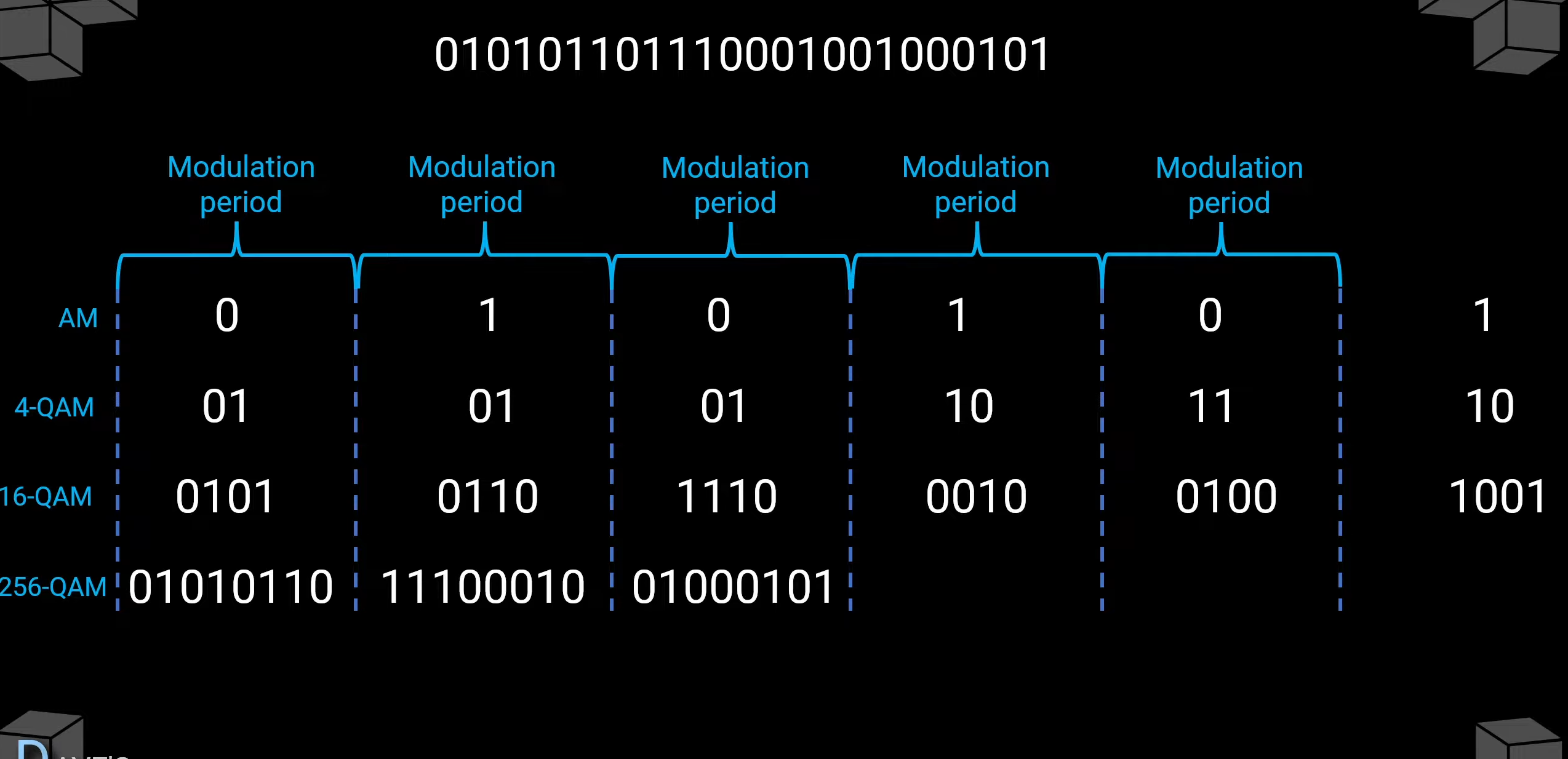
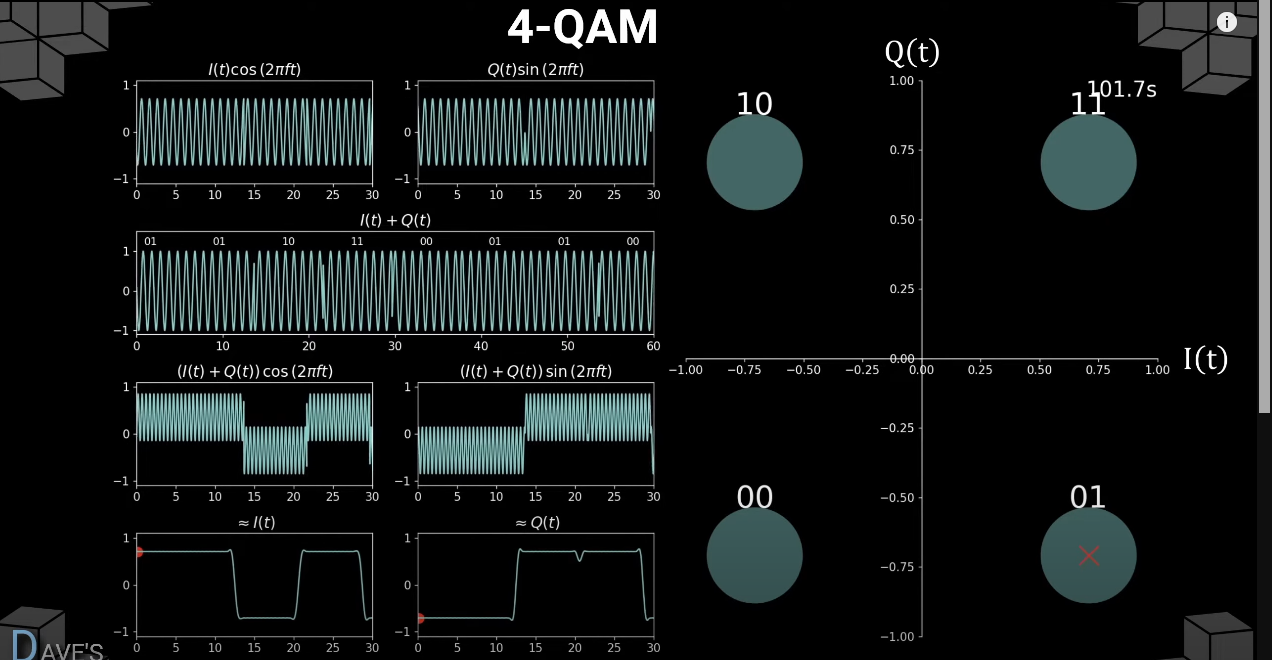
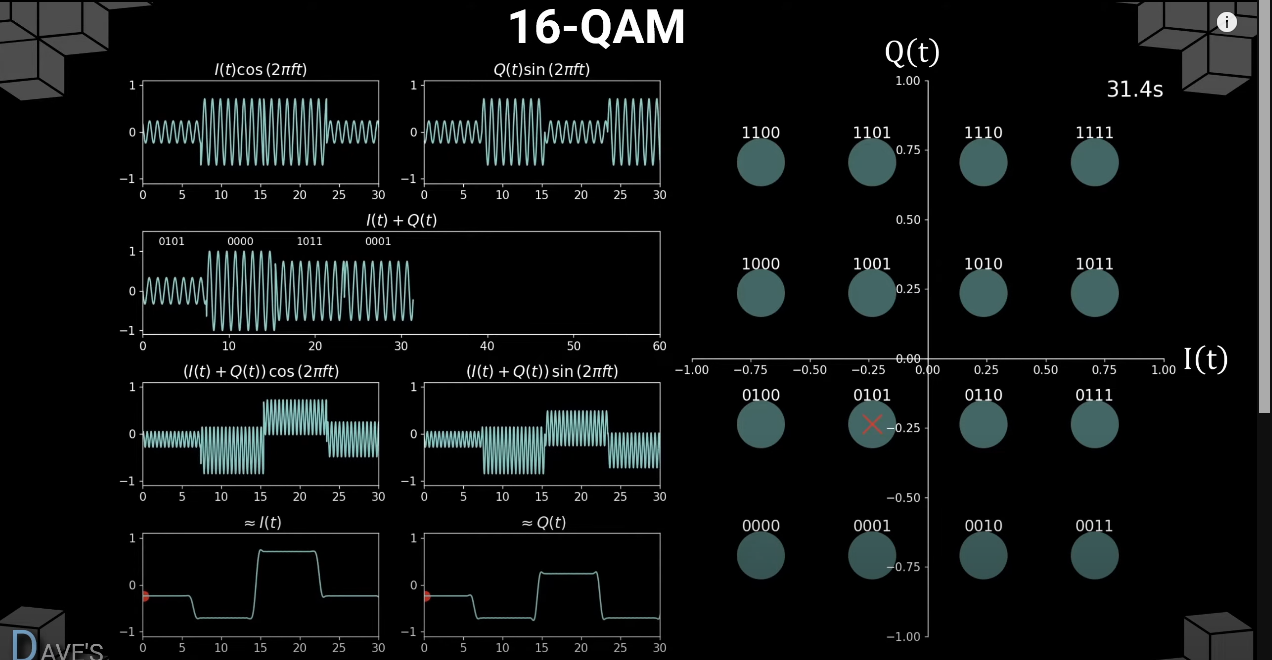
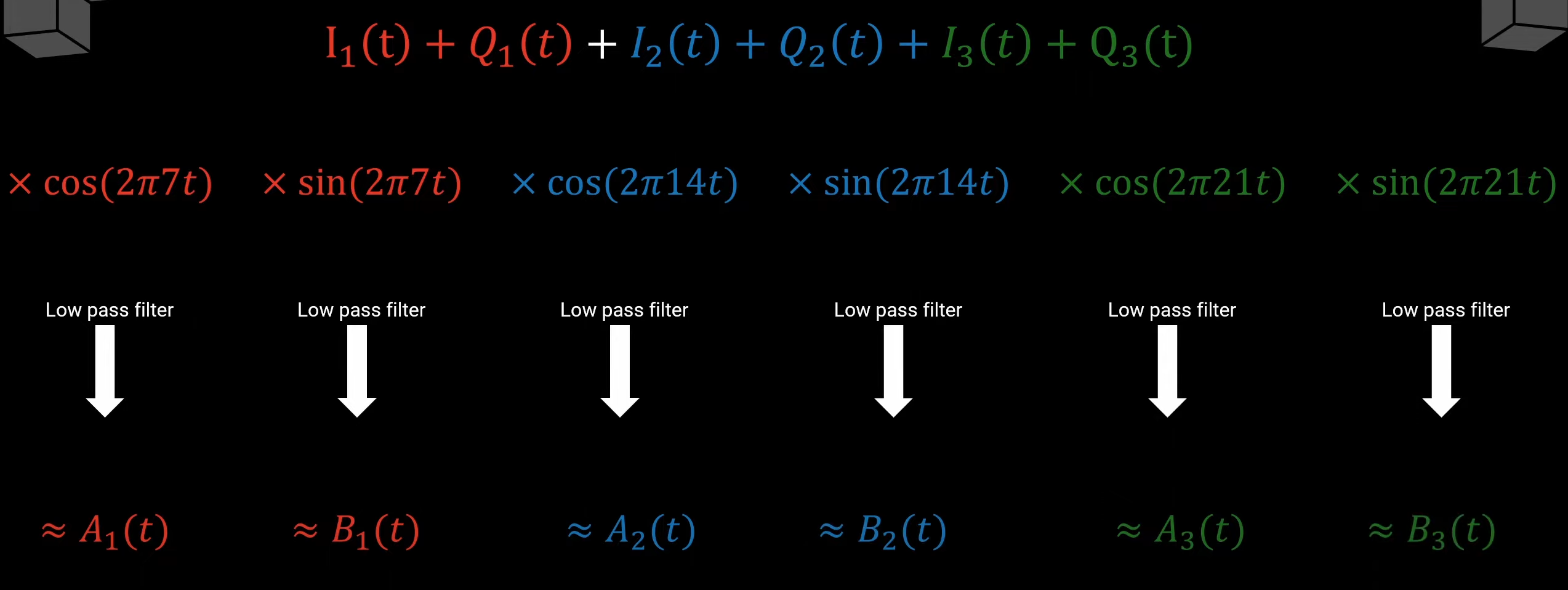
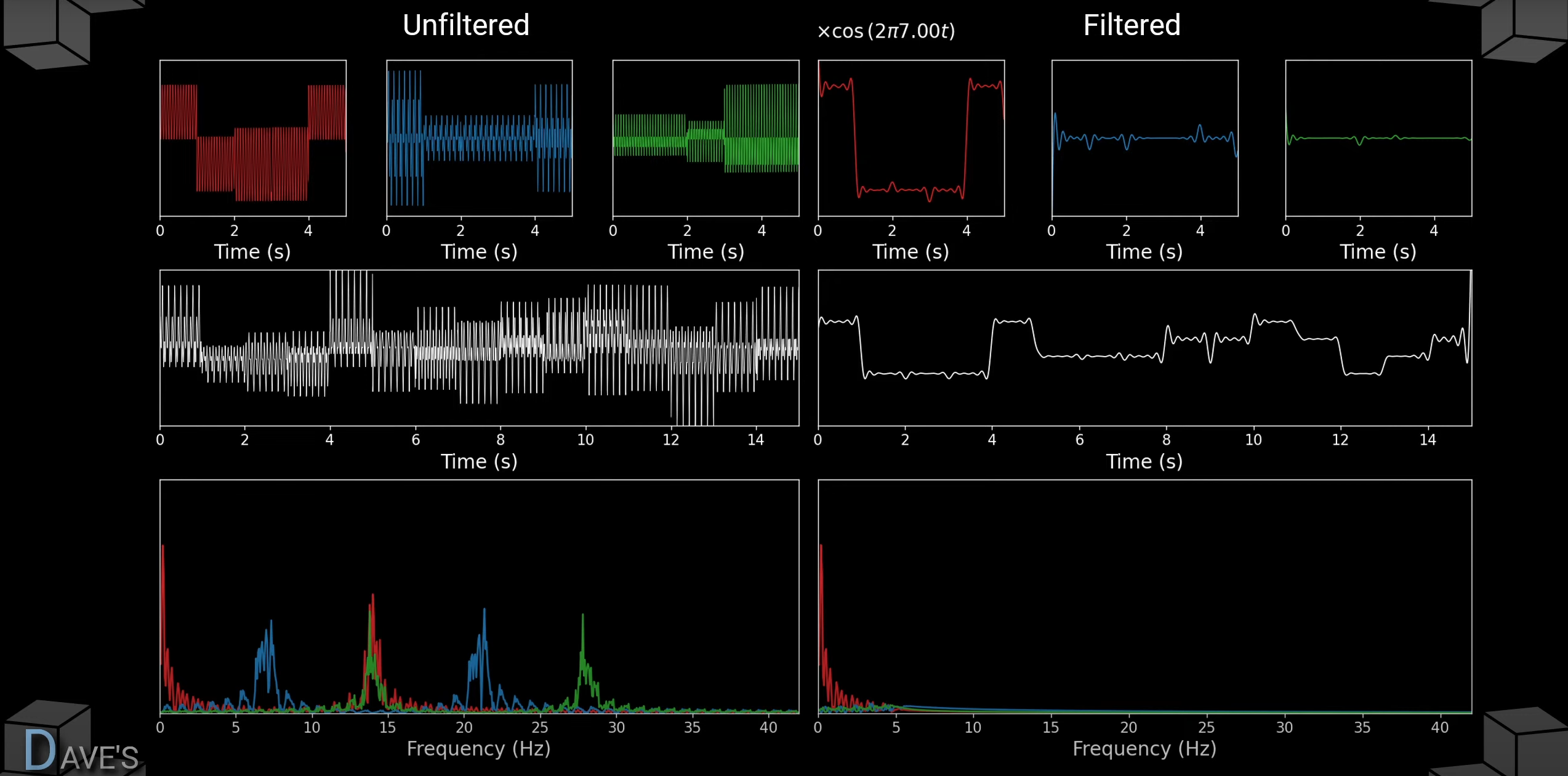
Quadrature Amplitude Modlation (QAM): Explained - YouTube
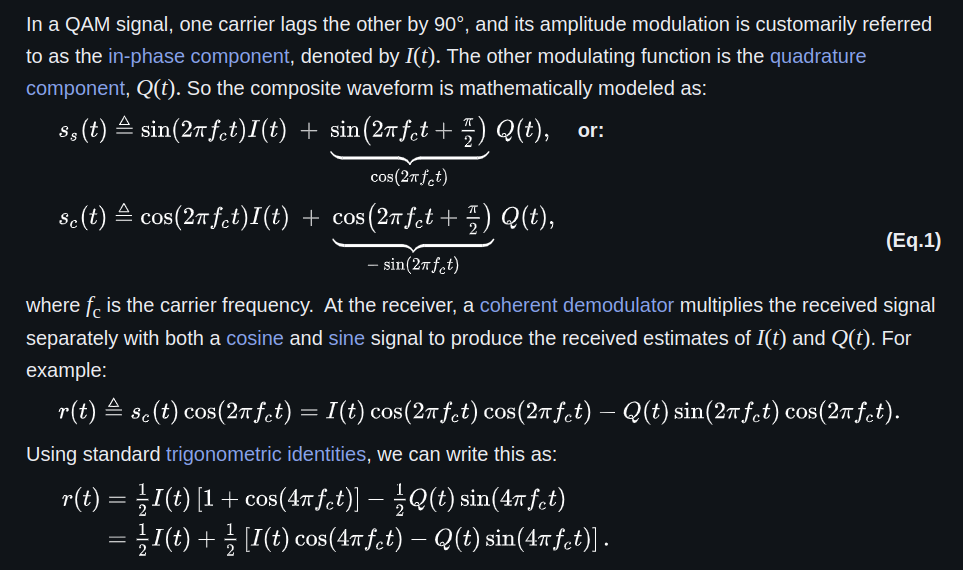
Quadrature amplitude modulation - Wikipedia
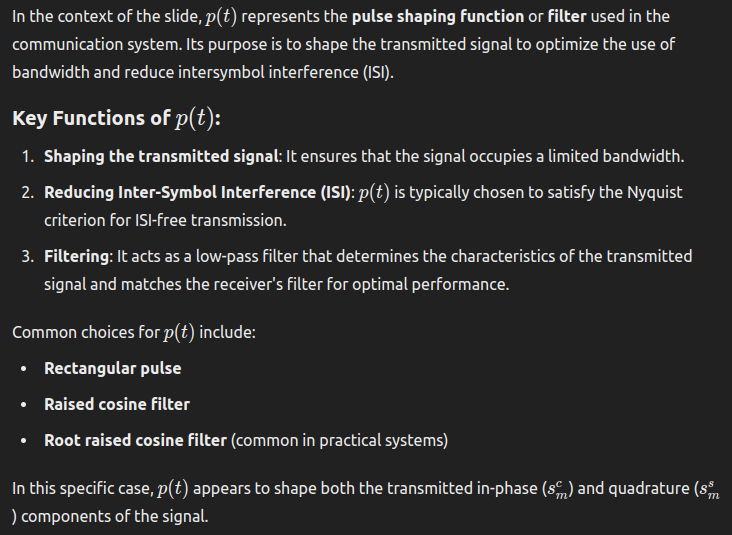
What You Need to Know about Wideband Signal Analysis
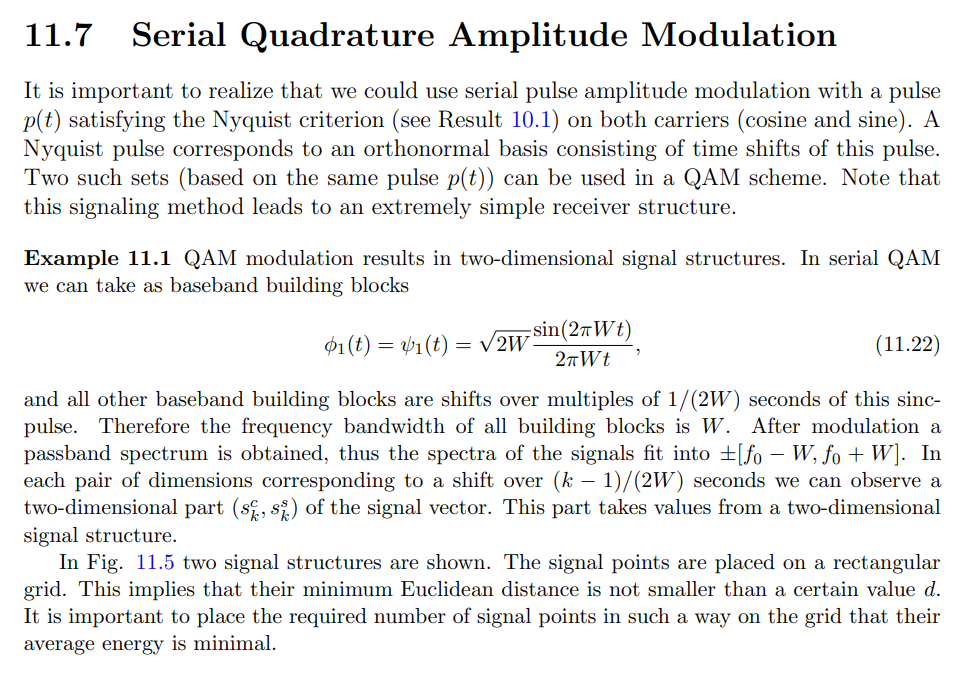
Random Carrier-Phase
Topic: Modulation
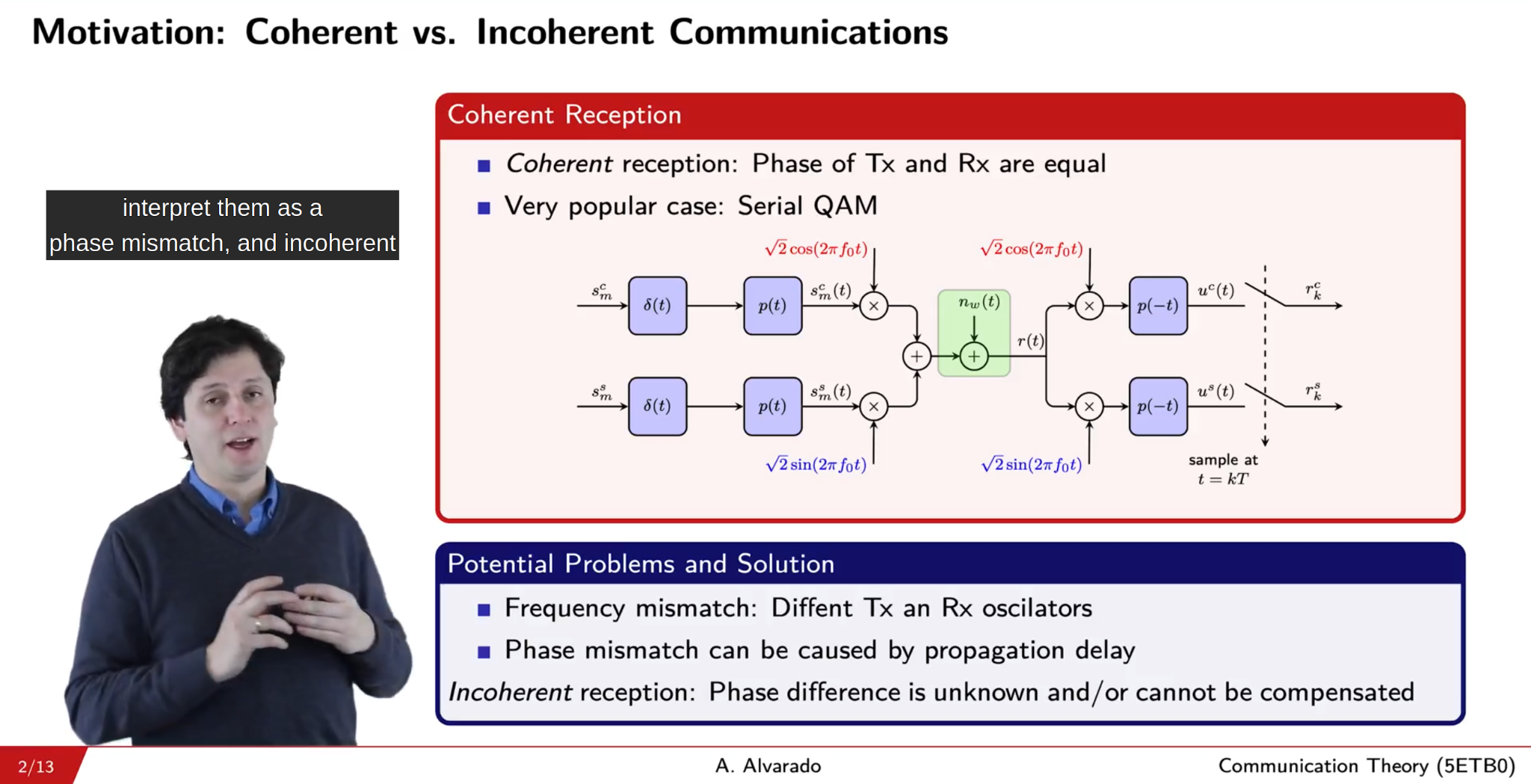
coherent vs incoherent reception: no knowledge of

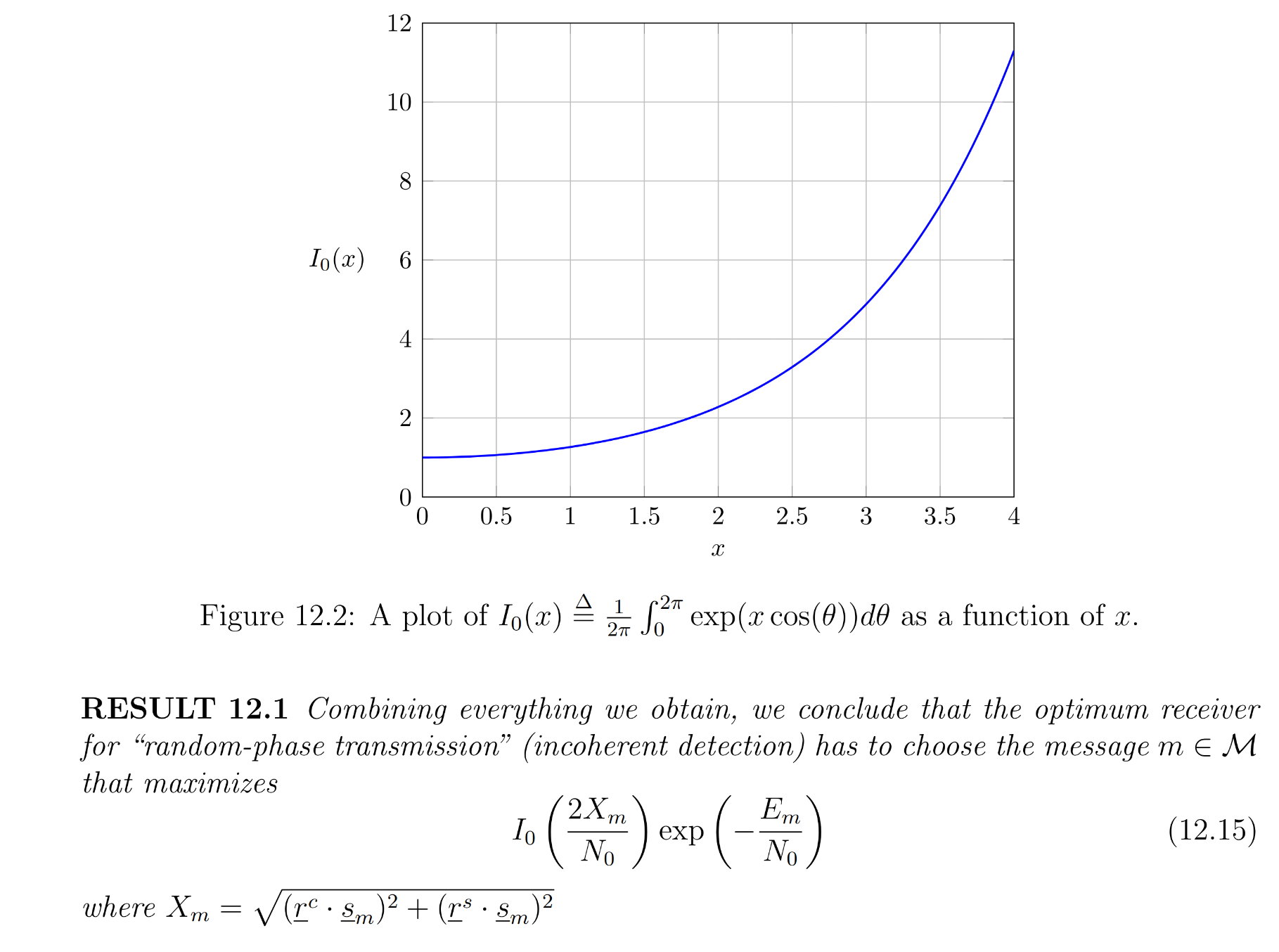
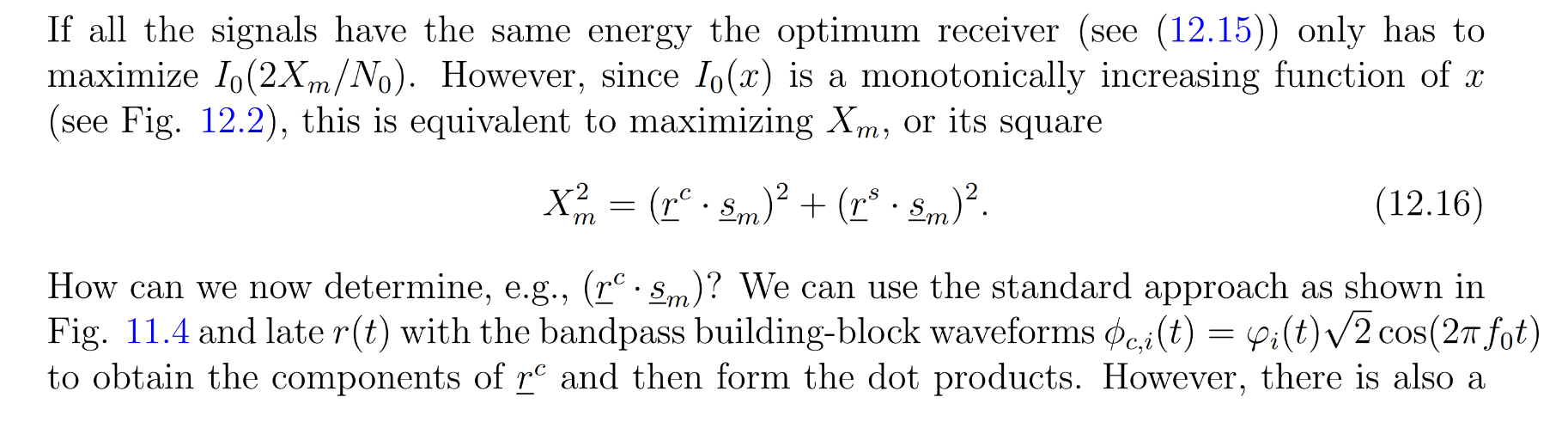
optimum incoherent reception (and when equal energy)
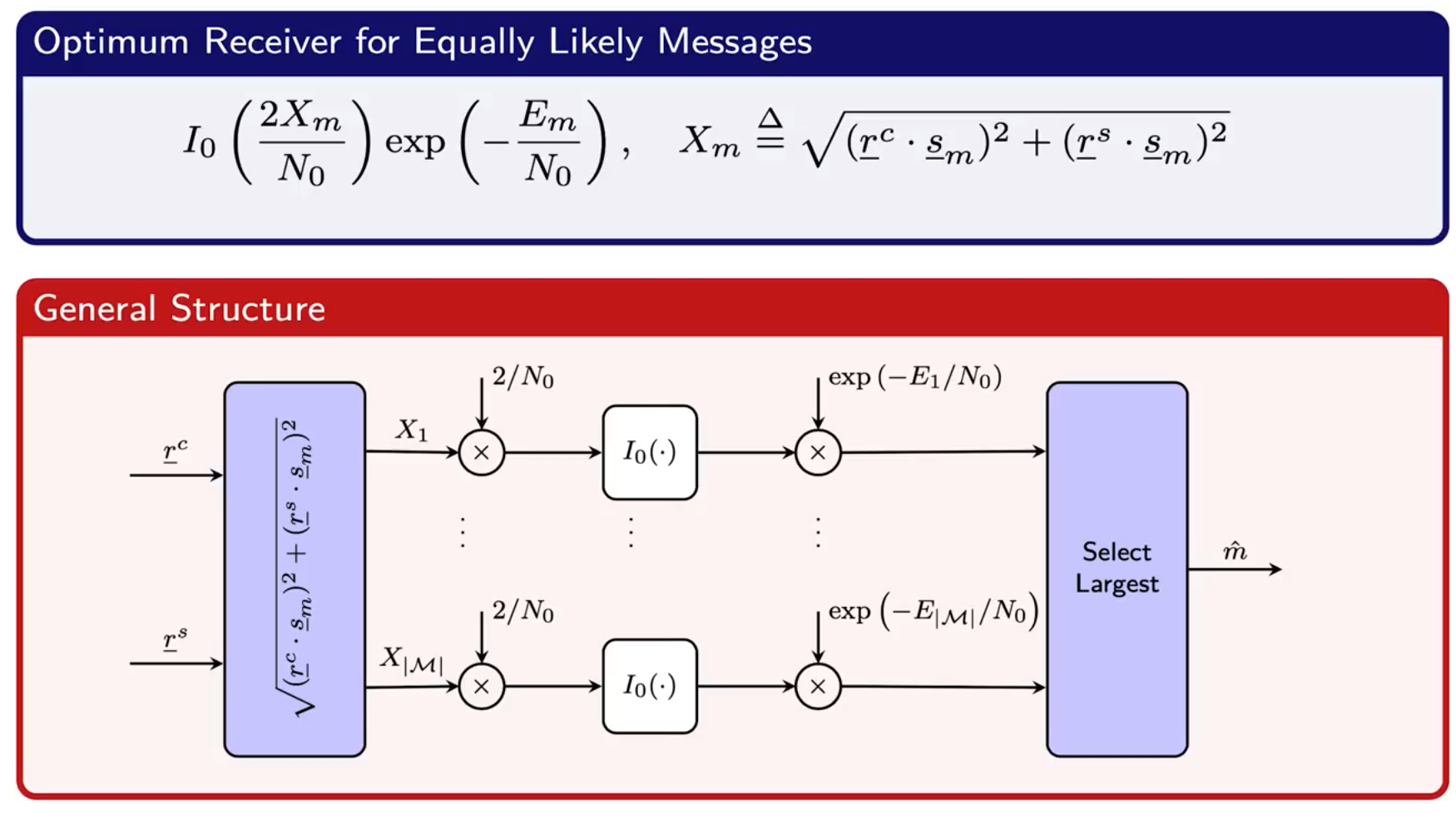
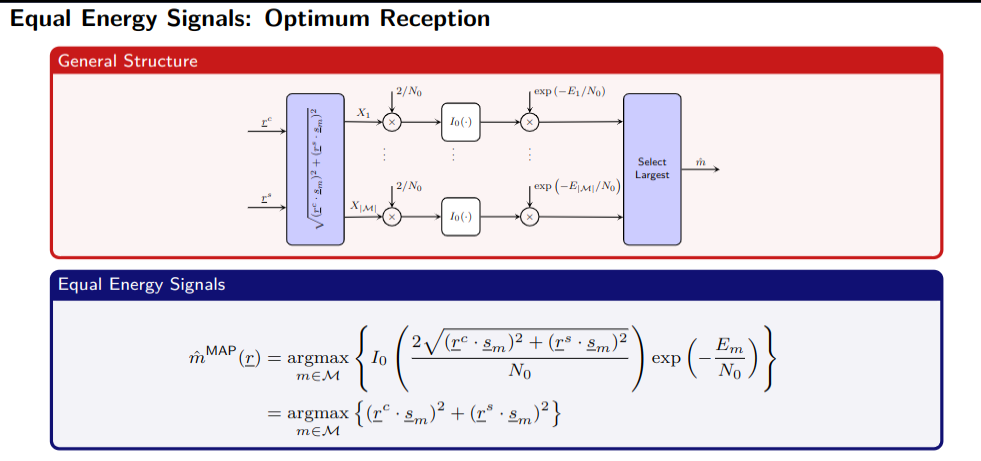
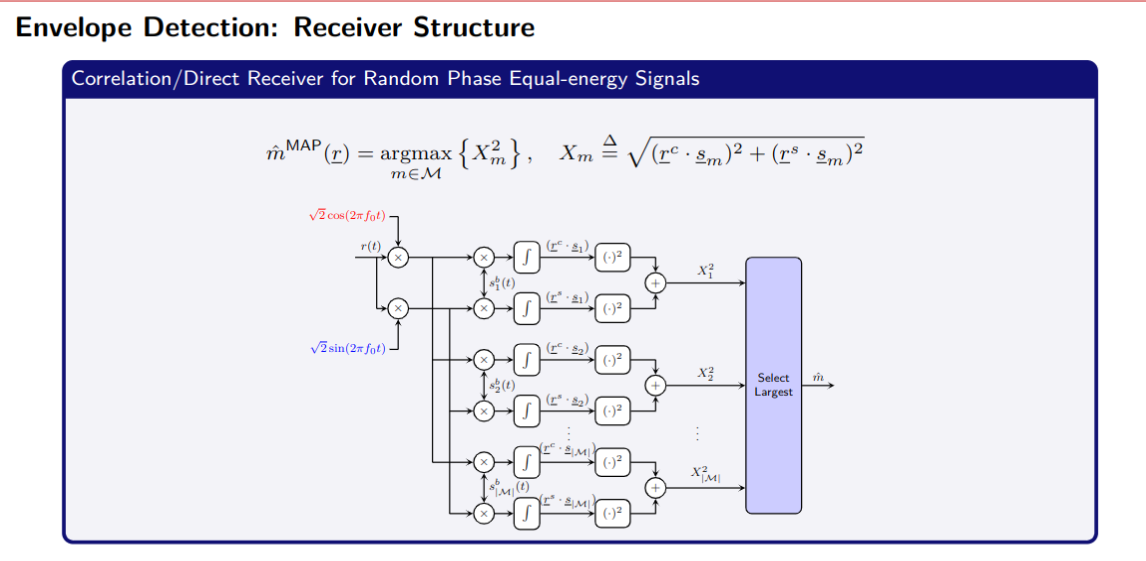
envelope simplified representation
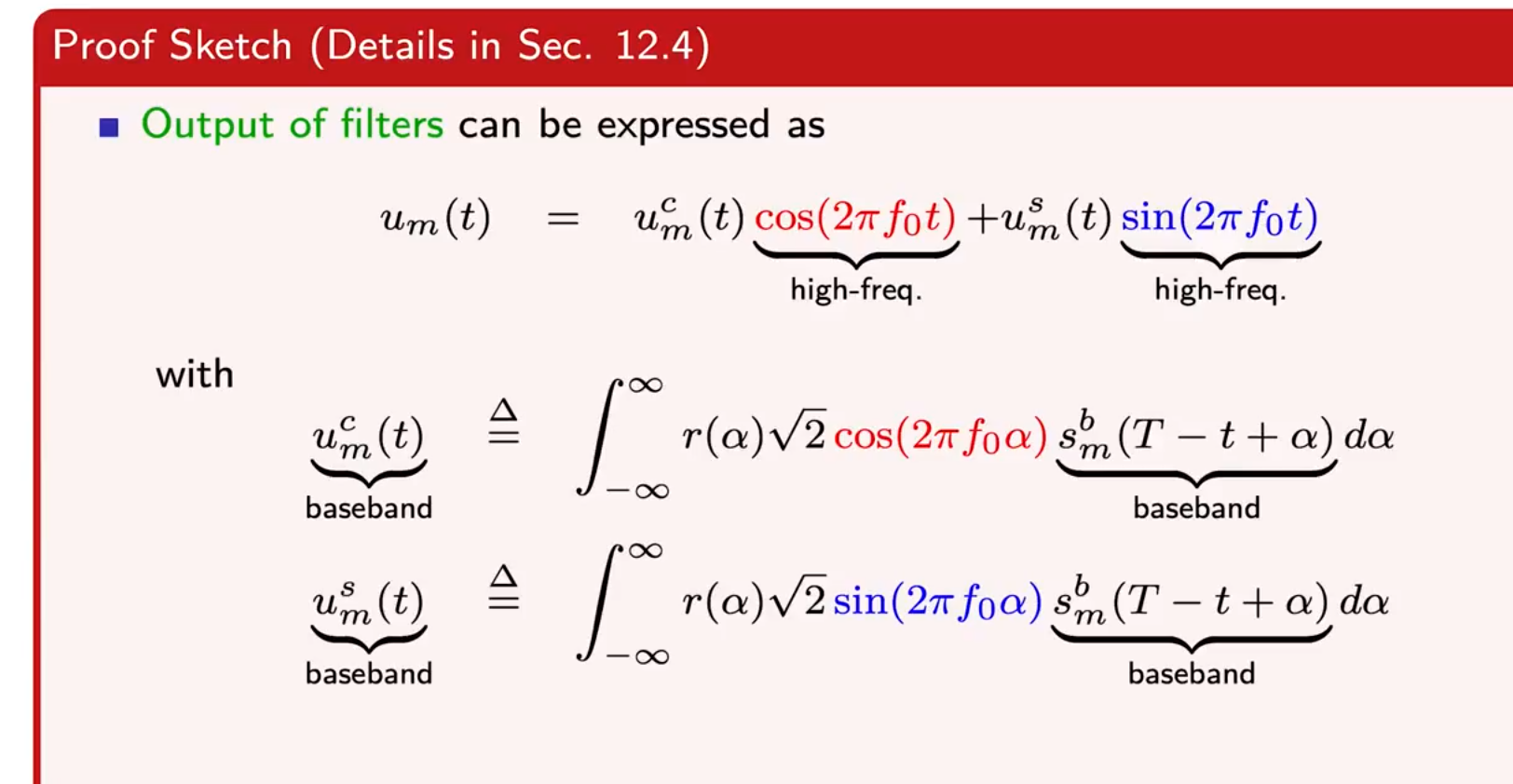
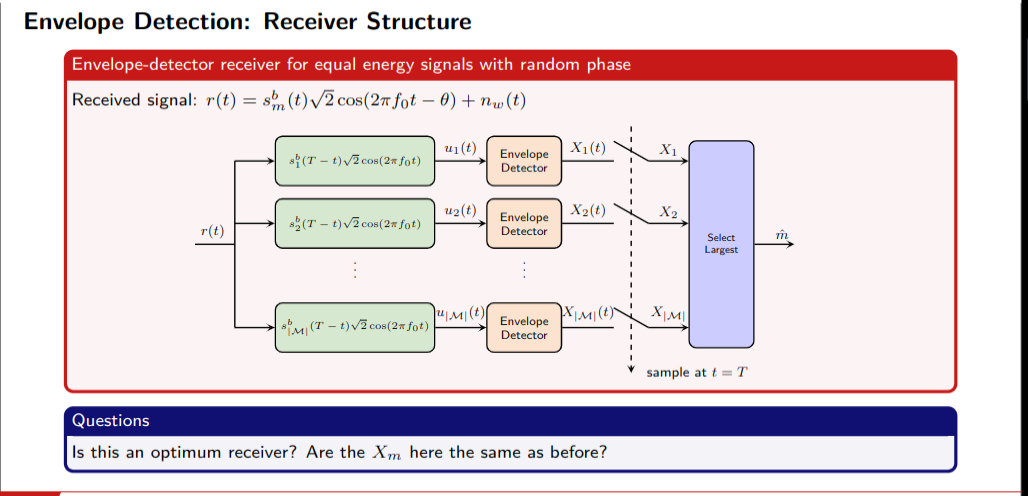
the green box the linear filter is a basically a mix of baseband and passband(carrier) signals.
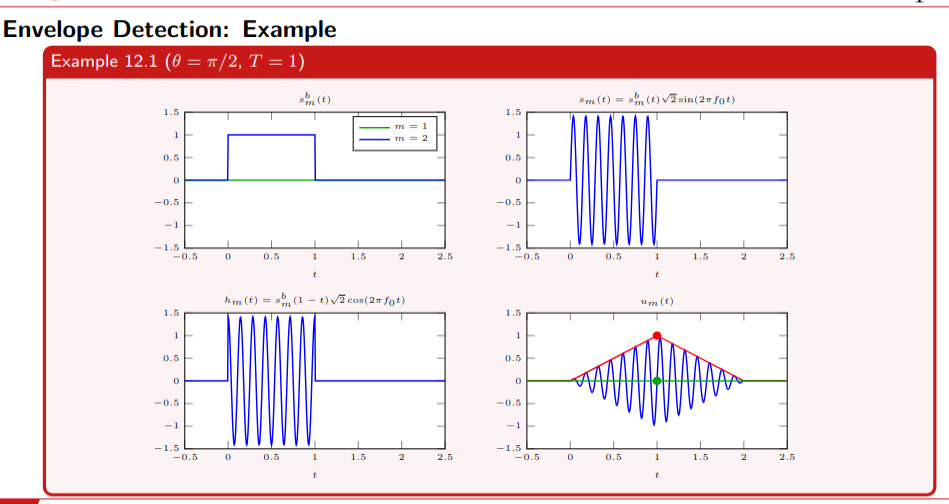
i. we have a binary message, ii. vector representation of the received signal in the time domain, iii. linear filter: invert + delay, iv: what you get out of the linear filter, v: then you get the envelopes, and now you can optimally detect messages (receive something close to 1 then message 2 and if close to 0 then message 1).
If message 1 if just inverted of message 1: would be identical to
only orthogonal signaling possible…
Nice to knows
signal like this can be split in the following way:
where:
- Message component:
encodes the actual data. - Building block:
structures the signal in time, shapes it in frequency and minimizes the inter-symbol interference. - Carrier component:
modulates the signal to the desired transmission frequency while preserving orthogonality between in-phase and quadrature components.
Invited Lecture
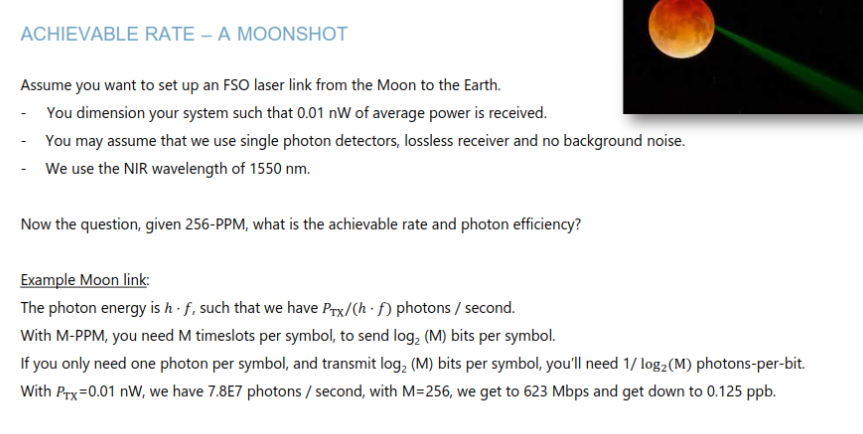
5ETB0_Invited_Lecture_Optical_Satellite_Communications.pdf
-
Satellites operate on RF band → could be a problem?
-
Infrared c-band spectrum → allows a much larger bandwidth that classic RF like FM or 5G MMWAVE BAND.
- Sat RTT: 46ms and
- Great circle fibre: 55ms → takes longer over long distance than satellite.
- free space optical communication is better over long distance than RF.
FSO vs RF
proportional to:
Example: Ka-band vs FA
with RF Ka-band (30GHz) vs FSO C-band (193 THz).
This gives about 75 dB gain in receive power for FSO over RF.
Assuring antenna
objective of communication networks:
- throughput
- reliability
- high-availability
- low-latency
minimizing:
- cost per bit
- bandwidth / wavelength
- power/safety
- form factor (size/weight)
- complexity of the system
UP link: diversity gain: temporal diversity, spatial diversitty, site diversity, frequency diversity.