5XTB0 Photonics
- Area: Electromagnetics and Waves
- Topics: Semiconductors and PN Junctions · Maxwell Equations · Plane Waves and Reflection · Waveguides
- Related courses: Electromagnetics II - 5EPB0 · Electronics I - 5ECB0
Quantities and Units of Light (Ch 1,2)
Electromagnetic Spectrum
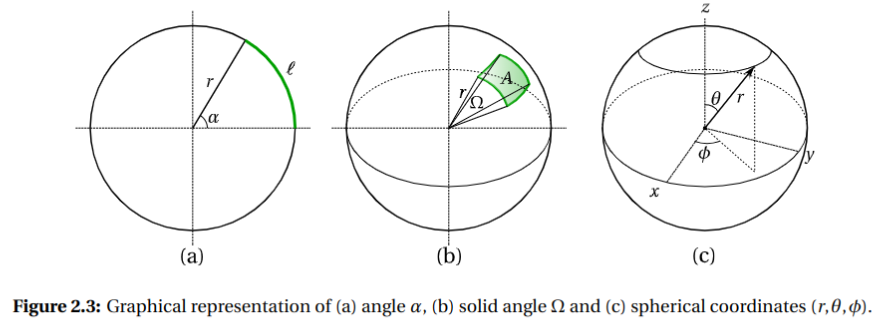
Basic Units
Solid Angle
Energetic Quantities
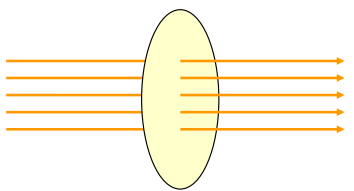
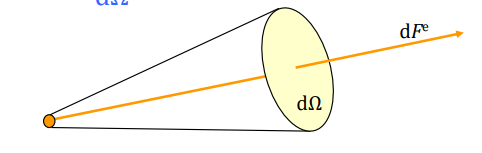
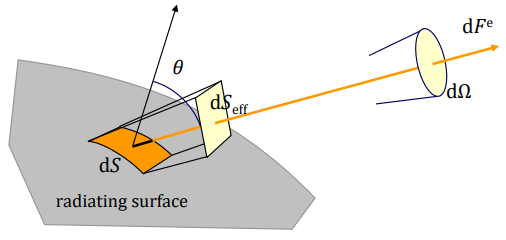
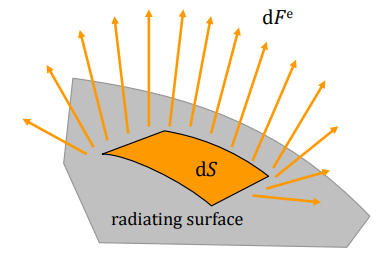
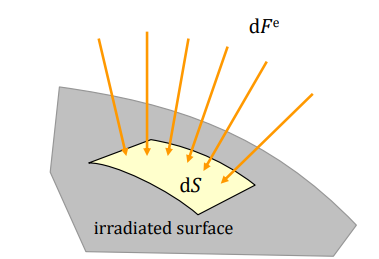
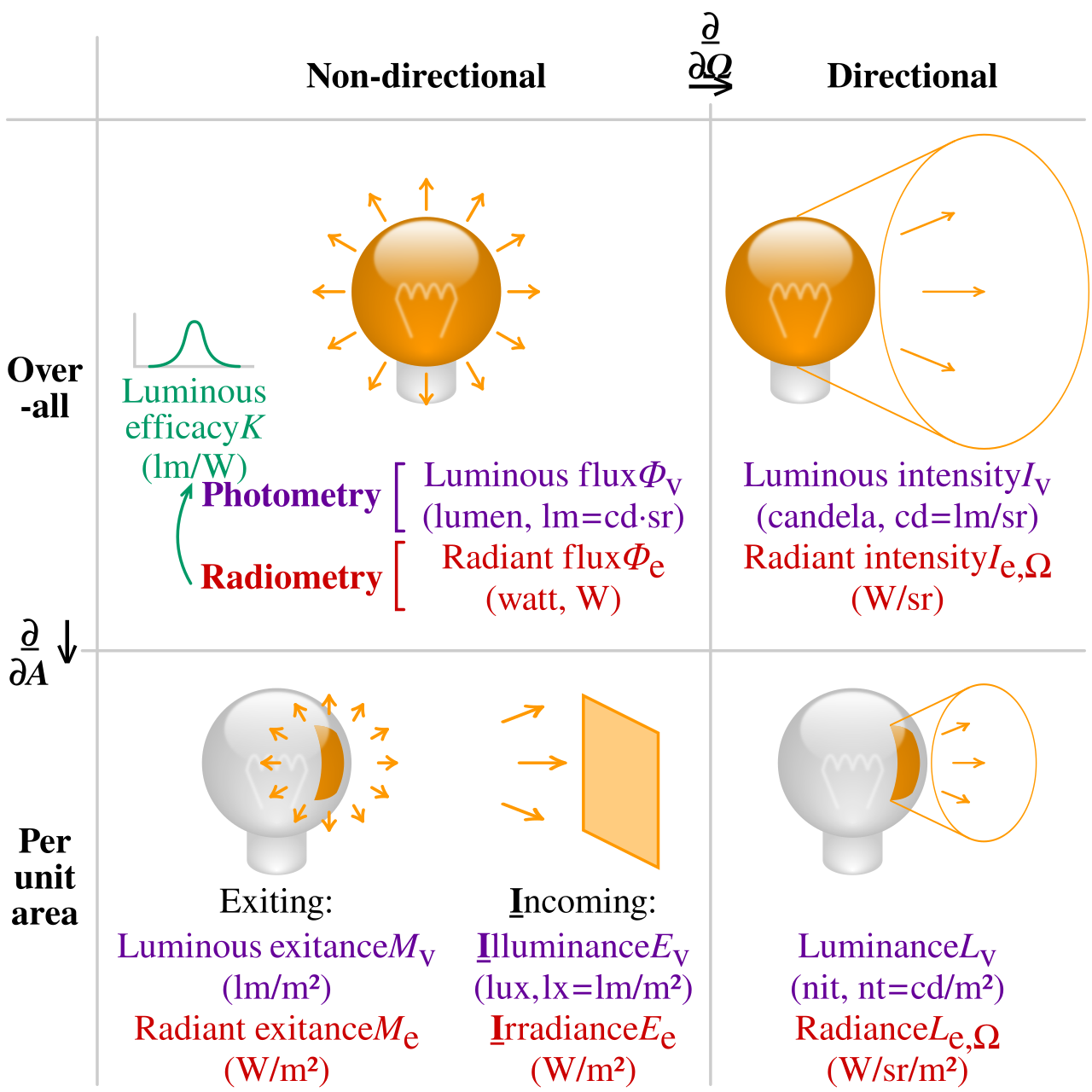
It is the radiant flux in an interval
Photoelectric Quantities
- photometric quantities take the response of the eye into account by taking visibility curve into account
. - no superscript
otherwise same as energetic quantities. - spectral density and visibility curve used for conversion
.
- Luminous intensity
- I - Luminance
- L - Luminous exitance
- M - Illuminance
- E
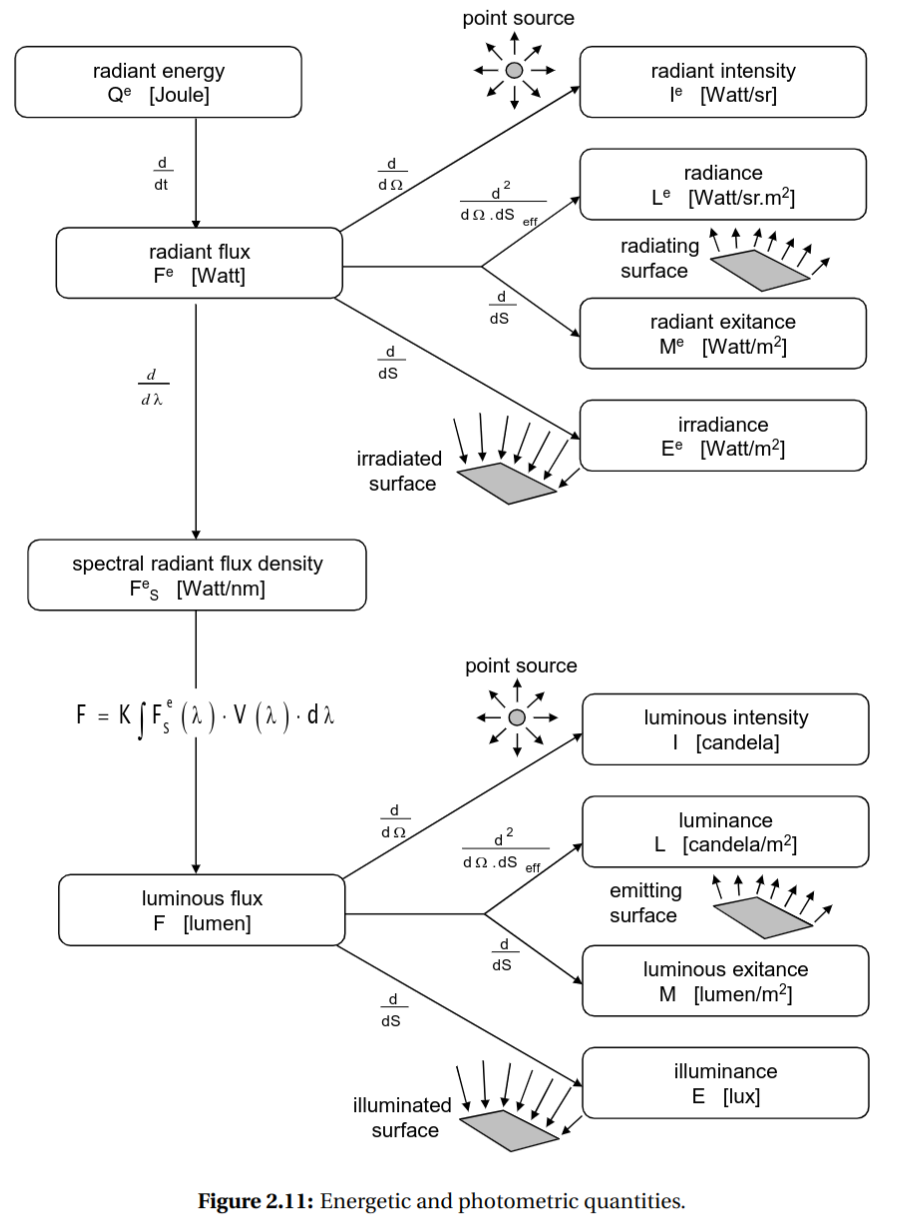
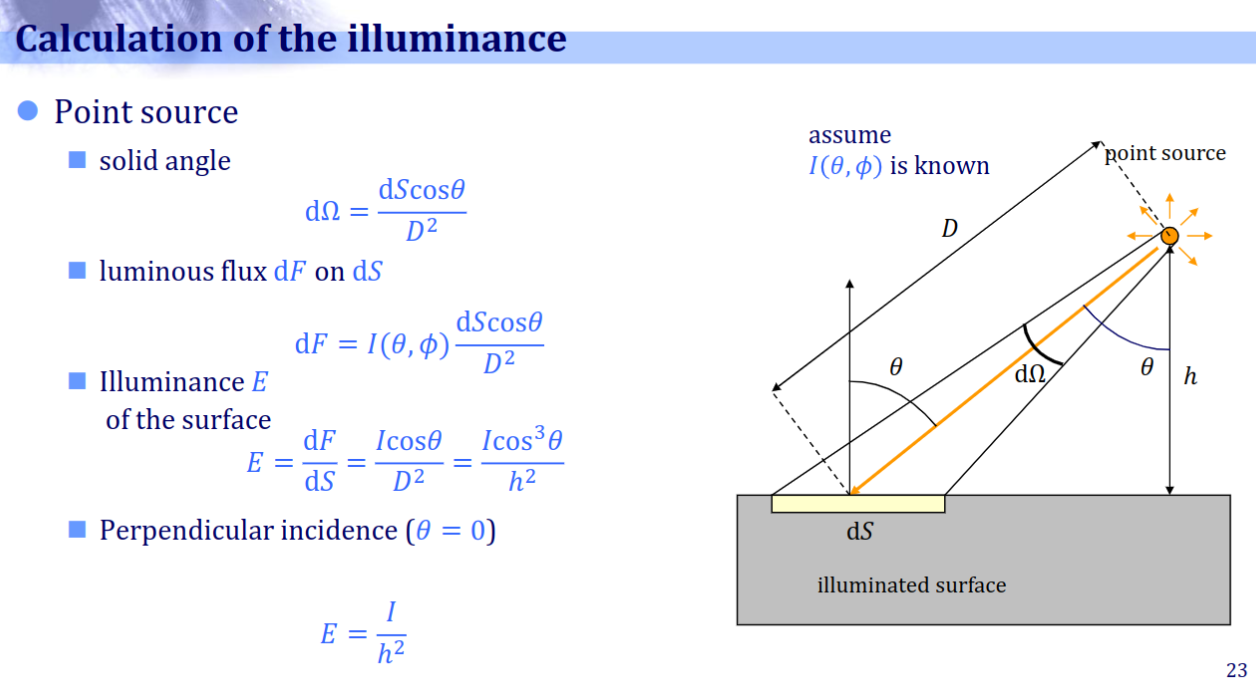
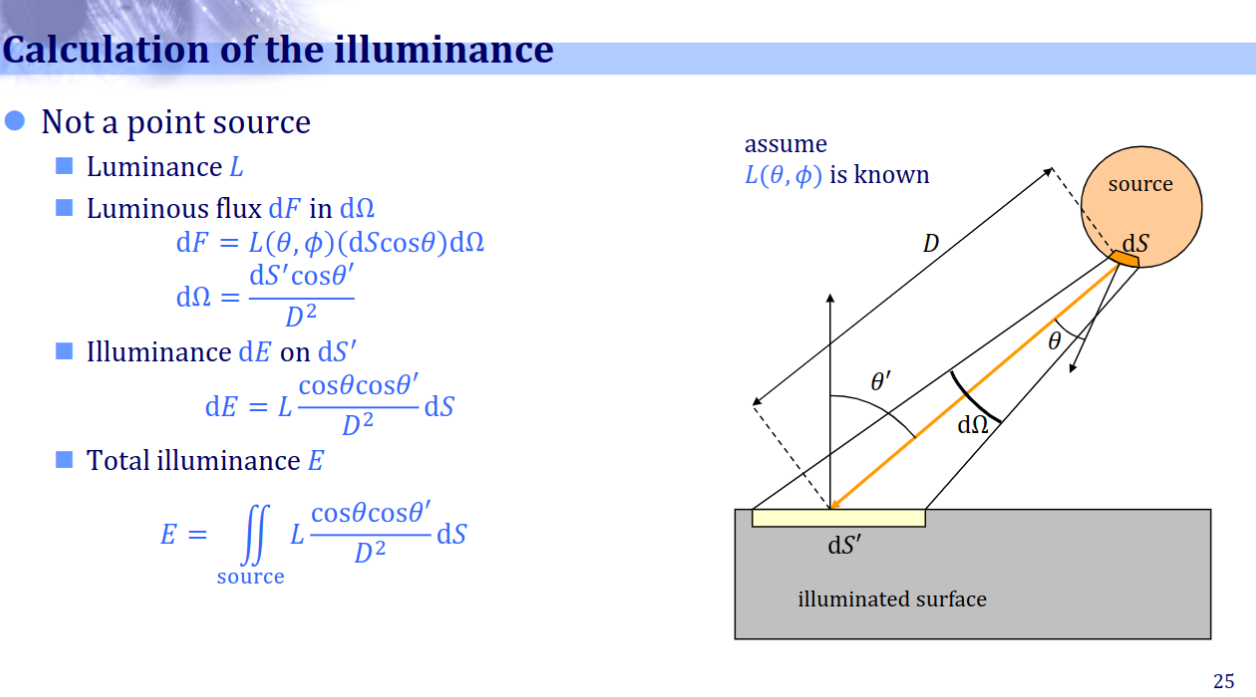
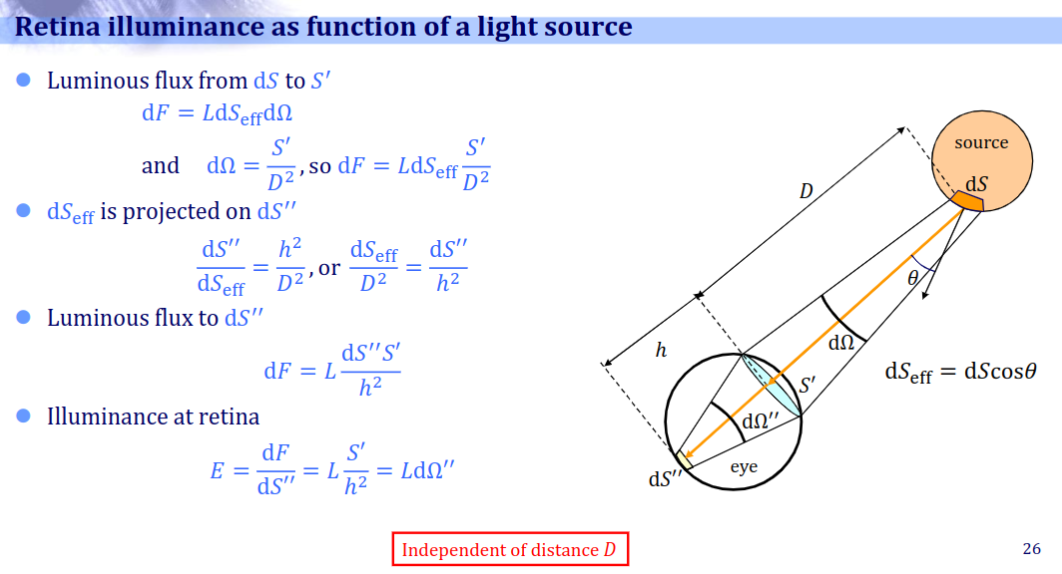
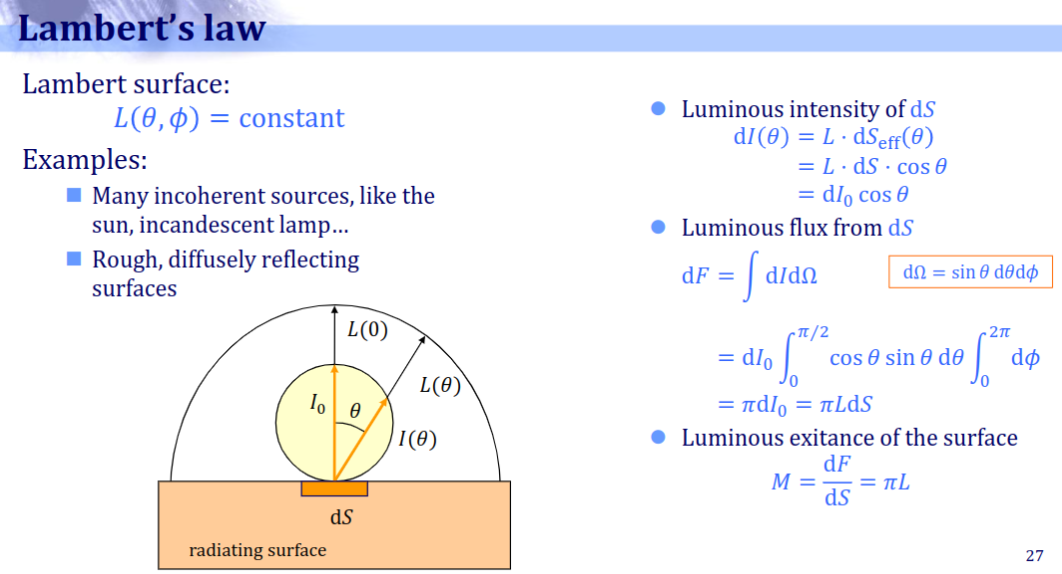
Relations between different quantities (Illuminance)
Geometrical Optics (Ch 3)
General concepts
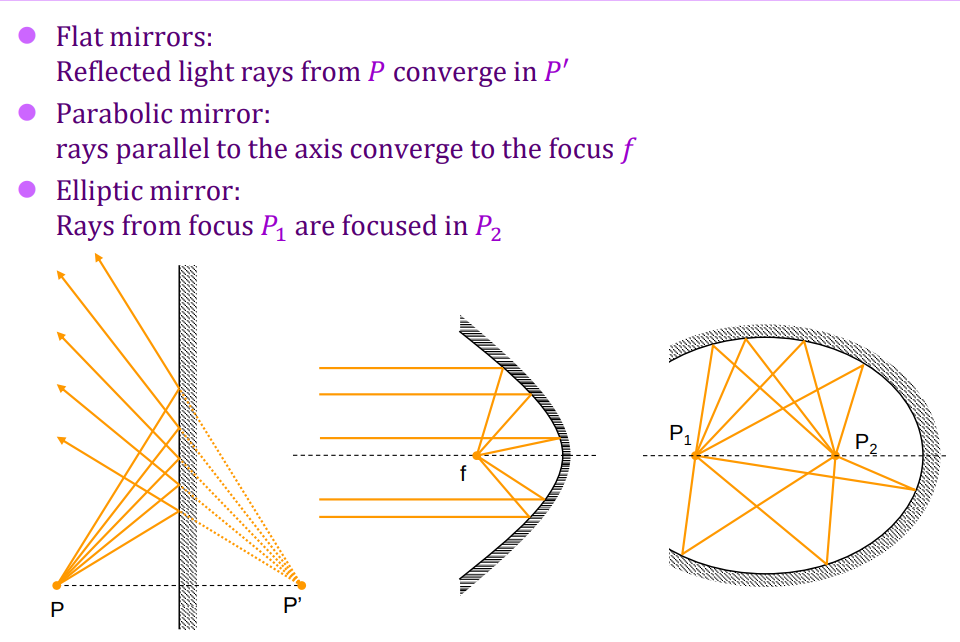
Paraxial theory of imaging systems
Paraxial approximation & examples
Paraxial=small angle with optical axis
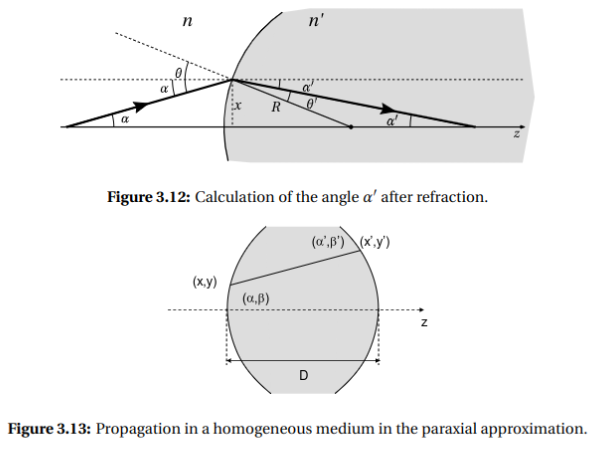
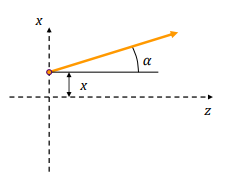
Matrix formalism
Spherical mirrors
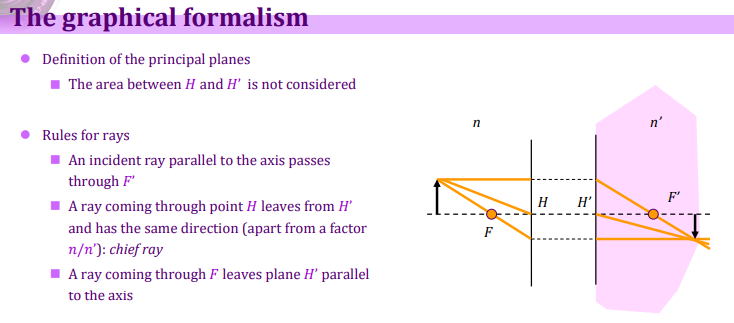
Graphical formalism
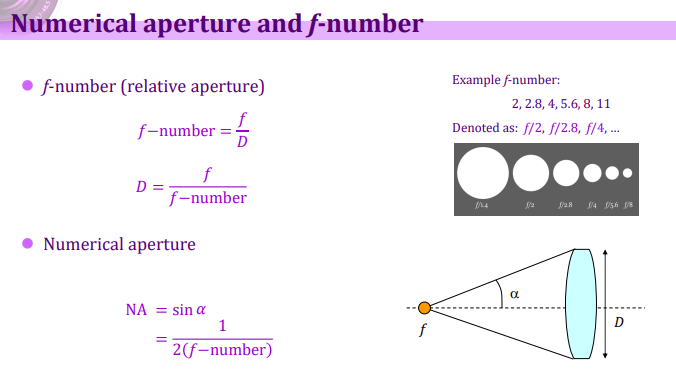
Aberrations in imaging systems
paraxial is 1st order approximation of sine, aberrations occur when imaging differs from paraxial imaging. Check the reader for different types of lens optimizations.
Spherical aberration
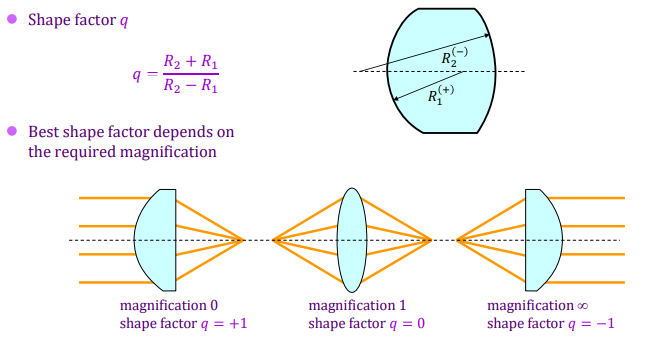
Other
Larger aperture:
- gathering more light (= larger intensity)
- more aberrations
- lower focus depth
Materials
direction dependence (anisotropy).
wavelength dependence (dispersion).
reader: absorption…
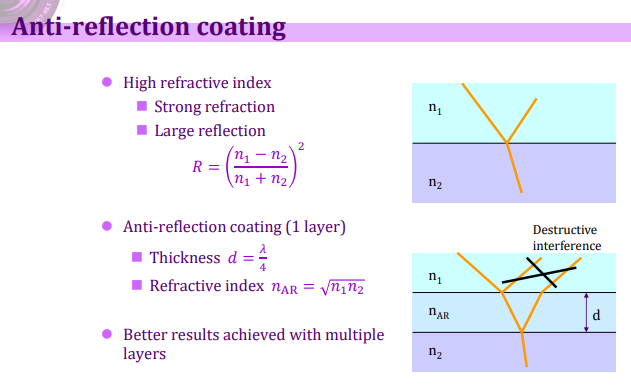
Applications
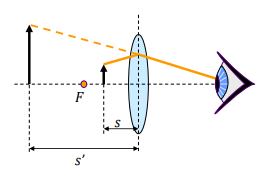
Microscope:
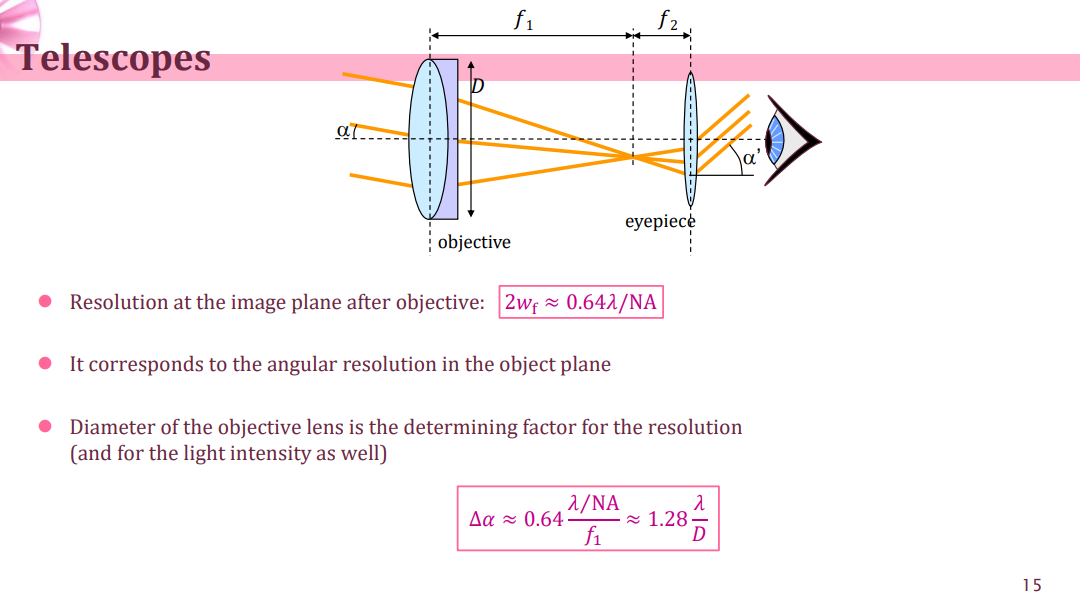
Telescope:
Scalar Wave Optics (Ch 4)
Topic: Plane Waves and Reflection
04-waves.pdf
Fresnel equations - Wikipedia
Postulates of wave optics
In a standing wave pattern, intensity is proportional to square of amplitude.
Monochromatic waves
Ray theory from wave theory
Wave fronts: constant phase
Rays: Perpendicular to wave fronts
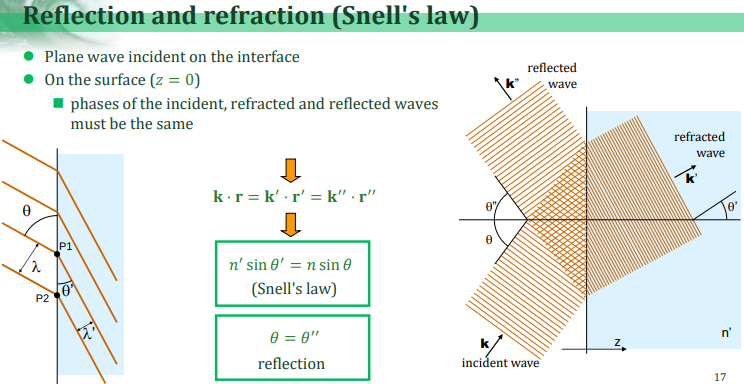
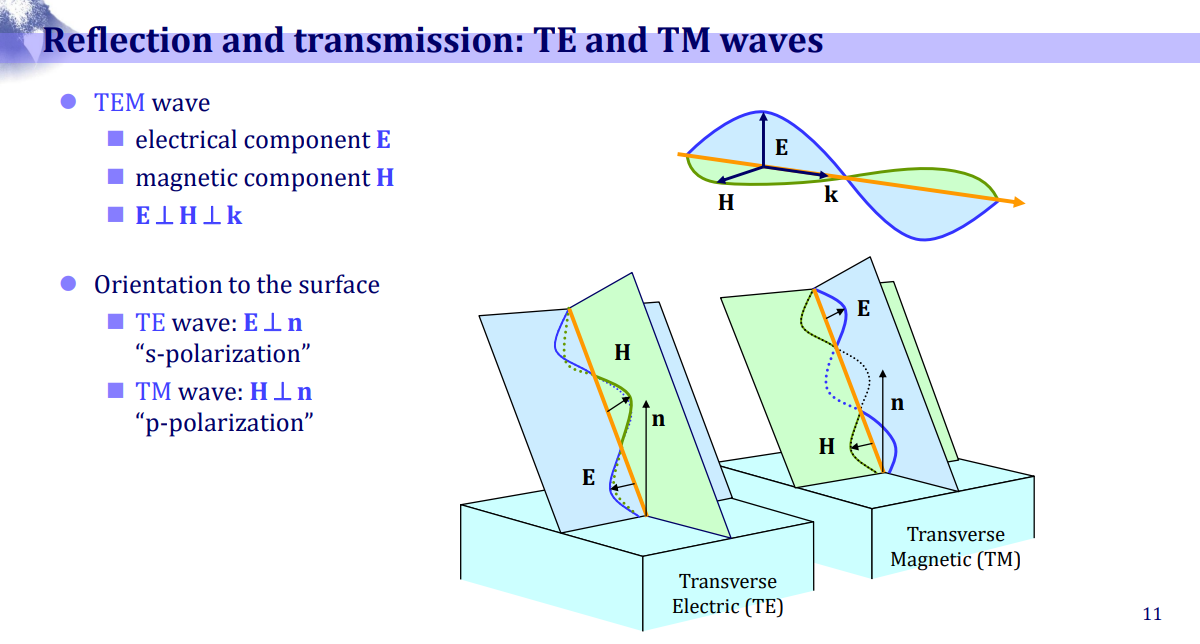
Reflection & refraction
Topic: Plane Waves and Reflection
Interference
Gaussian Beam Optics (Ch 5)
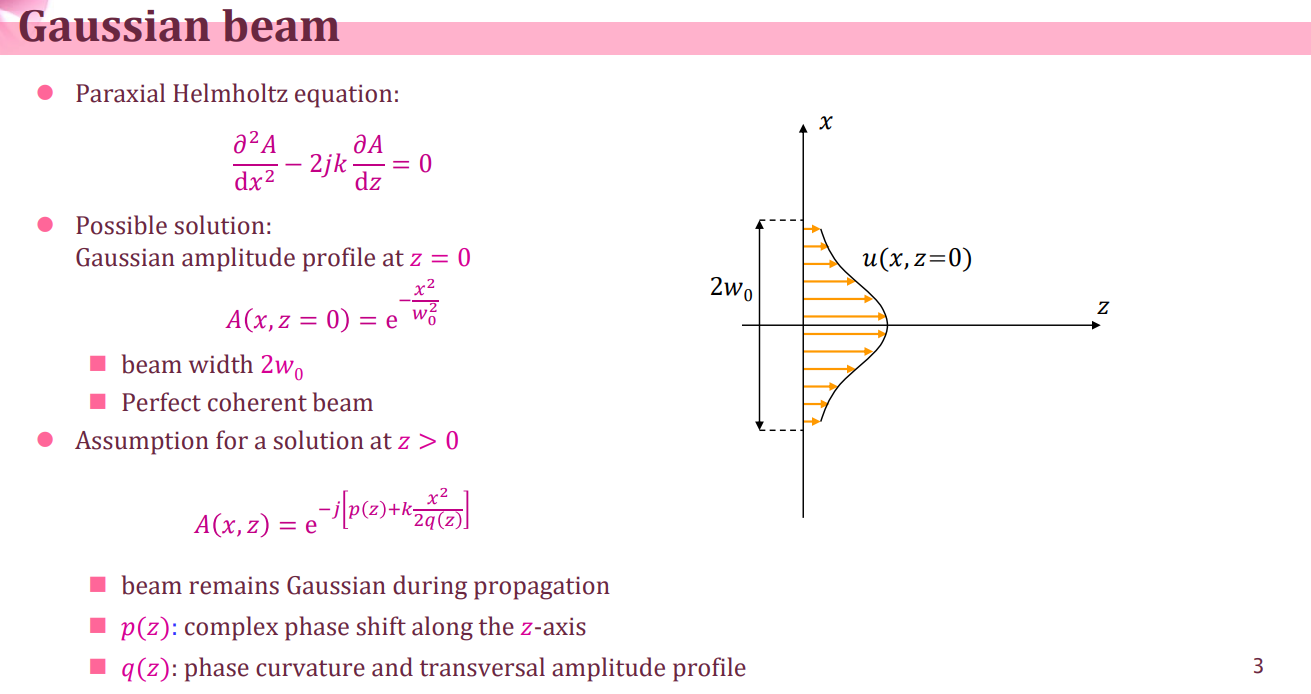
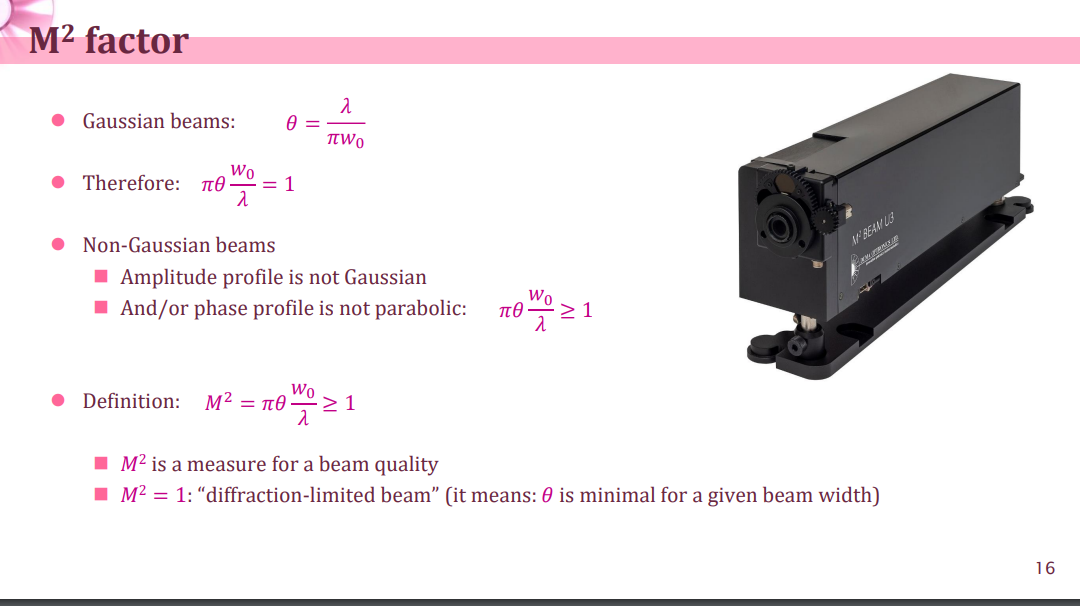
Gaussian beams are close to a laser beam IRL.
05-gaussian.pdf
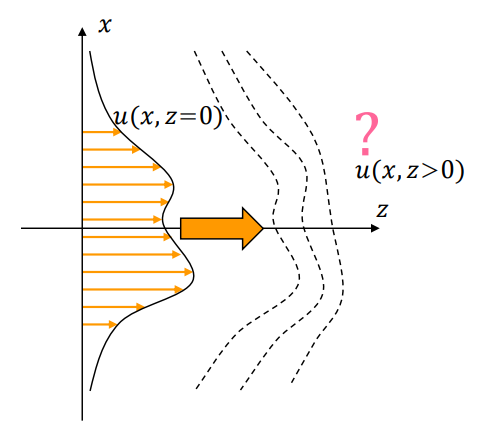
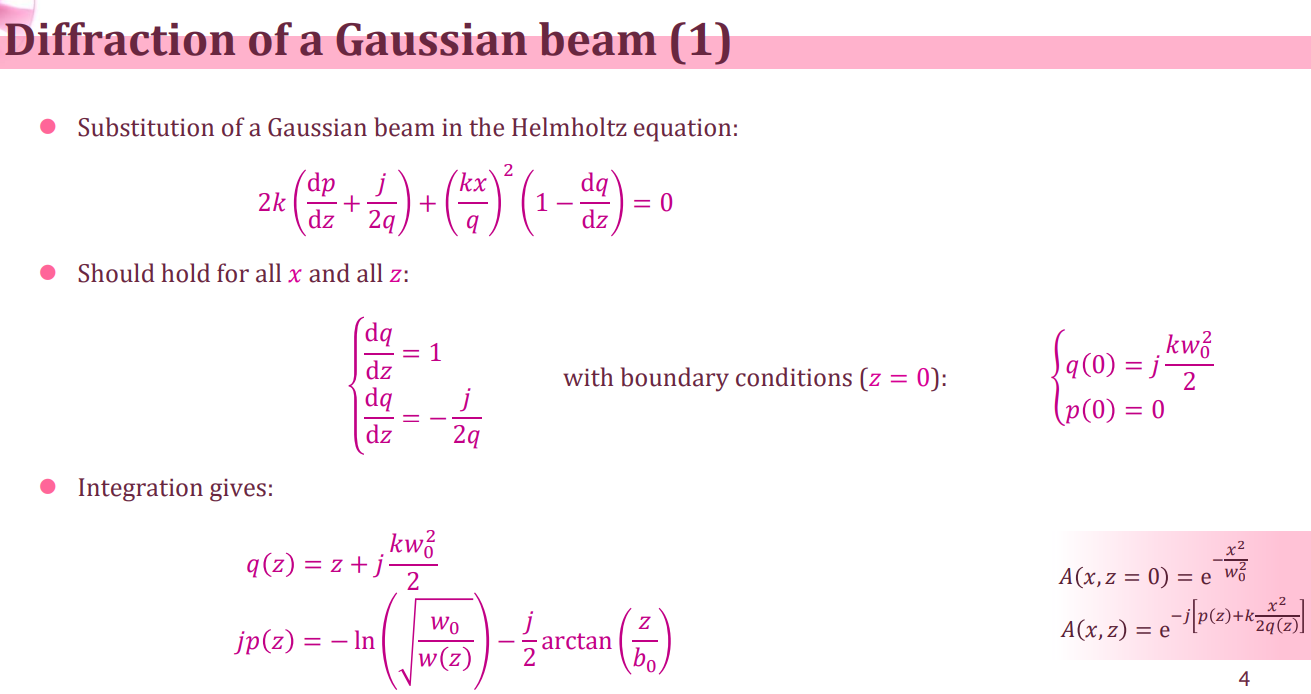
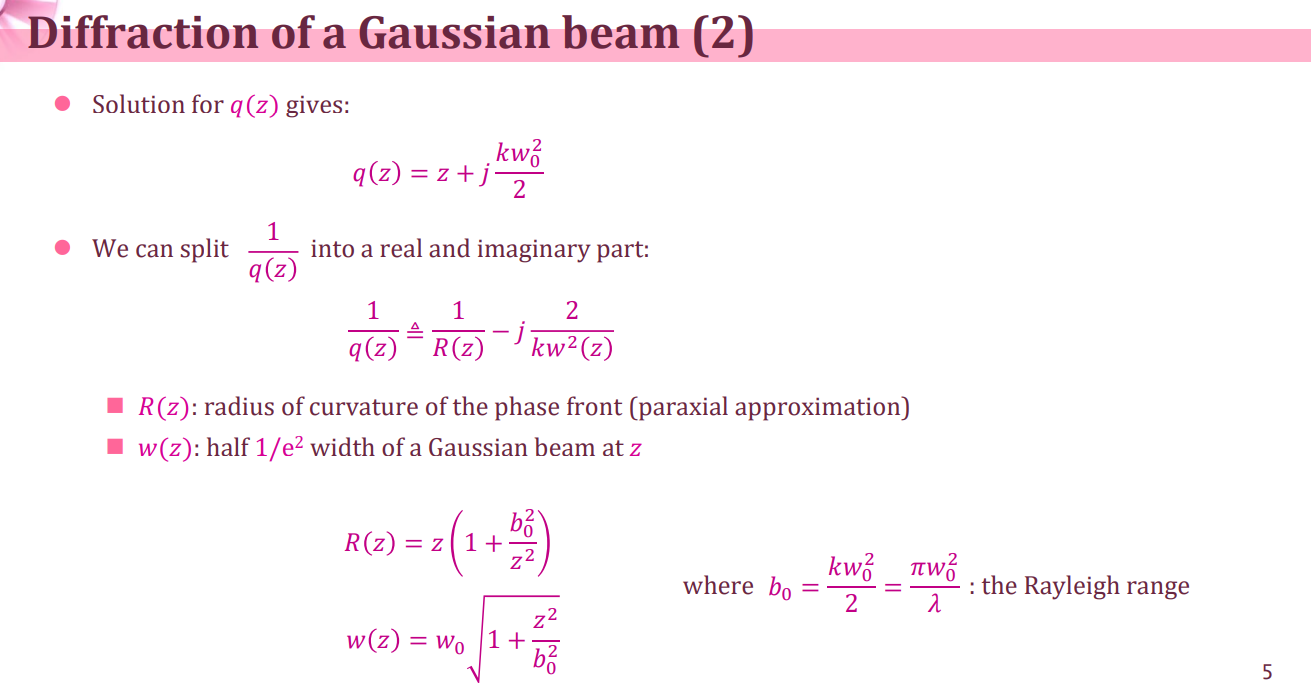
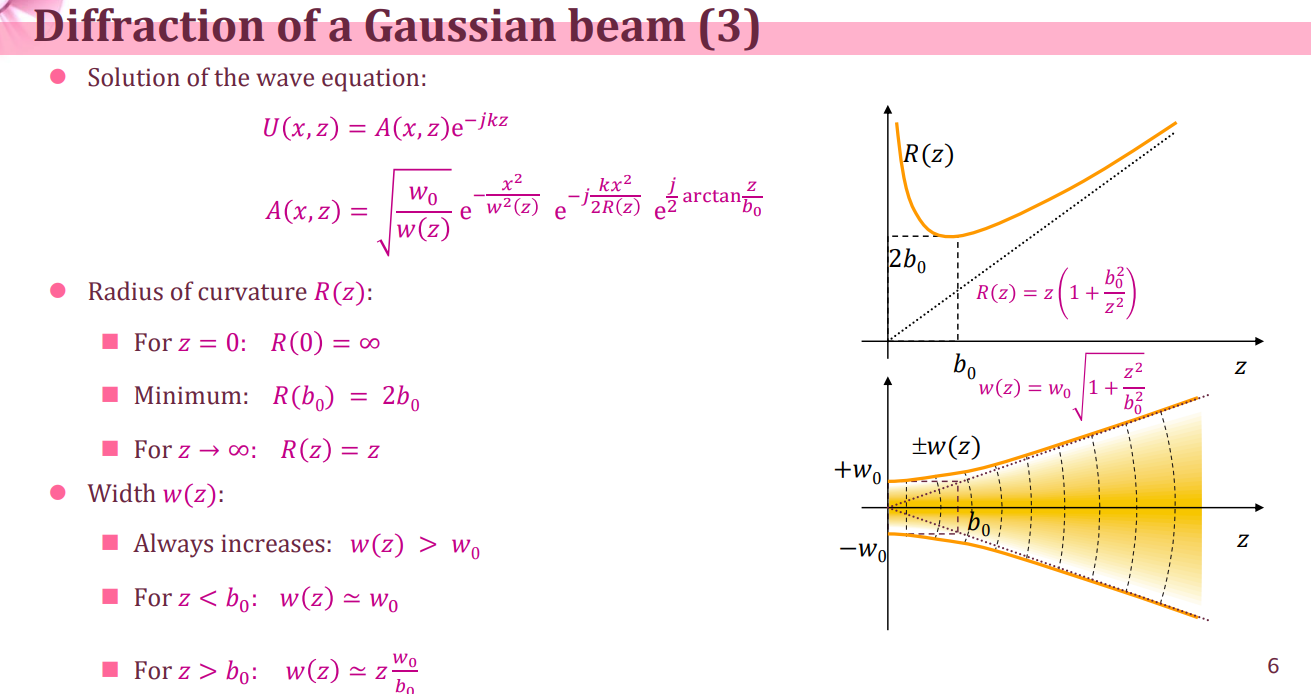
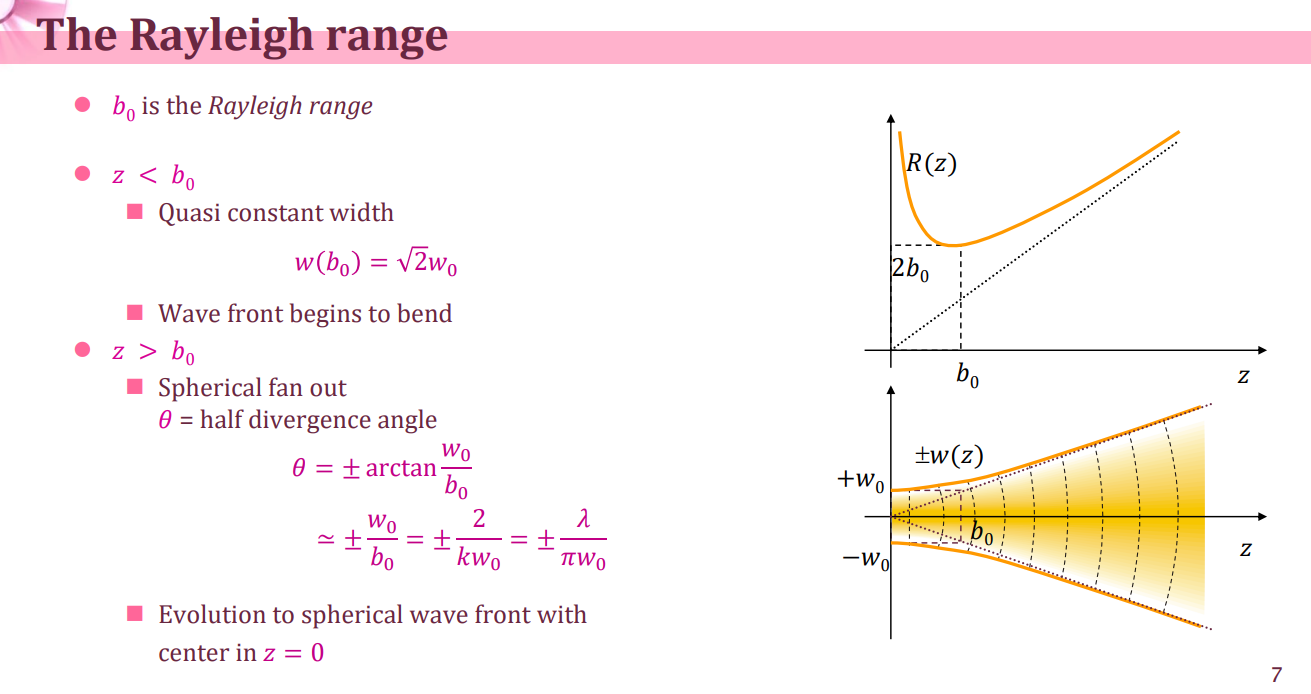
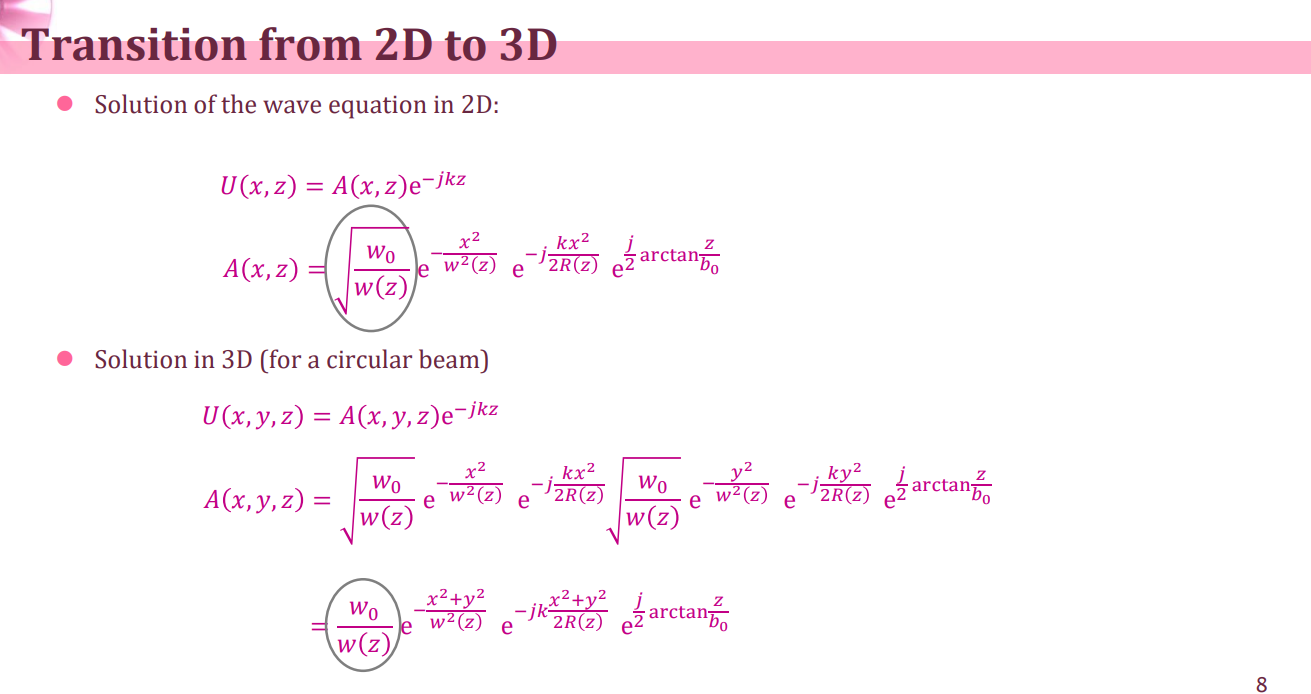
Diffraction of a Gaussian light beam
Monochromatic light beam in 2D:
Change of the amplitude profile during propagation = diffraction.
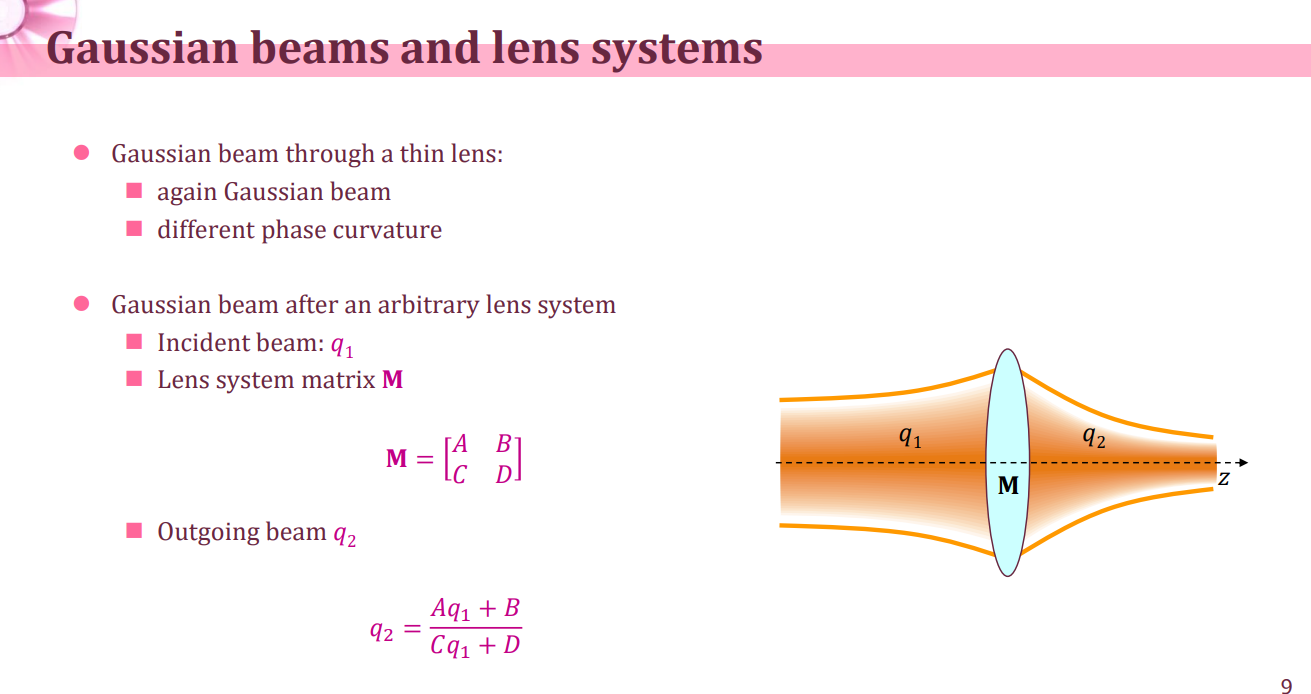
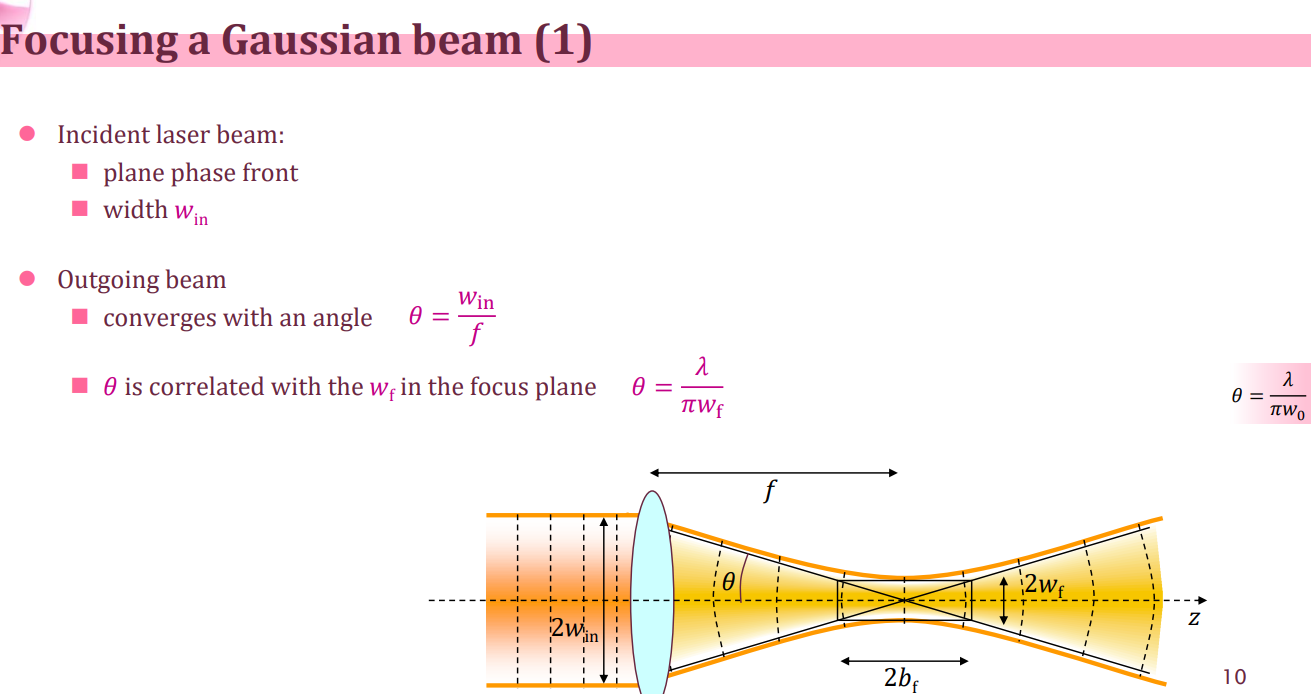
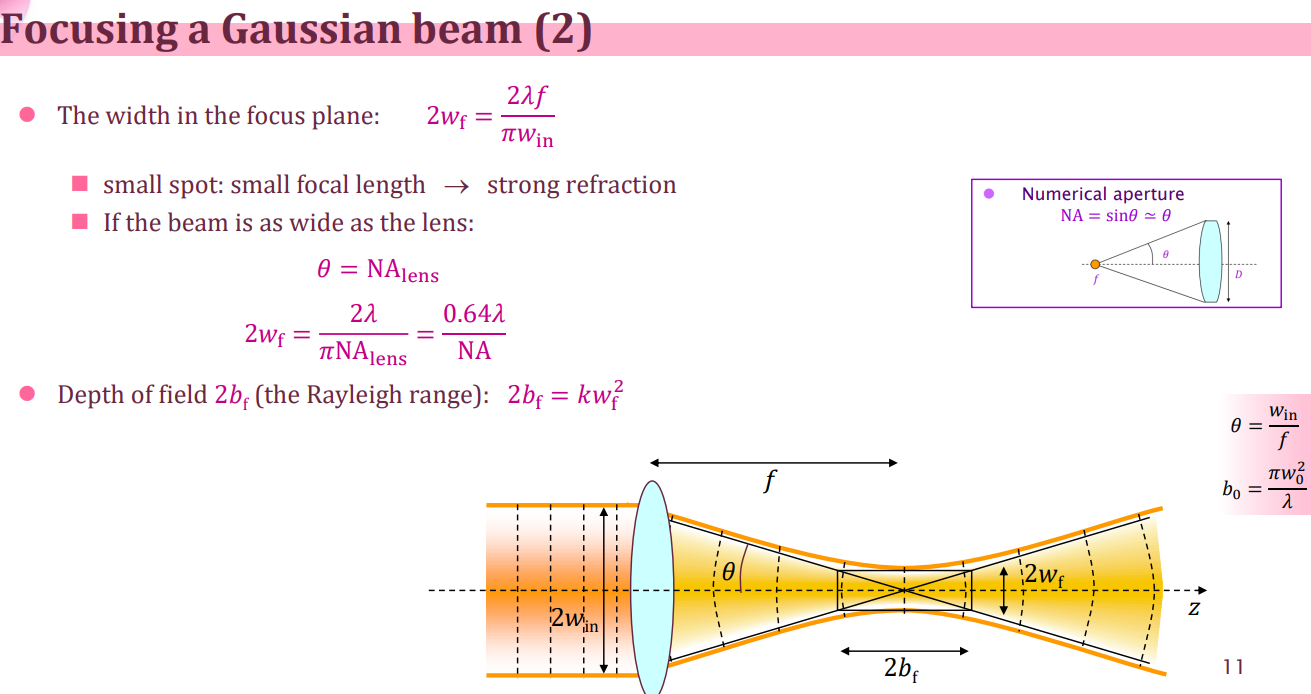
Gaussian beams in lens systems
Other
Electromagnetic Optics (Ch 6)
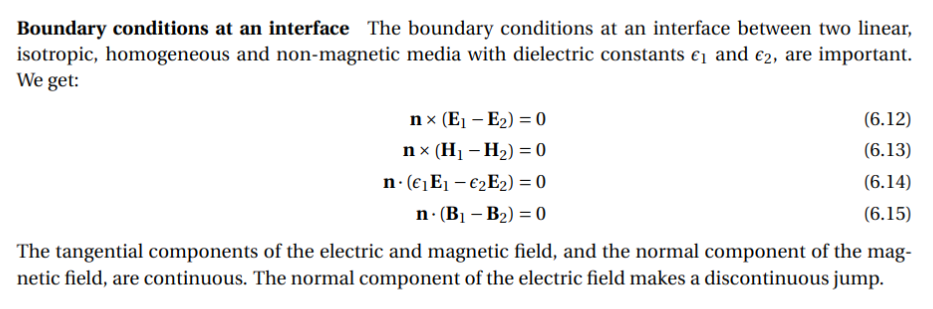
Topic: Maxwell Equations
06-electromagnetism.pdf
Electromagnetics I - 5EPA0
Electromagnetics II - 5EPB0
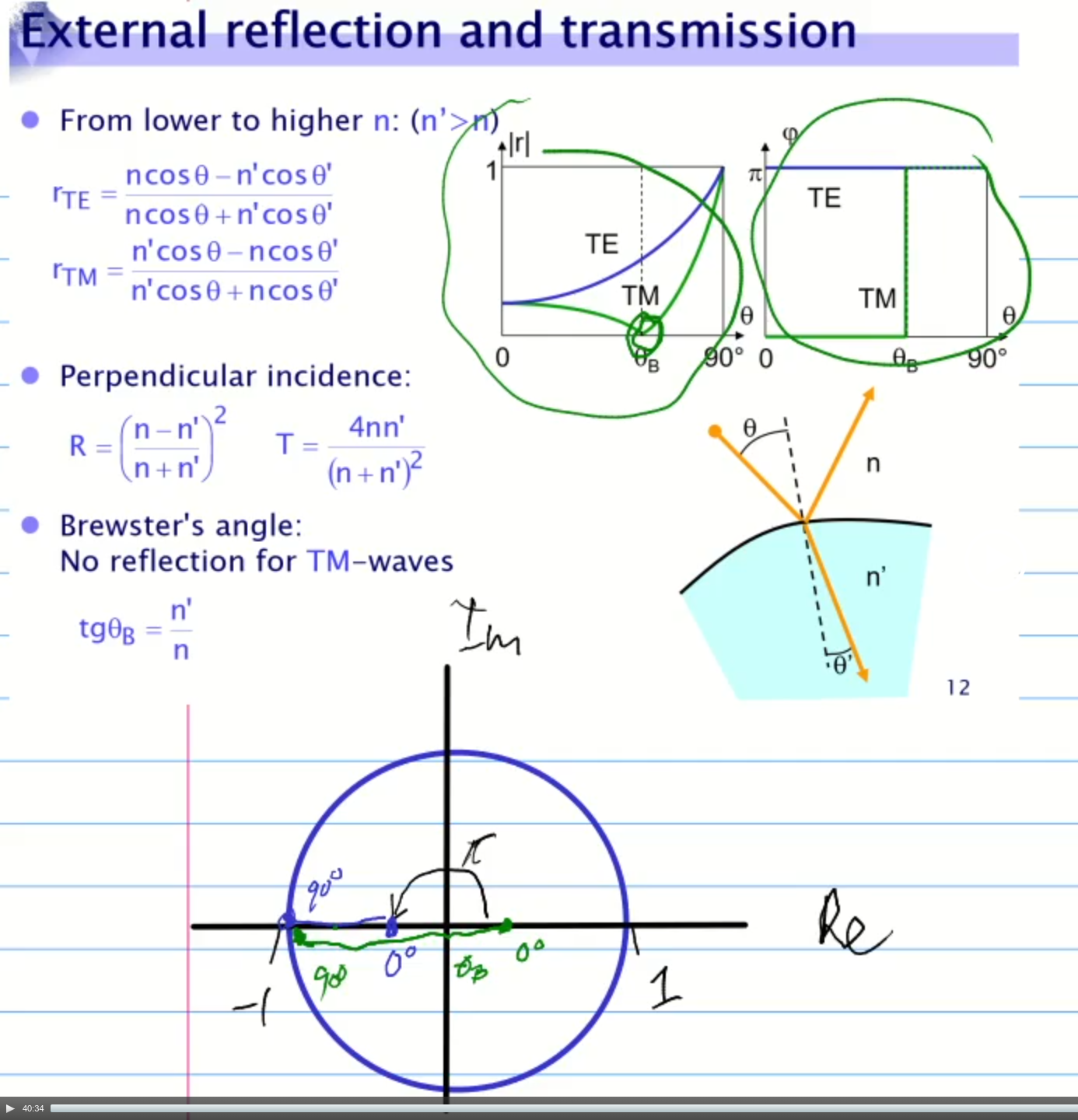
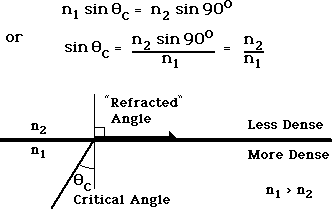
internal reflection/transmission
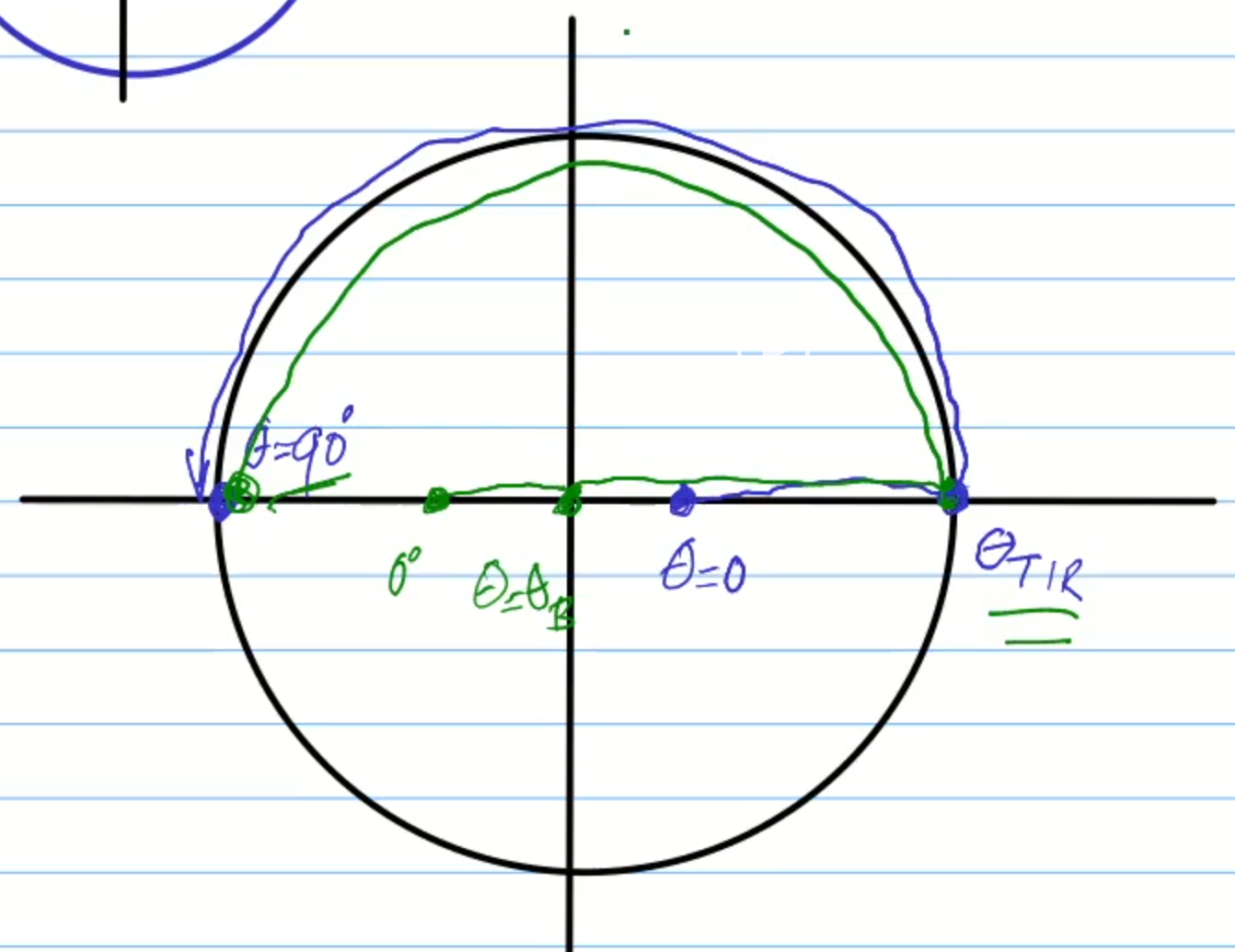
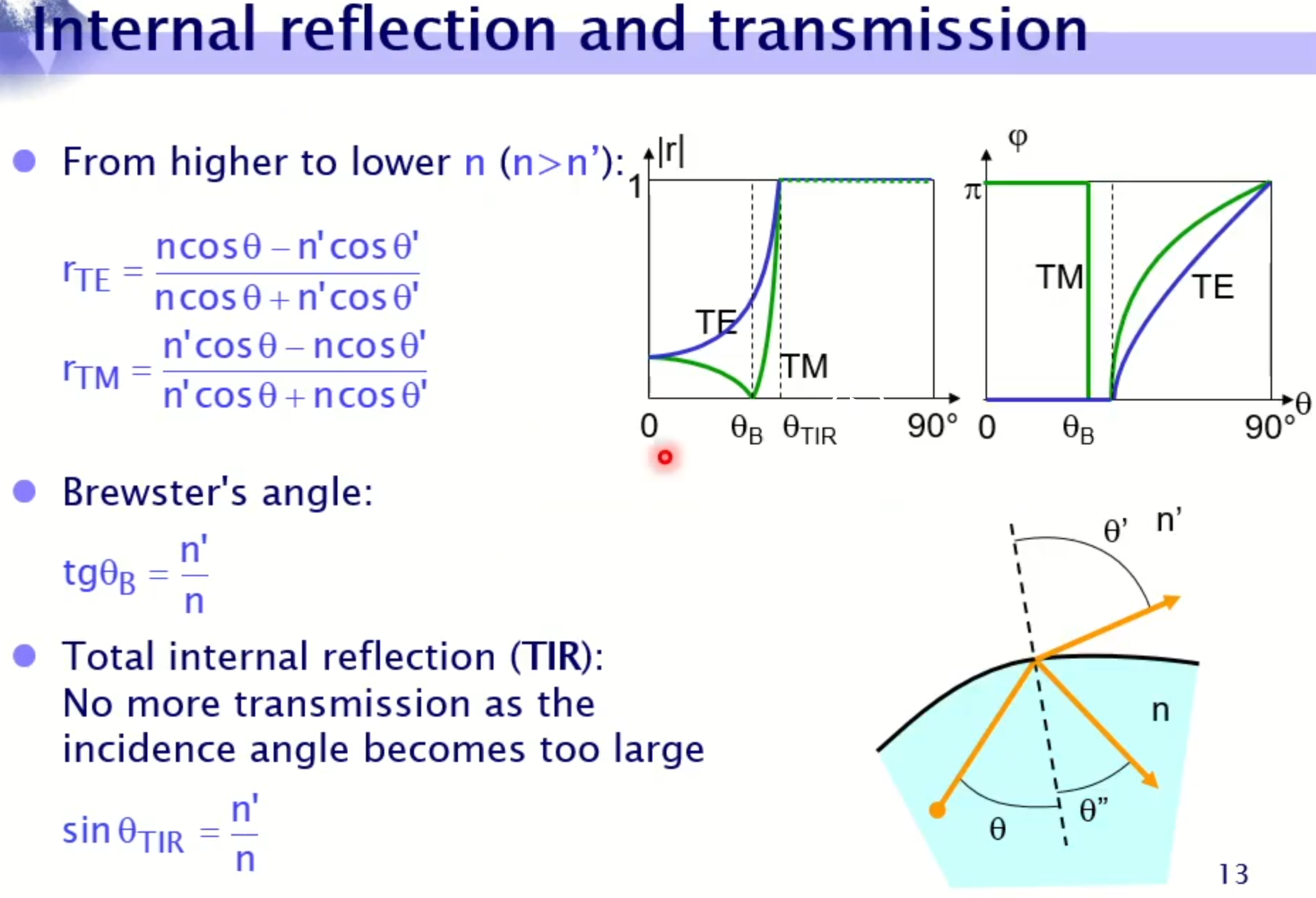
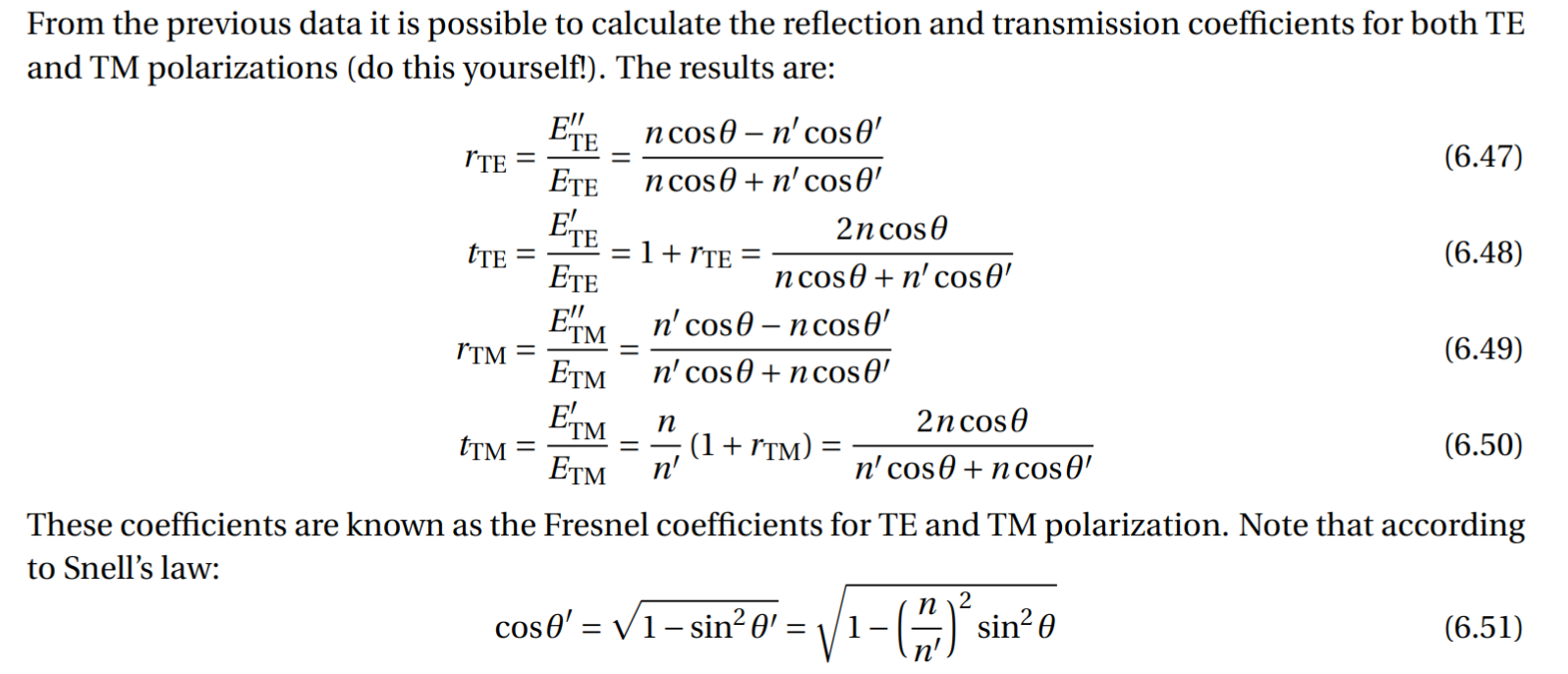
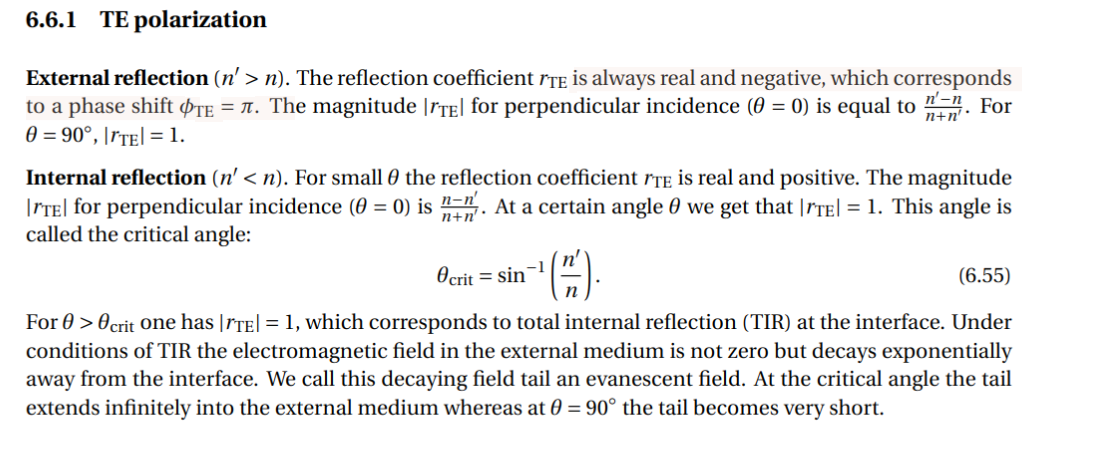
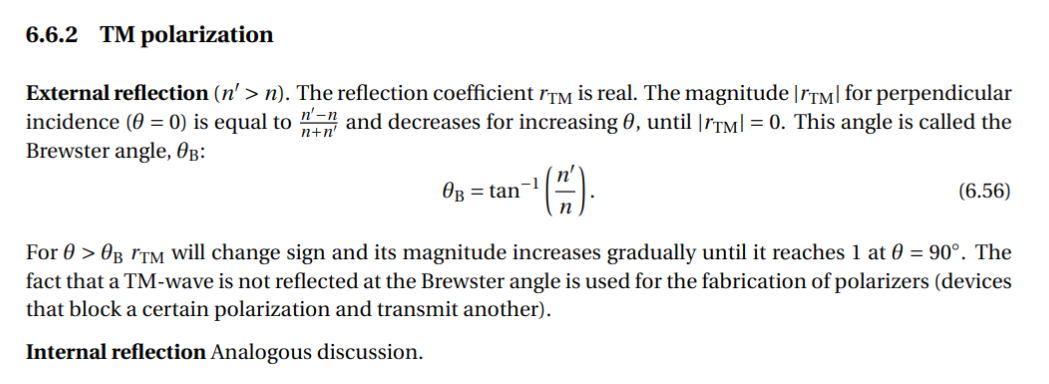
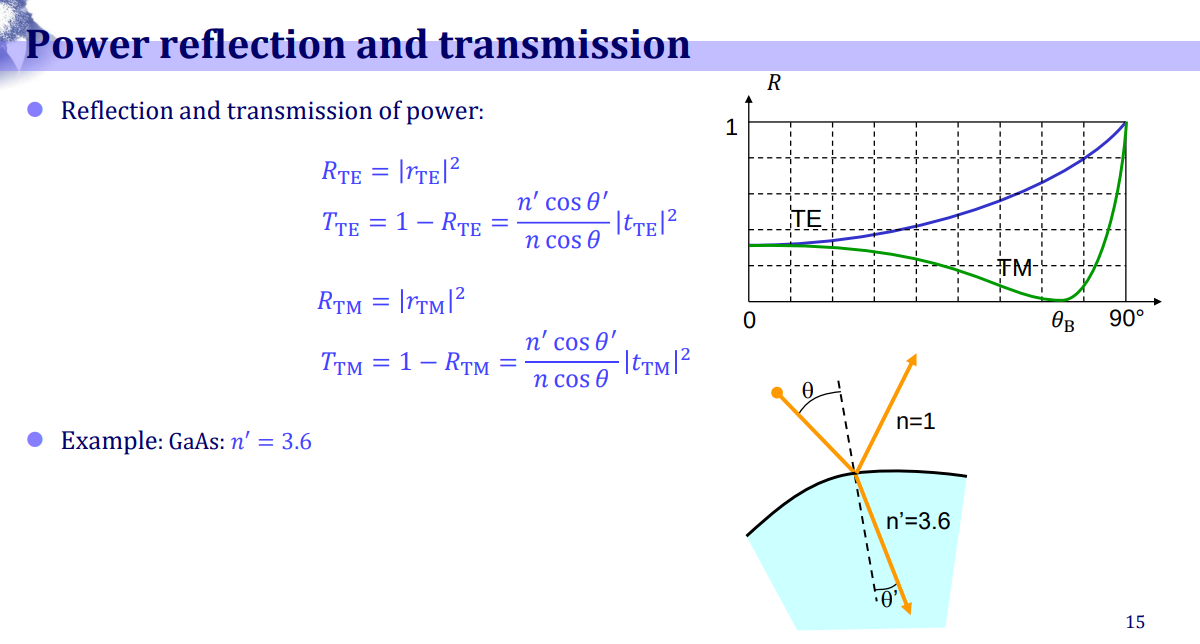
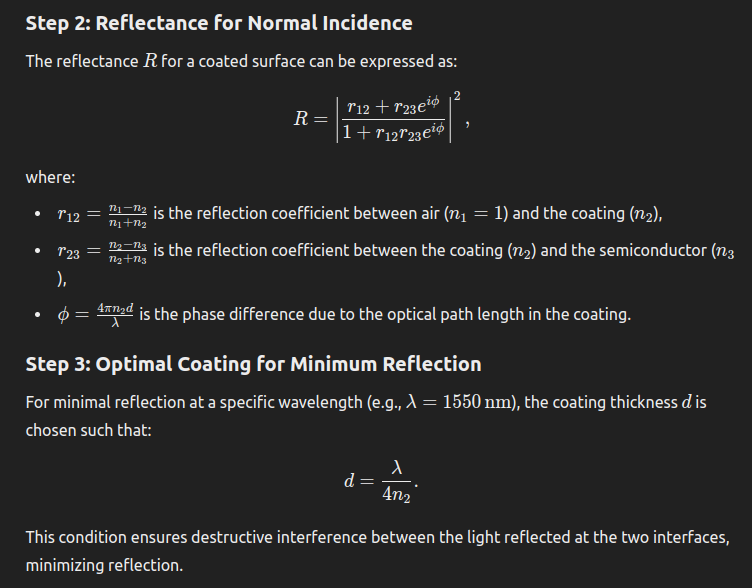
there is also complex coatings in filters, power/polarization splitters, needs CAD tools.
Waveguides (Ch 7)
Topic: Waveguides
07-waveguides.pdf
Photon Optics (Ch 8)
Photon
standing wave: sum of two counterpropagating travelling waves.
all parts of the system move sinusoidally: same frequency - fixed phase relation.
mode density per unit volume per unit frequency - independent of shape/size cavity
- energy in frequency mode change in discrete steps, quantized in photons.
- energy chance in EM mode: absorption, generation.
- beamsplitter where one photon probability
when N phtons absorbed → momentum transferred.
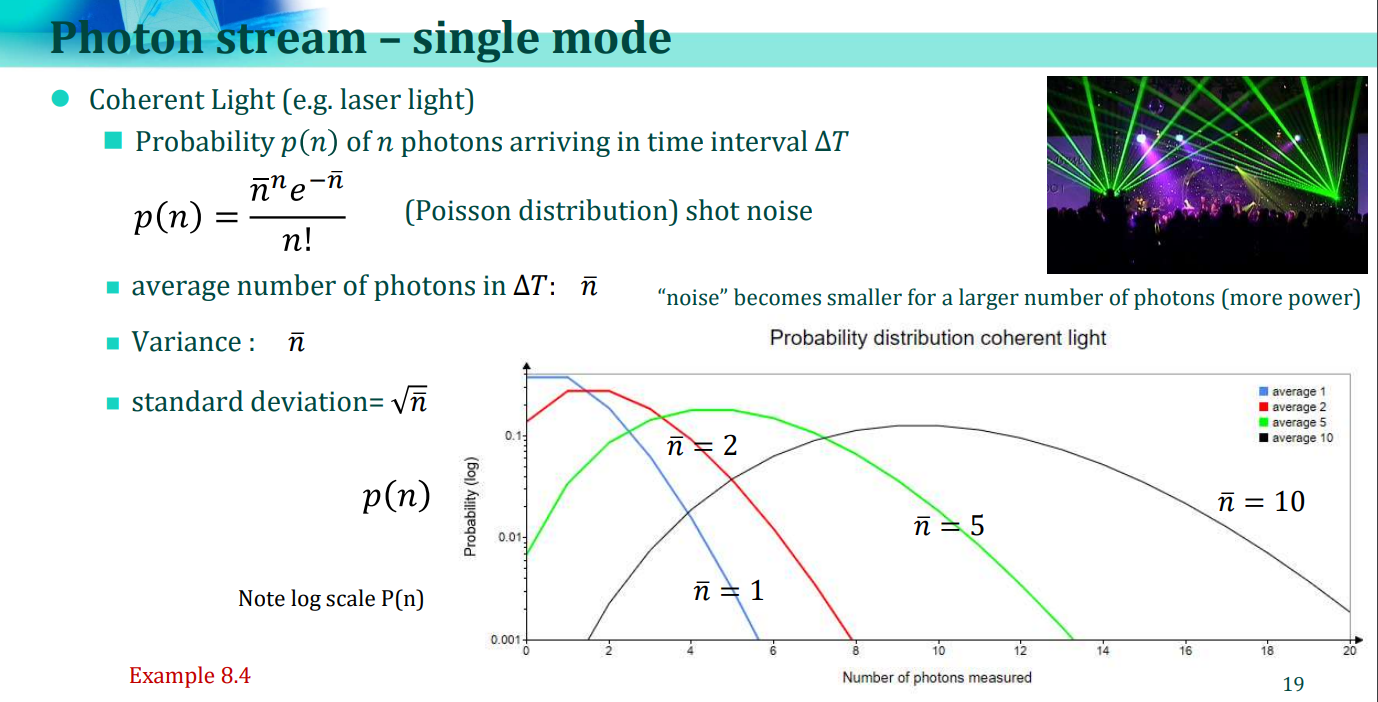
Photon streams
Photons & Atoms (Ch 10)
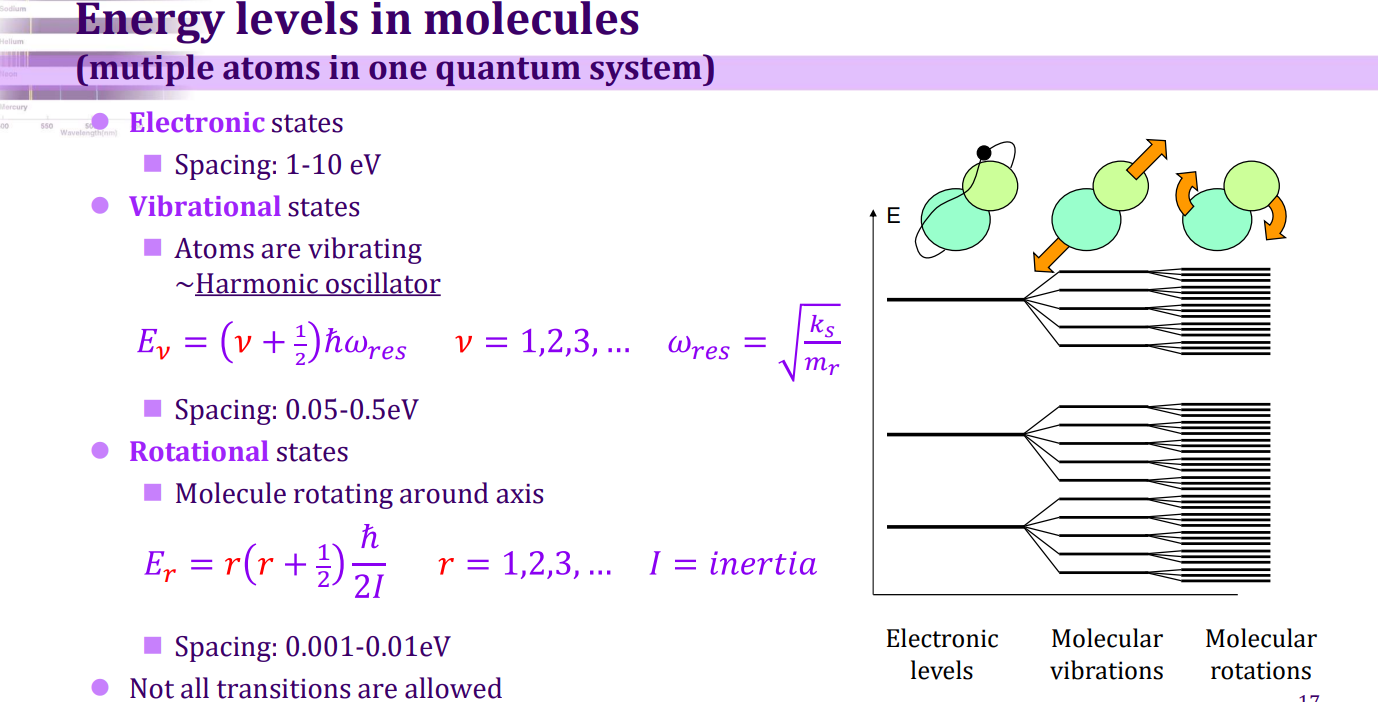
Energy levels in atoms and molecules
- Each state of a system means that it has a specific energy, we call this: the energy level of the system.
- Each state defined by quantum numbers:
- pauli exclusion: no two identical particles can be same state…
- each state max 2 electrons. (spinup, spindown)
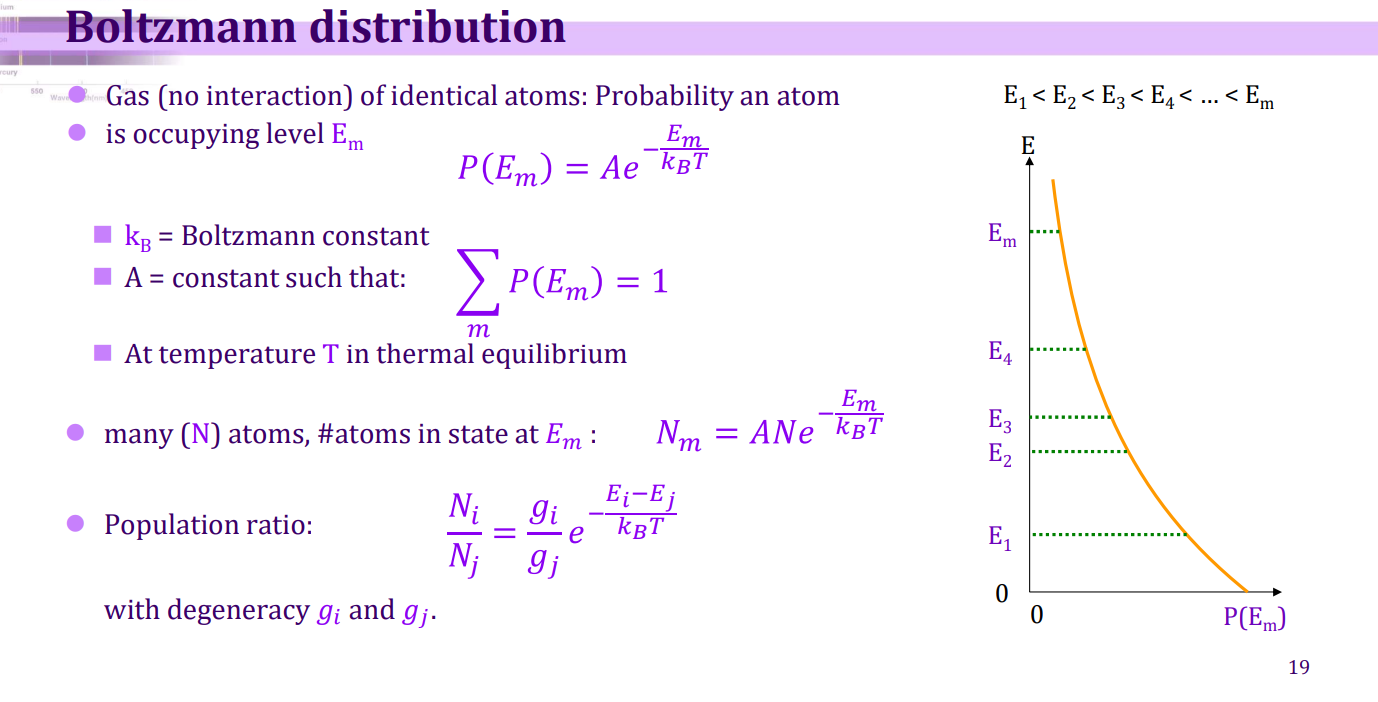
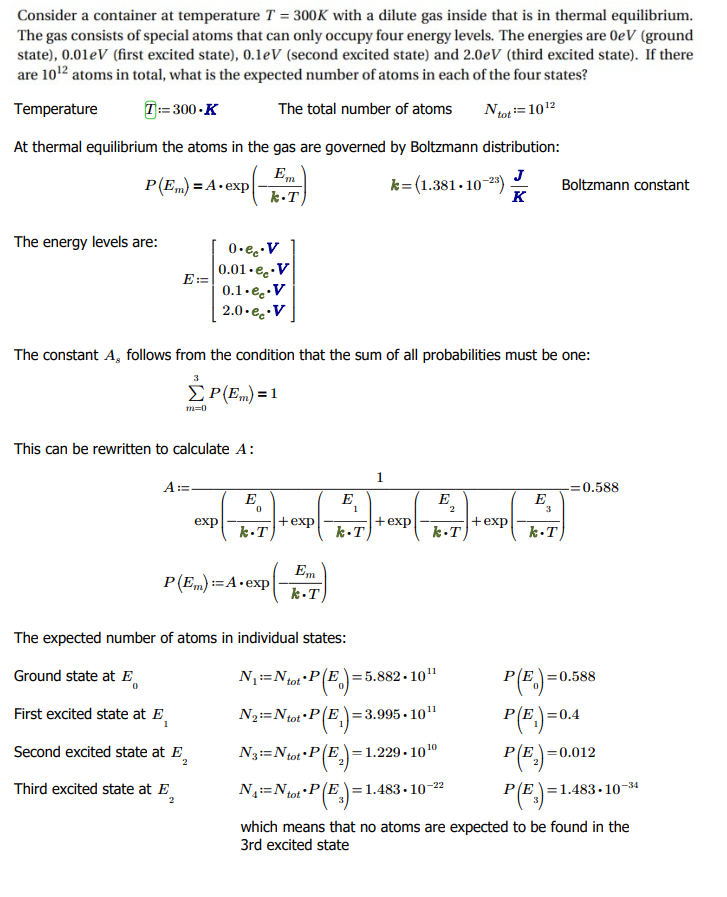
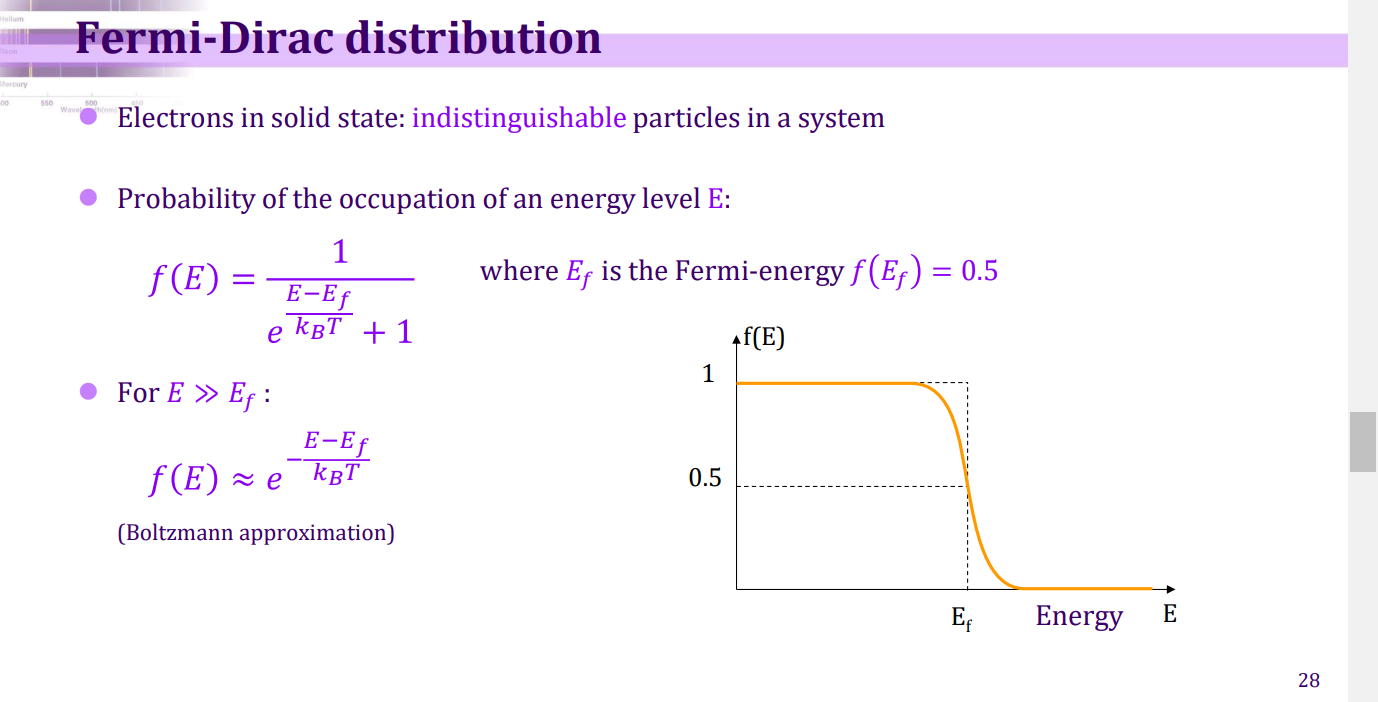
boltzmann distribution: group of atoms/molecules in seperate systems, the probability finding atom/molecule in particular state at specific temperature.
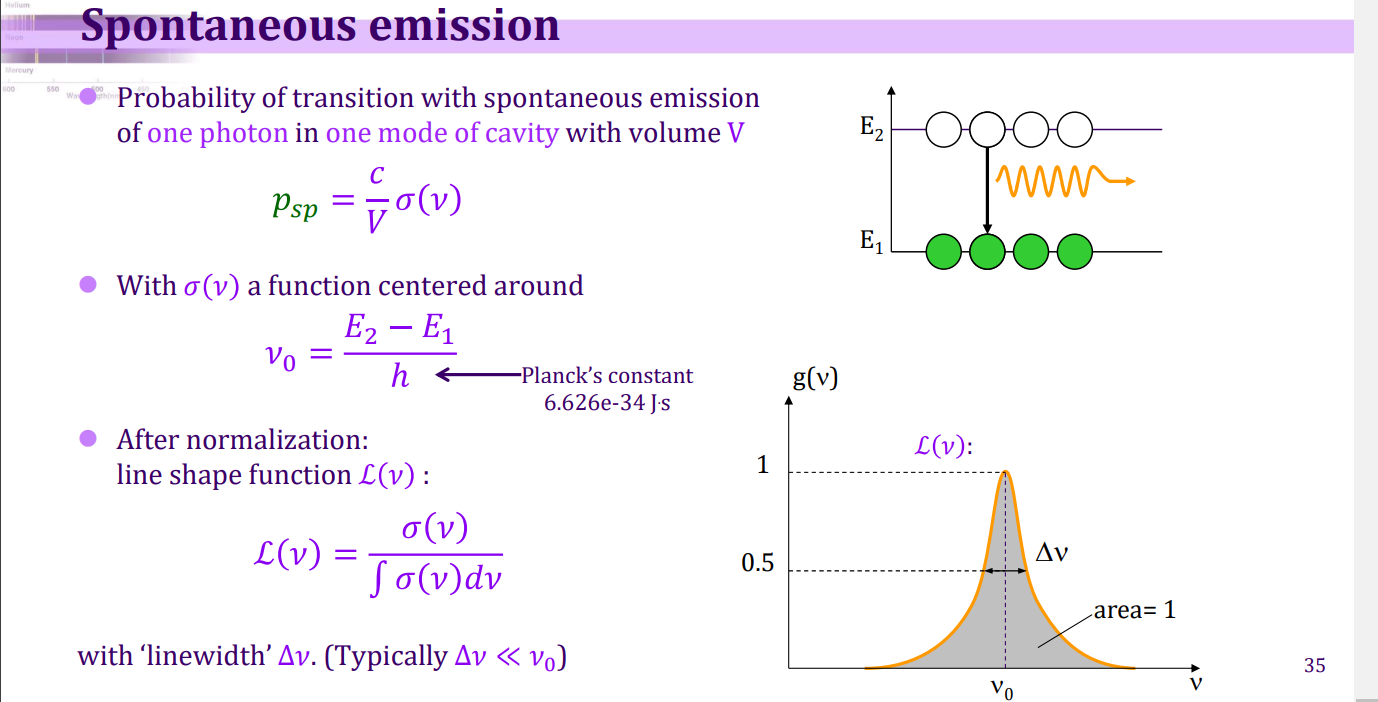
Interactions between photons and atoms
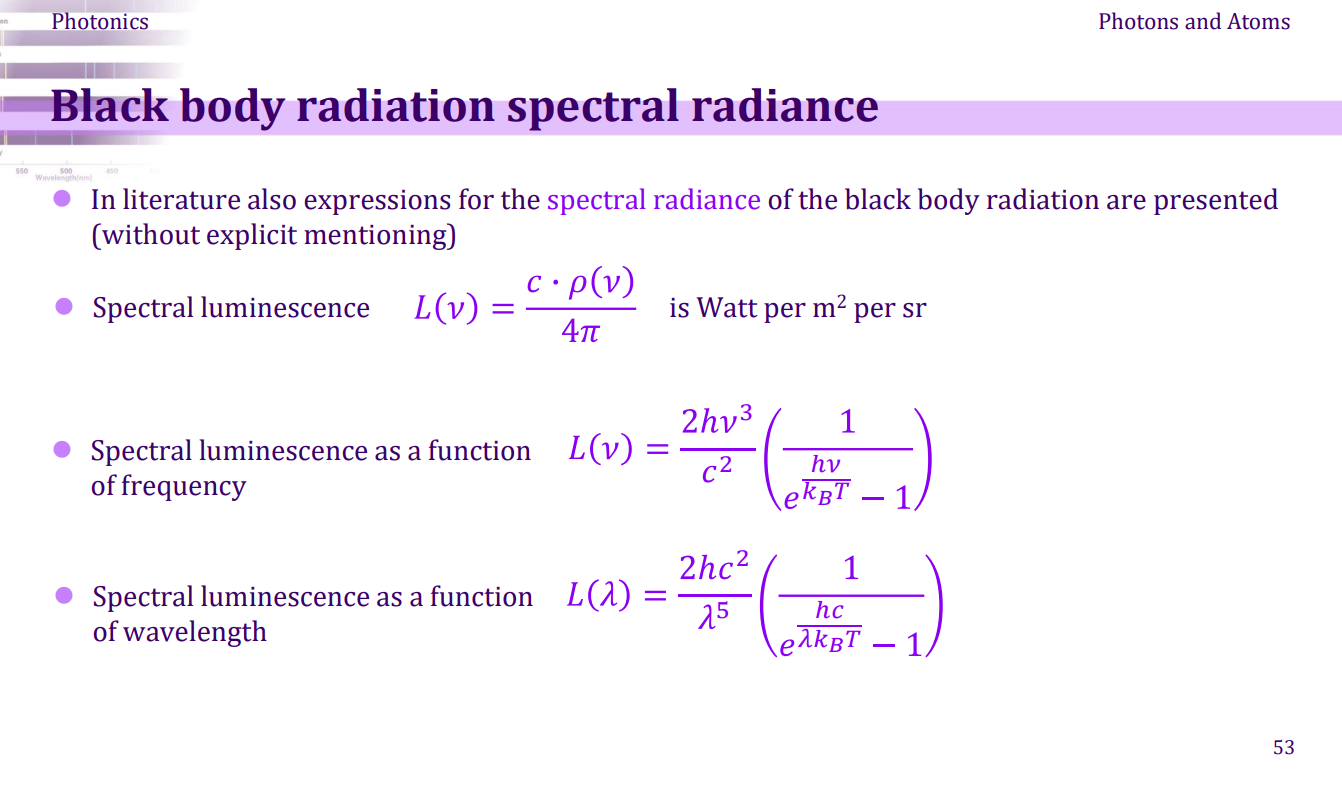
Thermal light
Lasers (Ch 13)
Gain medium
pumping between energy levels is caused by multiple factors…
Laser rate equations (Laser Cavities)
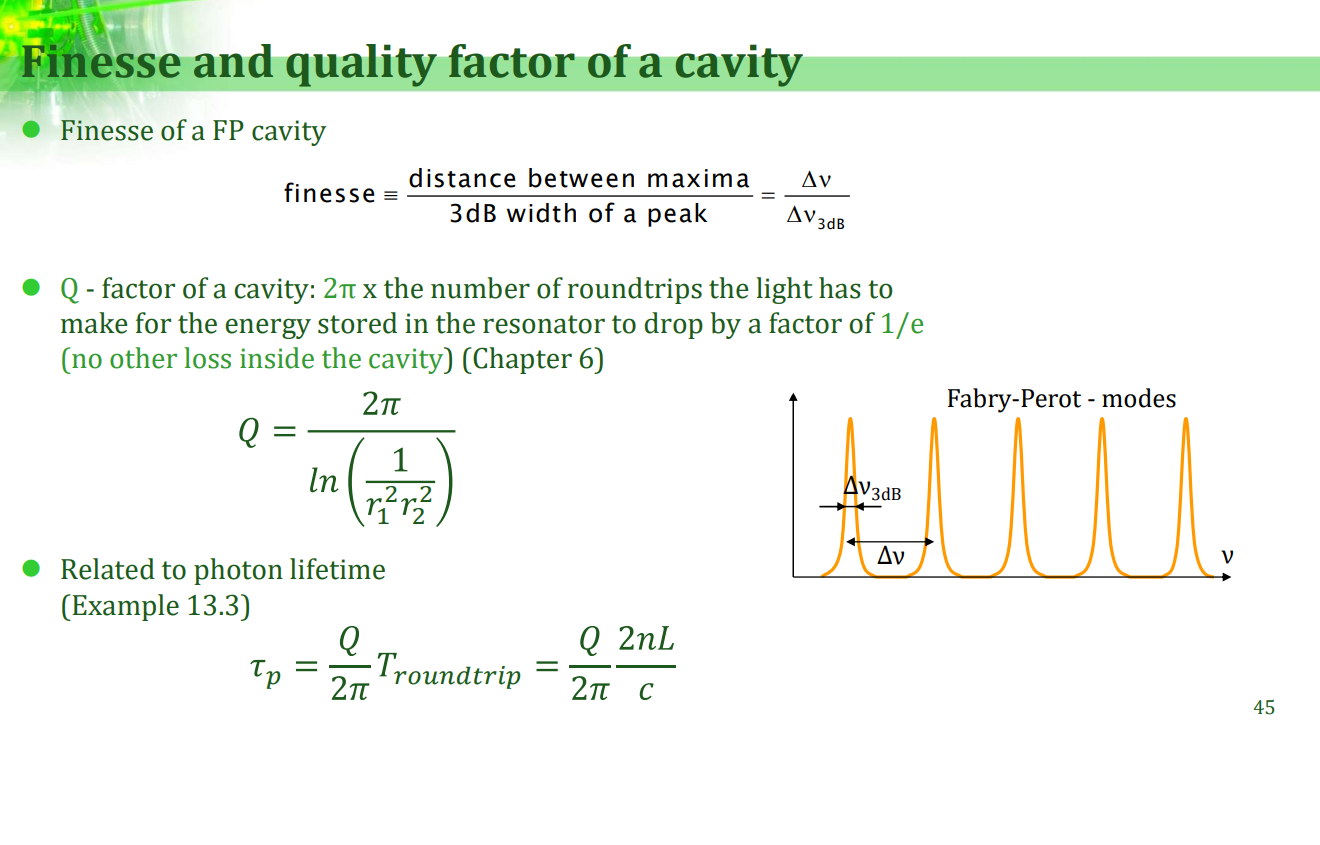
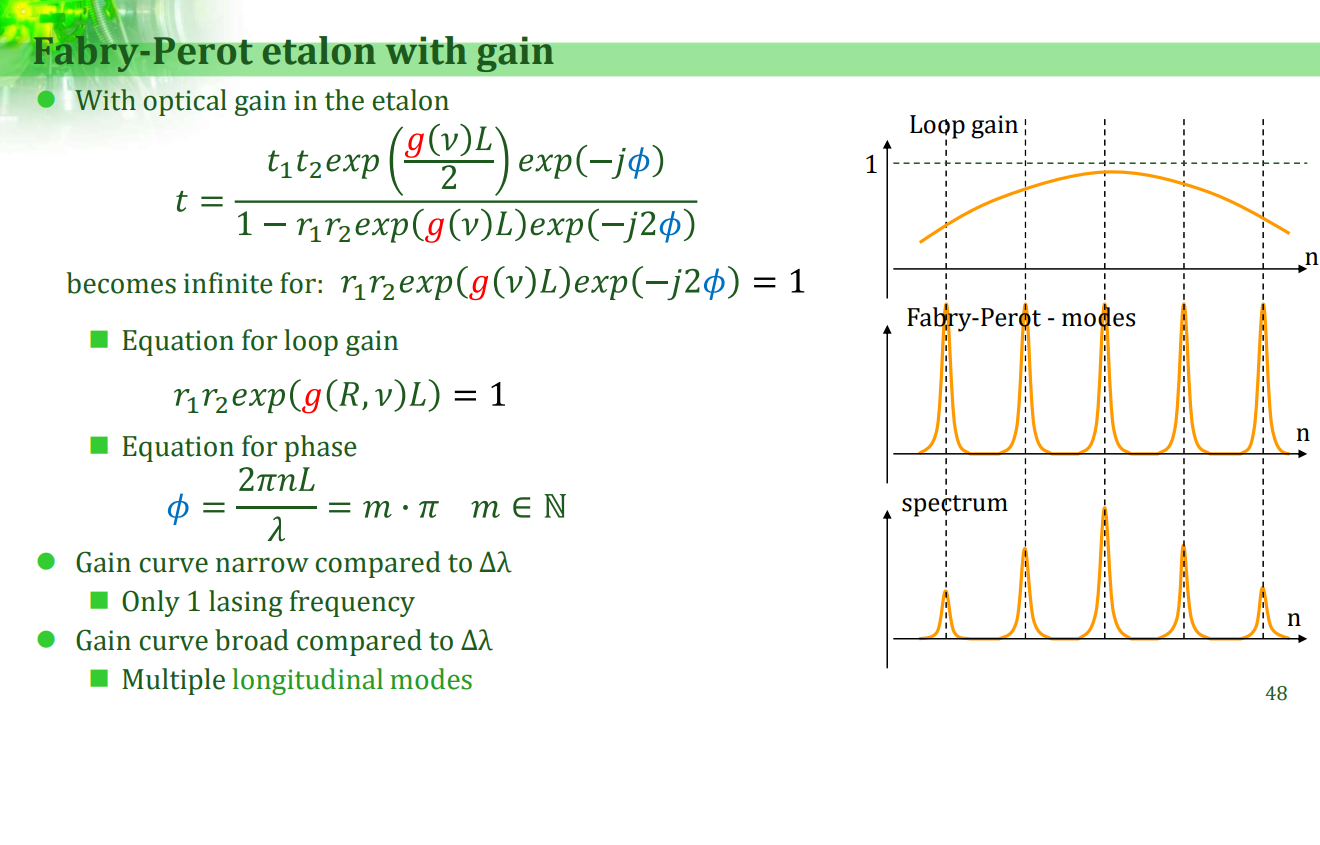
laser cavities, passive fabry-perot resonator, resonator with optical amplifier
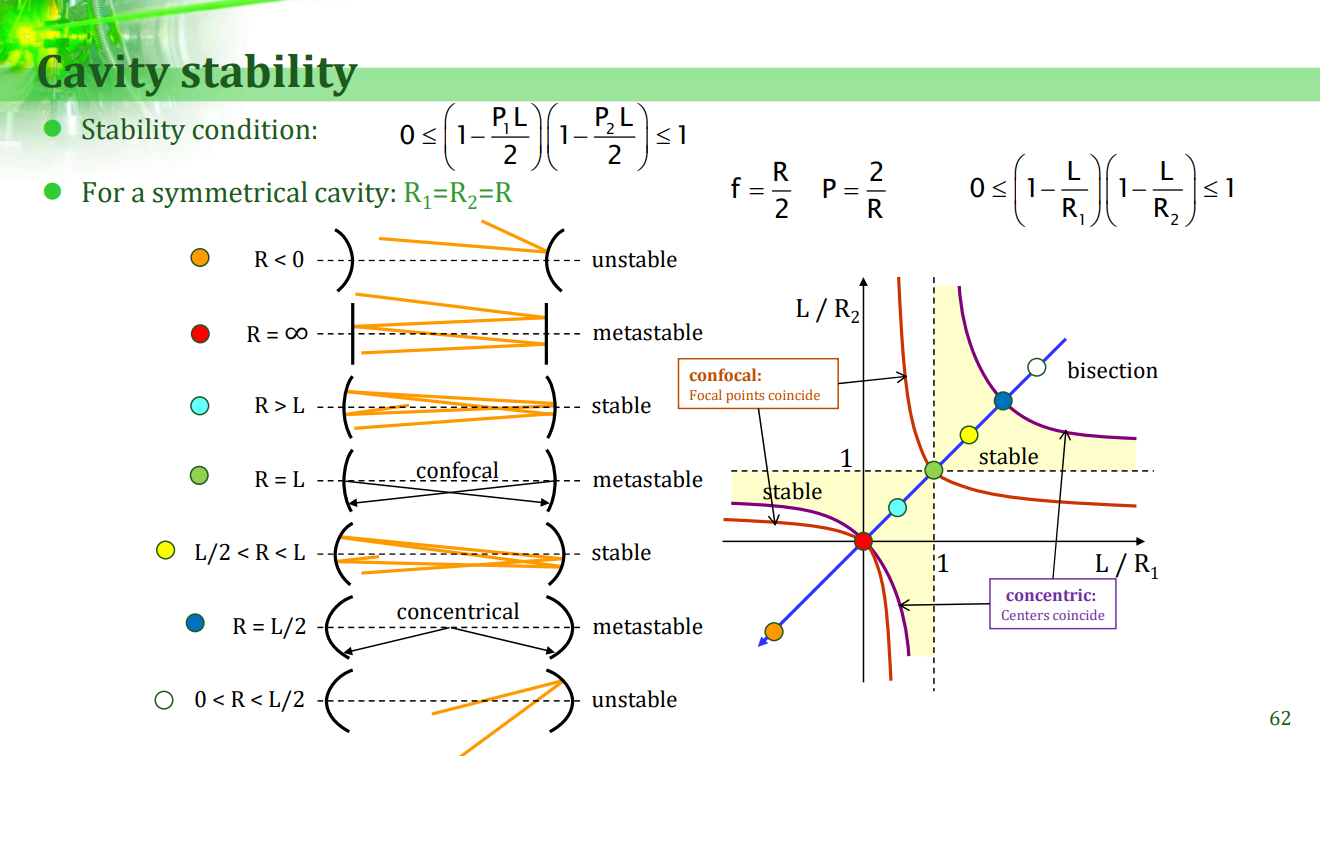
cavity design using mirrors, transverse modes
spherical mirror: see notes prior…
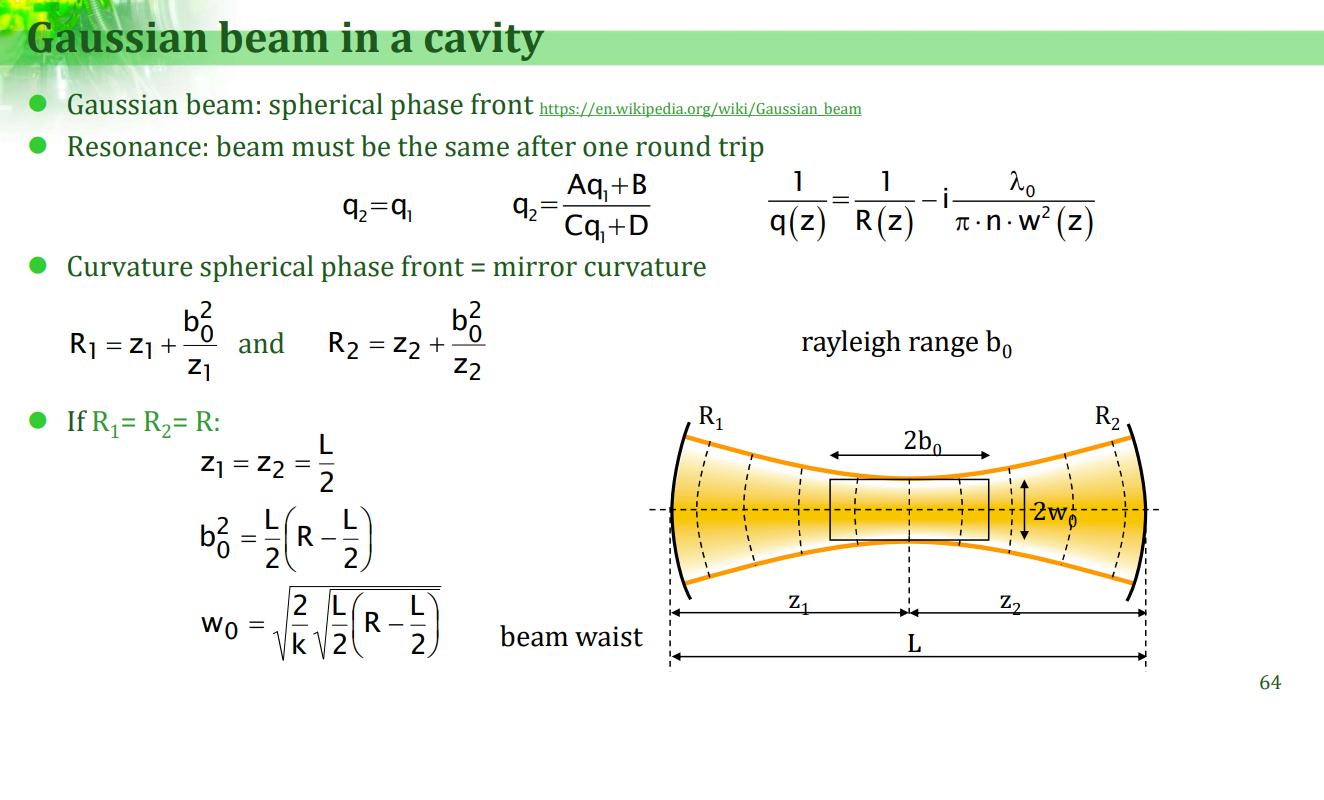
Characteristics of laser beams
The wider the laser spectrum, the shorter the pulses.
Types of lasers
see reader…
Semiconductor Light Sources (Ch 14)
Topic: Semiconductors and PN Junctions
14-SemiLS.pdf
Optical properties of semiconductors (semidconductor materials)
Electronics I - 5ECB0
conduction band and valence band
intrinsic (pure material) semiconductors
electrons promoted to conduction band → a hold in valence band:
in general
but the electrons can be excited from valence band to conduction band by absorbing light but
Probability finding an electron at energy
Probability of finding a hole at energy
Diodes (role of pn junctions and heterojunctions)
n-doping in equilibrium → fermin level up → conductivity up →
p-doping in equilibrium → fermin level down → conductivity up →
in reverse potential as you decrease the potential of the n-junction you increase the band gap and the barrier becomes unpassable for electrons from p to n so no energy flow from n to p.
Heterojunction
Heterojunction in semiconductor devices combines materials with different bandgaps (between n and p junctions)
, creating a potential barrier that confines carriers and enables efficient light generation in the smaller bandgap region, with the equation for photon energy: .
connections between the materials indicate which material can be used as the junction in between and on p-n-junctions: for instance GaAs (MID-GAP) and AlAs (PN-JUNC). since GaAs has a smaller bandgap it should be in the middle. That straight connection between the material showcases good material relation.
LED’s
Laser Diodes
Semiconductor Detectors (Ch 15)
Topic: Semiconductors and PN Junctions
15-Detectors.pdf
Phototubes, Photoconductors
Photodiodes